
Sigma for dashboards
Dashboards that get to the answer
Hand the mapping table to the people who own it, and every edit writes back to the warehouse under existing controls.
Schedule demoEach number below comes from a customer describing the process they run without Sigma.
Start from an empty Input Table, a CSV upload, or a table already in the warehouse.
Row-level security from the warehouse decides who edits which rows. Nobody sees data they shouldn't.
Approved edits write back to the warehouse, and audit history on Input Tables records every change.
Load the list. Give owners access. Publish and audit
An owner assigns the family once on the Master SKU list, and every report and app reads that assignment.
An Input Table is a warehouse object, so the mapping lives where the models live. Sigma never modifies production tables, and your dbt models stay the source of truth.
Certification badges mark a definition endorsed or deprecated, and version tags record the release it belongs to. Actions route each proposed change to the owner who signs it off.
Change a mapping once and every workbook, report, and app that reads it returns the new value on the next query. Value lists keep the same options in every control.



Sigma queries your warehouse live, so a workbook reads what landed a moment ago.
Reference data edits run under the same roles, permissions, and logs that govern the warehouse itself.
Queries run live on the warehouse, and edits insert rows instead of overwriting production tables.
Each person edits the rows their warehouse role allows, so one region owner cannot touch another.
Audit history on Input Tables records who changed a value and when, so a dispute ends with evidence.
These 3 examples keep definitions, metrics, and metadata in Sigma instead of a side spreadsheet.
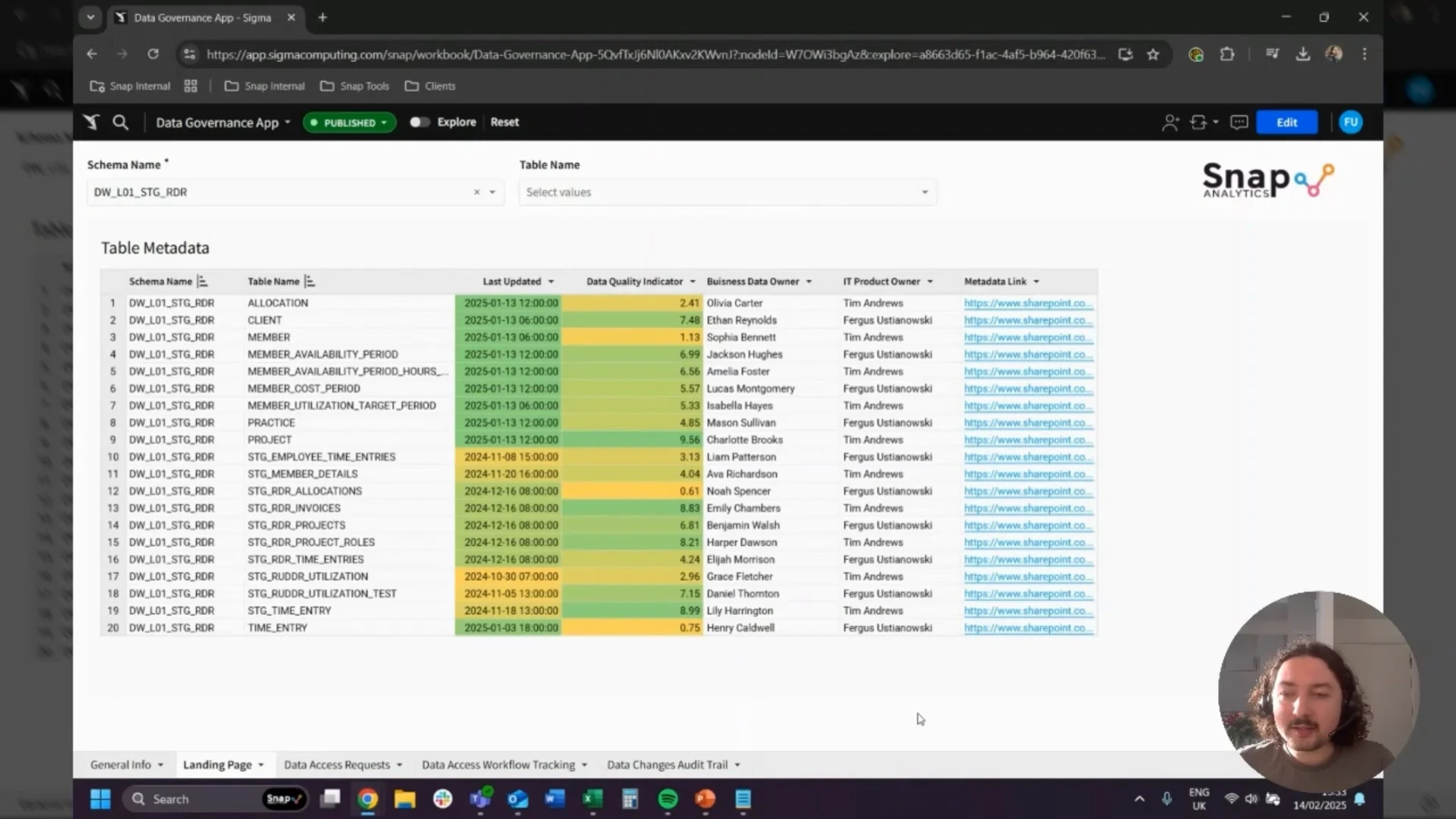
Lightweight data catalogue and governance app. Asset catalog, documentation, quality reporting, audit trail, and access requests.
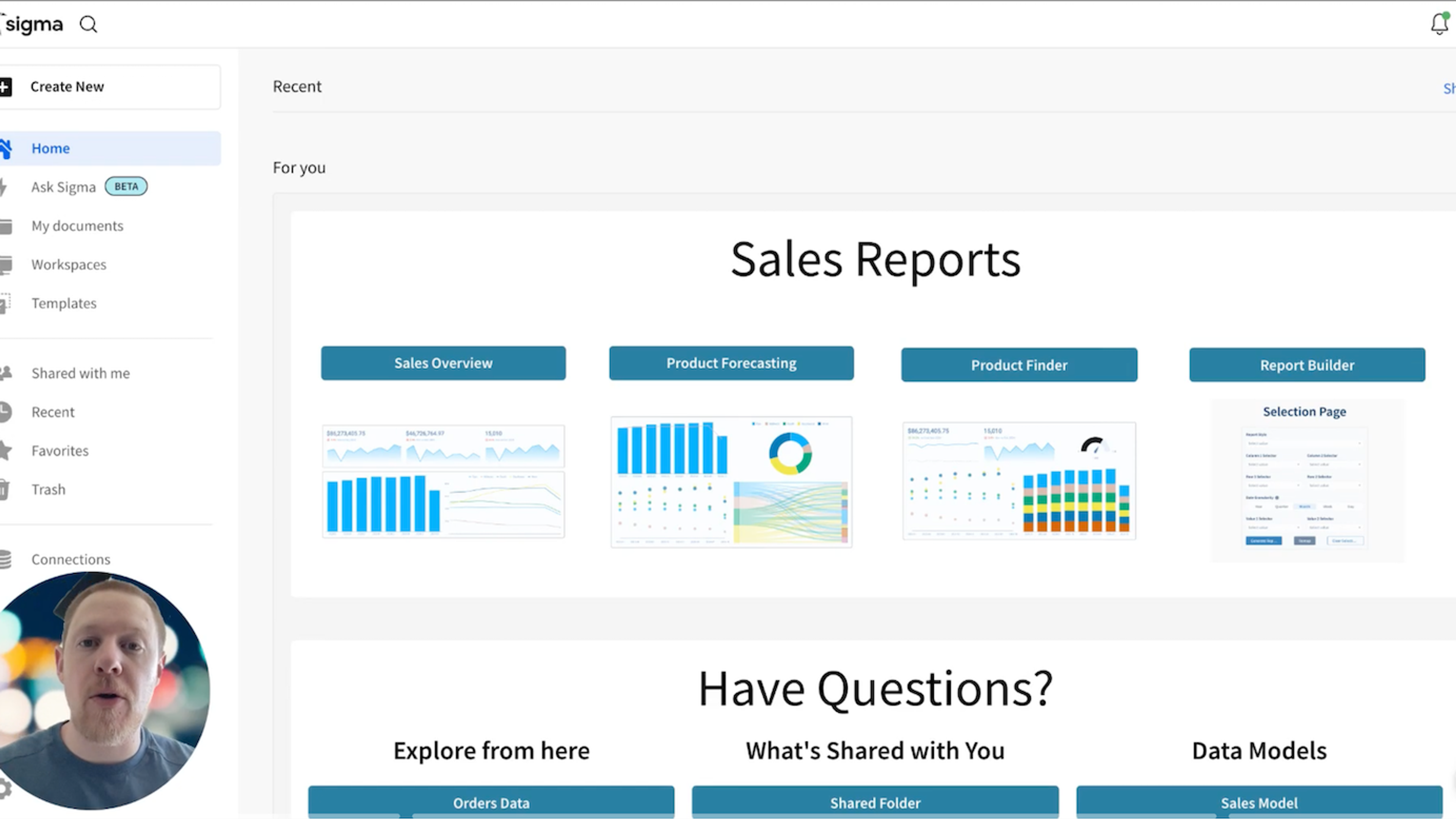
Sigma's flexible semantic modeling. Build reusable, secure data models that balance governance with self-service exploration.
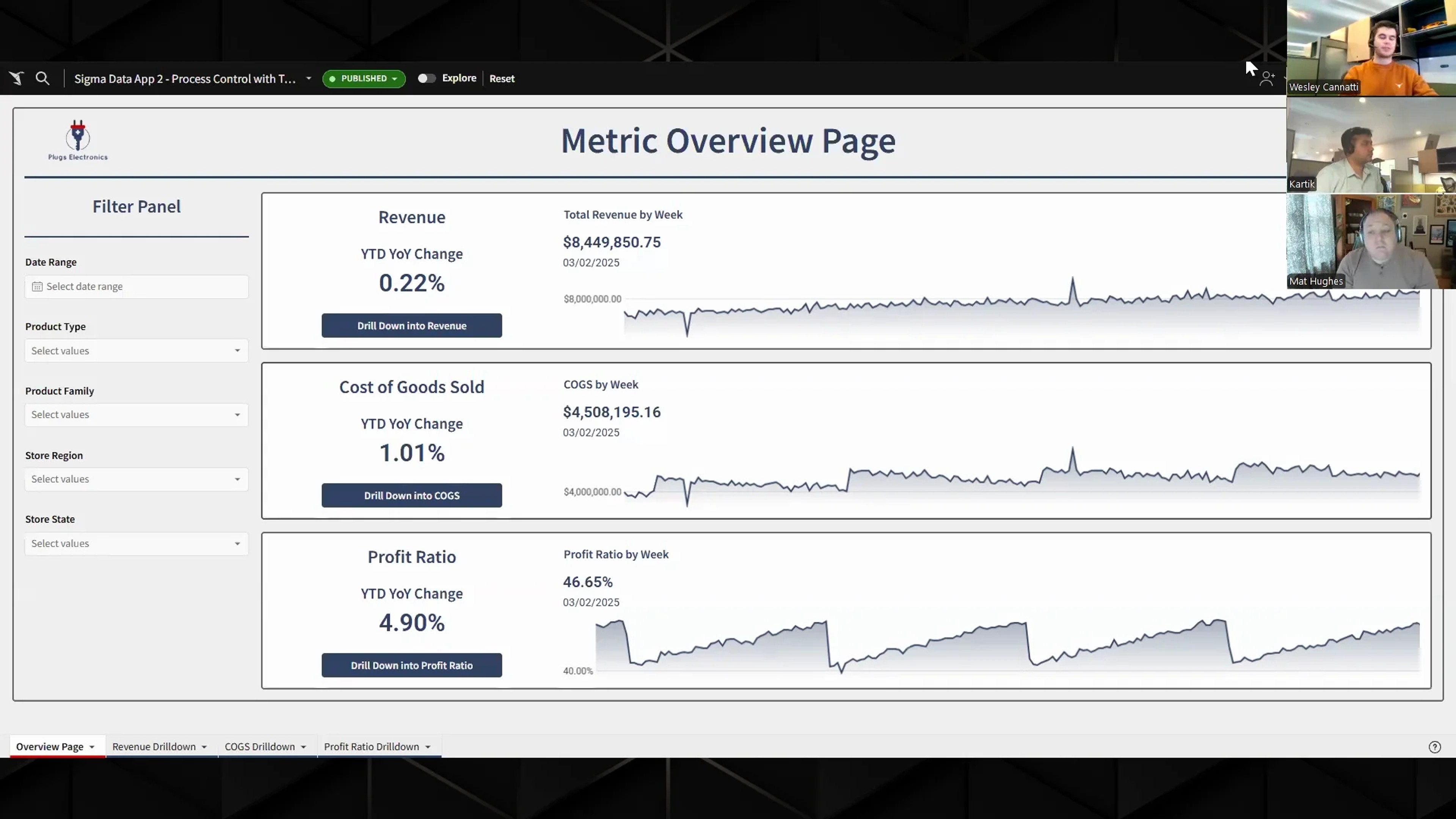
Track multiple metrics on the fly and create custom views for end users in a single data app.
All 7 build on the same live, governed platform.
Dashboards that get to the answer
Own every forecast version
Model every lever on live data
Own your plan in one place
Project tracking you can act on
Reconcile every number in one place
Once owners maintain their own definitions, the data team stops maintaining lookups and gets back to shipping models.
Schedule demoStop buying a new tool for every workflow. Build it once on governed data, then scale it across the business.