5 Takeaways From Workflow on the Road: London

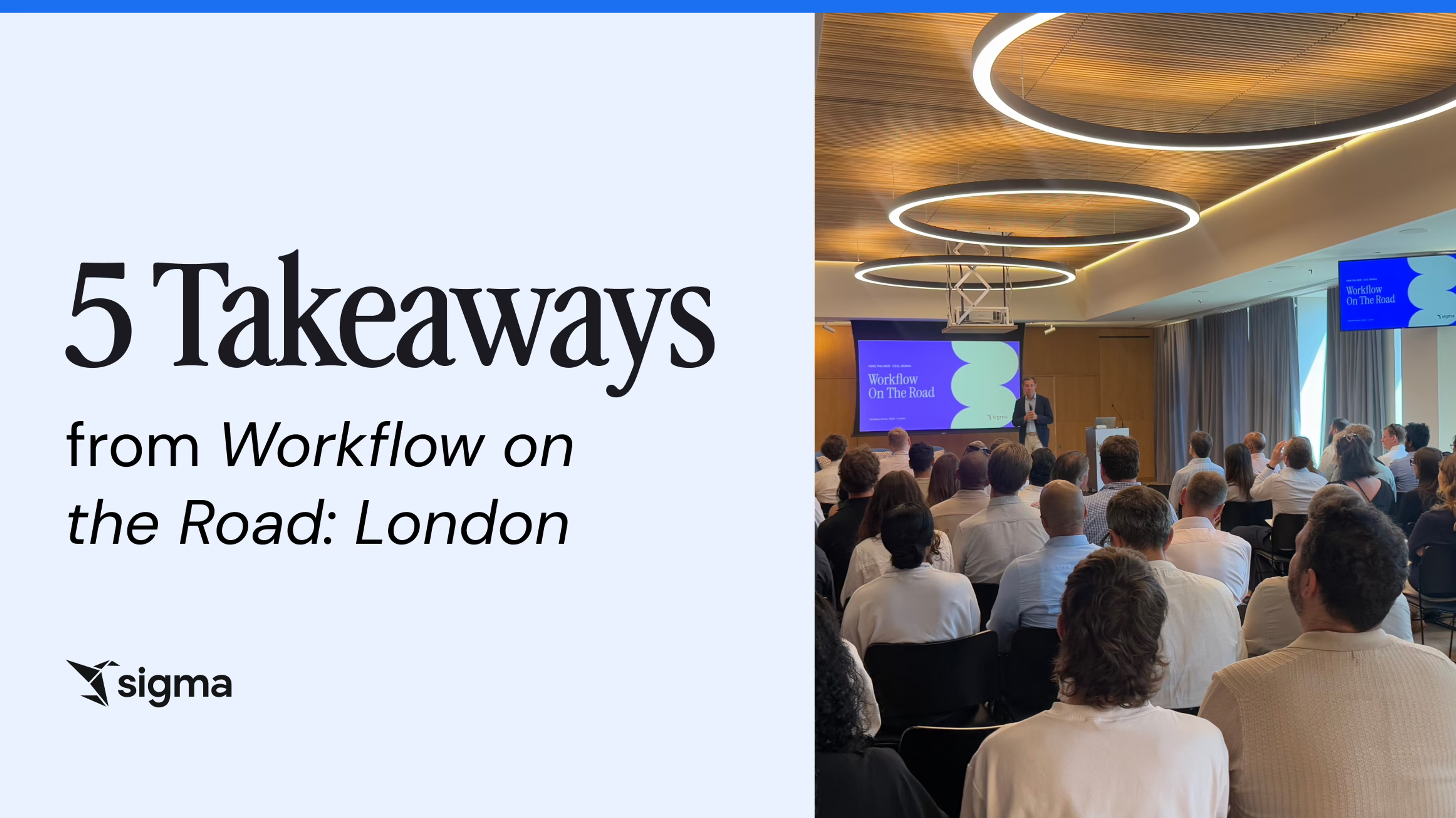
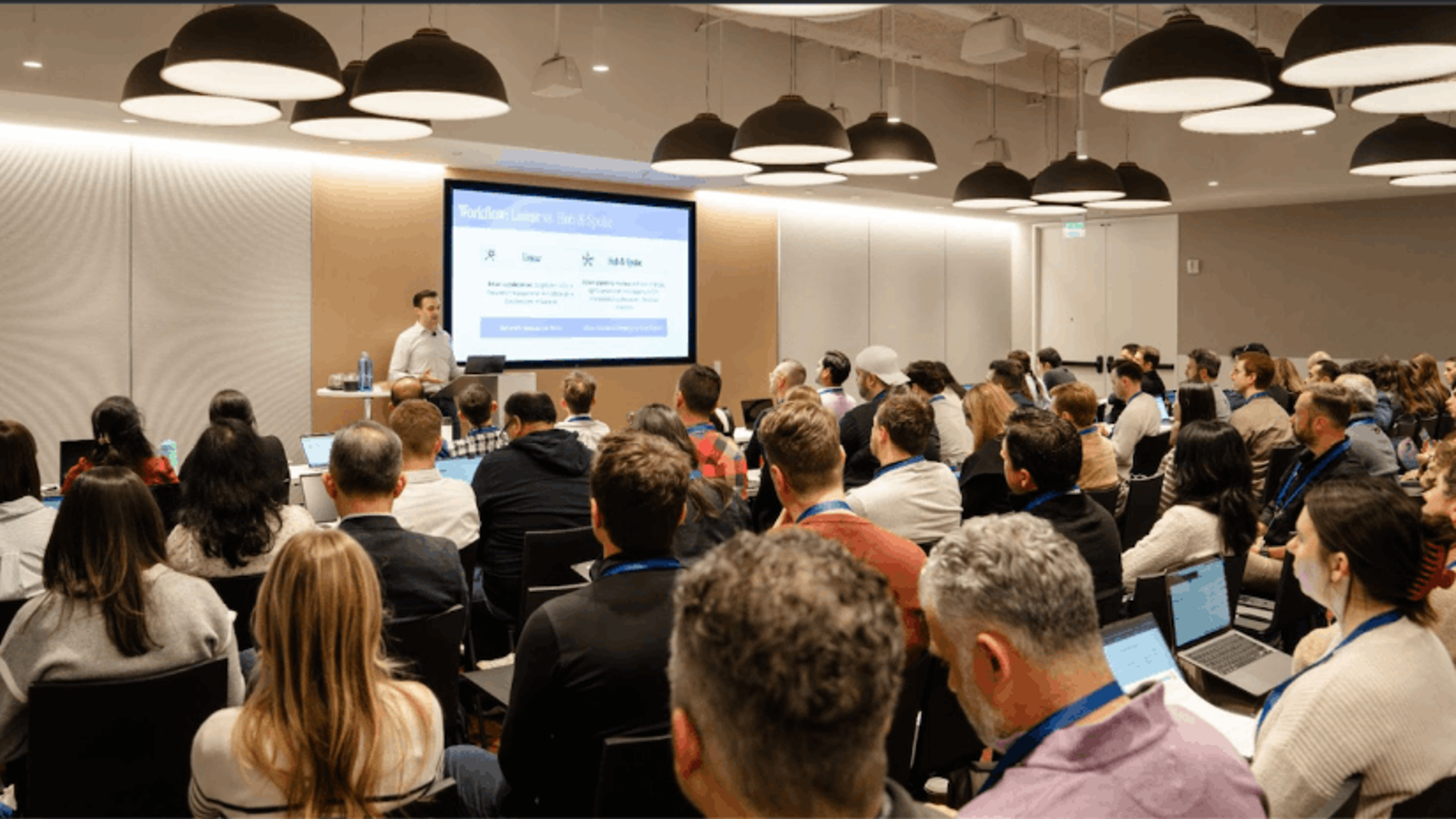
Last week we brought together finance, data, operations and IT leaders for Workflow on the Road: London, the U.K. edition of Sigma's user conference for AI Apps builders.
Across an executive keynote, a live demo, and a customer panel with Sagacity, Genius Sports, and Met Office, one pattern held: the teams getting the most out of Sigma are folding dashboards, reports, and single-purpose SaaS tools into a smaller set of applications they build and govern themselves.
Customers described replacing 200 workbooks with a single governed data model, retiring long tails of legacy BI, and turning reports into AI Apps that write back to the warehouse and take action. Below are five takeaways from the event, and each one is a move you can likely start on with data you already have.
1. Build applications instead of buying more SaaS
The economics of "build vs buy" reverse once you build on shared, governed infrastructure. When every app inherits the permissions, governance, and telemetry already in your warehouse, your 50th application costs less to stand up than your fifth. Buying software works the other way, where each new tool adds its own licenses, identity setup, and data pipelines.
Sigma's keynote put a number on the adoption behind this shift. There are now more than 6,000 applications built in Sigma, and about 65% of them are built by business users rather than central IT.
Data consultancy Sagacity has already run the math. Costas Christoforou, Head of Innovation & AI at Sagacity, described a "before" state of 20 products delivered to dozens of clients through 200 workbooks and 200 pipelines. By moving to one data model per product and switching client context with user attributes, the team cut maintenance cost by about 90% and now runs all of it with a small team. The advice for anyone starting with Sigma: replace the functionality, not the tool. Don't default to simply rebuilding the old bar chart. Ask what you couldn't do before.
2. Ground your AI in well-modeled, governed data
The large models reason well, but they only know the internet. They don't know your business. The context that makes AI useful lives inside the four walls of your enterprise data, where public models can't reach it on their own.
Genius Sports made the connection explicit: useful analytical AI relies on well-modeled data with rich context. The team pointed to two sides of this in Sigma. One is using AI like Sigma Assistant to interpret the data. The other is helping non-experts push their own context back into the warehouse, so people and models improve the data together.
Sagacity shows how an agent gets that context at the moment it answers. A Sigma Agent inherits the filtered slice a user is already looking at, so it queries exactly that data with no custom pipeline, and it draws meaning from a knowledge base connected over MCP. The agent returns both the numbers and what they mean.
Met Office shows what building that foundation takes. Met Office supercomputer generates massive volumes of operational data 24/7, a portion of which is moved into Snowflake with a medallion architecture layered on top. This helps turn what the panel called "data spaghetti" into the governed, reusable layer an AI model can actually query.
3. Use writeback and agents to turn dashboards into applications that act
Writeback captures a decision at the moment it happens and records it back in the warehouse, which moves a team from "what happened" to "so what." A report you look at becomes an application you act in, and it captures the expert knowledge that ETL never carries.
Sagacity built a campaign management application on this idea. A client's team selects the records to work and writes updates back to the warehouse as they make calls and changes, and a live report keeps managers current while campaigns are still in flight. One customer summed it up simply: Work is now visible as it happens, so managers no longer wait for finished results to know where things stand.
Met Office uses writeback the other direction, setting a threshold in a control and then evaluating which rows exceed it dynamically, which lets the team prototype in minutes without going back into the warehouse layer.
Agents extend that shift a step further, so the app itself can watch the data and surface the next move. Genius Sports gave the reason it matters: after three years of reporting on what happened, the job now is to act on it, so the team put the actuator directly in Sigma, where domain experts act on the data and feed their knowledge back to the warehouse.
4. Open the front end, keep the back end governed
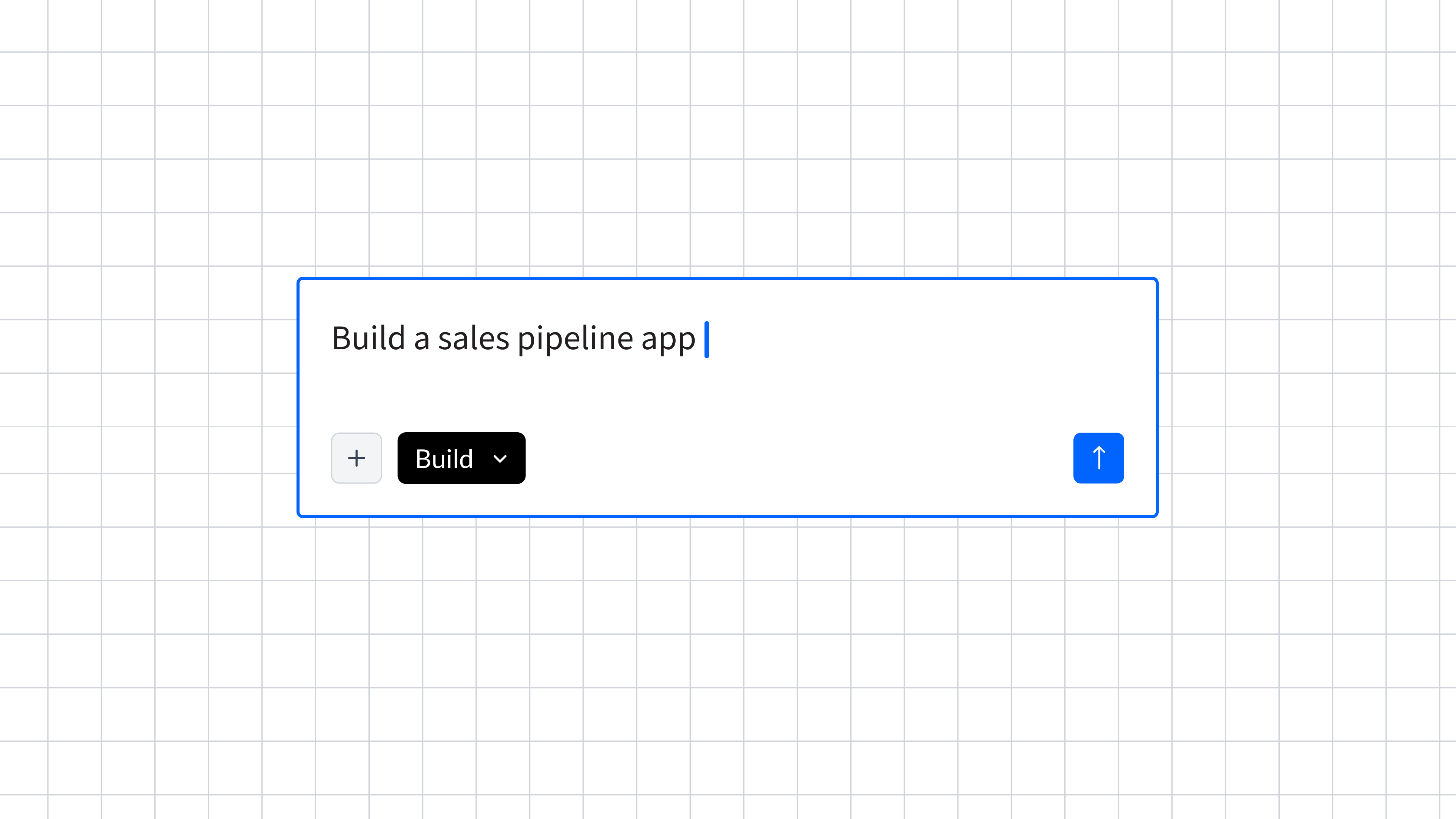
Sigma keeps the governed back end in your warehouse and opens up the front end. Vibe coding tools build interfaces people love, but hosting customer data on a third-party platform doesn't work for regulated companies. With Sigma, a builder can describe an interface in plain language and Sigma generates it in the same system already approved by IT, so security and governance remain strong while business users get room to build.
The panel was candid that generation has gotten cheap and governance is what makes it safe. Genius Sports pairs guardrails with a community review space, so builders learn from each other and bad ideas get caught early rather than lectured out of existence. Sagacity leans on production and staging tags as a safety net, custom groups for fine-grained permissions, and Sigma Tenants for sandboxing work before it reaches common use. A useful side effect surfaced in the demo: because natural-language prompts are logged in Sigma, the instructions that built an app double as its documentation.
5. Start building now, and plan for what's next
The shortest path to conviction is a customer who was building 48 hours in. Met Office had agent access for two days before the panel and already saw huge potential for agents to help customers use weather data more effectively, and lower barriers to providing context-specific weather intelligence. The team is testing heavily first, because trust is paramount when the advice drives a real decision. Sagacity, meanwhile, is rolling out Pixel Perfect Reporting to give executives a formatted view alongside the interactive one.
The live demo showed where this goes next. Highlights included an autonomous agent that watches for anomalies and takes real actions through APIs, a renewal co-pilot that surfaces recommendations before the user asks, and building native Sigma workbooks with Claude that a team can then maintain in Sigma's no-code interface.
Find the move that's already within reach
The through-line from London is straightforward: Build applications on governed data and run more of them on one platform, rather than buying and stitching together another SaaS tool for every workflow. Whether you are consolidating a SaaS stack, modeling data your AI can finally use, or turning a report into an application that acts, at least one of these moves is probably closer than it looks.
- Request a Sigma demo to see what building on Sigma looks like with your own data.
- Sign up for Sigma Public to see what other teams have built and try Sigma for free.
- View upcoming events to meet the Sigma team and learn more about building AI Apps.