What Happened at Workflow 2026: Insights from Sigma’s First User Conference

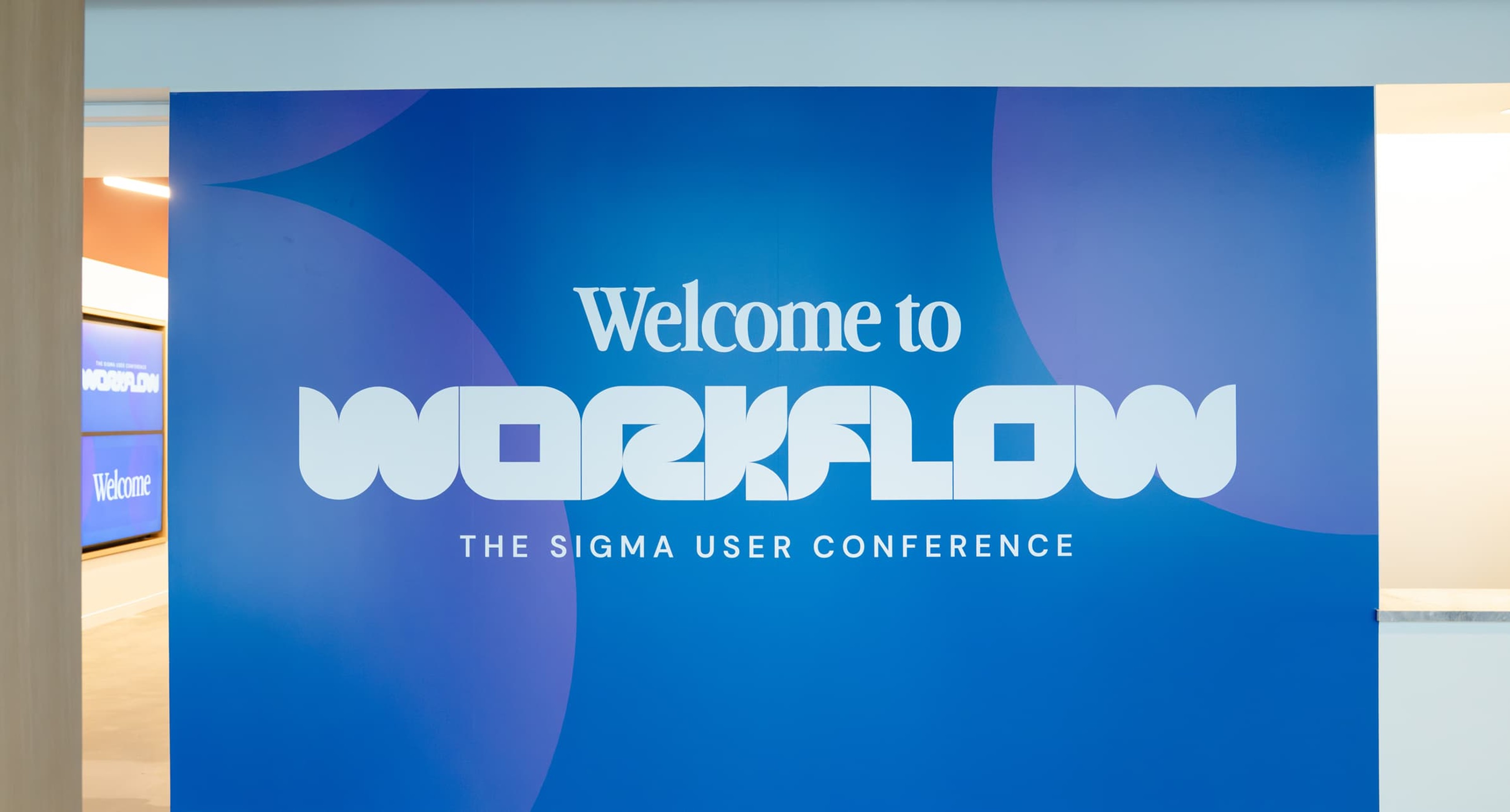
Last week our Sigma team hosted Workflow, our very first in-person user conference in San Francisco.
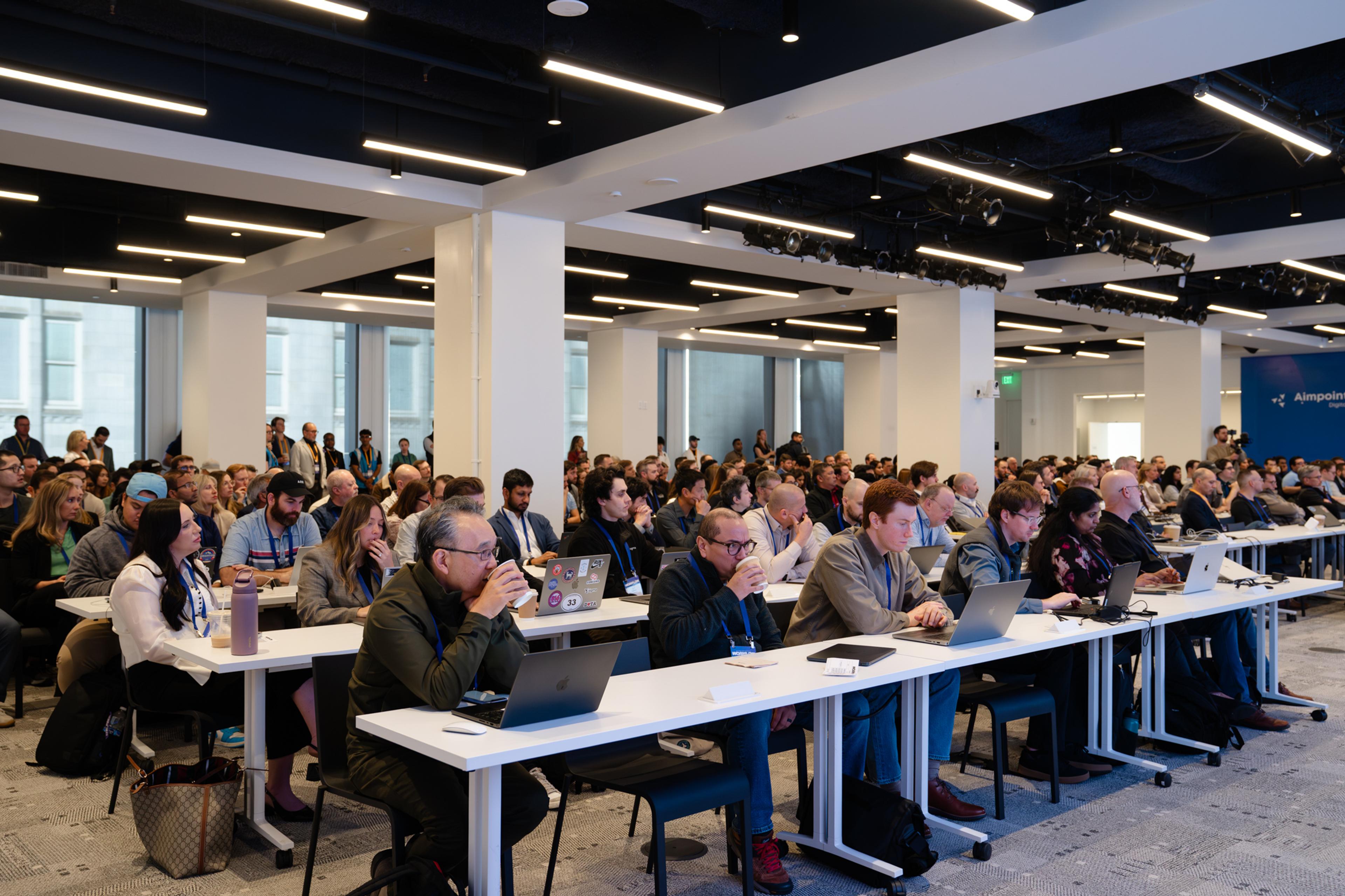
Building on the momentum of 2025’s virtual conference, Workflow marked the next chapter in the evolution of Sigma’s builder community. 400 builders, engineers, partners, and data leaders came together for a full day focused on how Sigma users are building AI Apps directly on their cloud data warehouse. Instead of stitching together spreadsheets, dashboards, and multiple SaaS tools, teams can build AI-powered workflows in Sigma and write data back in real time, all within a single governed environment.
From executive keynotes and product announcements to hands-on builder sessions, customer stories, and activations, Workflow brought the Sigma community together for a full day of learning, building, and connection.
[Watch the Workflow 2026 sessions on-demand.]
Executive Highlights and Product Announcements
To kick off the day, Sigma CEO Mike Palmer welcomed Sigma builders, representing a wide range of roles and technical backgrounds.
Palmer then invited Kevin Boller, EVP of Corporate Development, Strategic Finance, and BI at FloSports, to share how his team uses Sigma to transform demand forecasting for live sports rights. By evaluating portfolios of events and modeling scenarios in a single environment, Boller’s team can quickly identify underperformers and opportunities. The result is faster iteration, greater transparency in the forecasting process, and a shift away from fragmented workflows.
Palmer also welcomed Sigma product experts Marwan Mattar, Katrina Menne, and Zalak Trivedi to showcase how Sigma is embedding AI across the platform. Their session introduced the framework Discover → Build → Act → Scale, demonstrating how builders can move from asking questions to creating full applications and workflows in Sigma without leaving the platform. For example, a team might start by asking questions about their sales performance. With Sigma, they can build an AI App to track pipeline health, chat with an agent to plan and trigger follow-up actions for at-risk deals, and continue to scale that workflow across their entire revenue team.
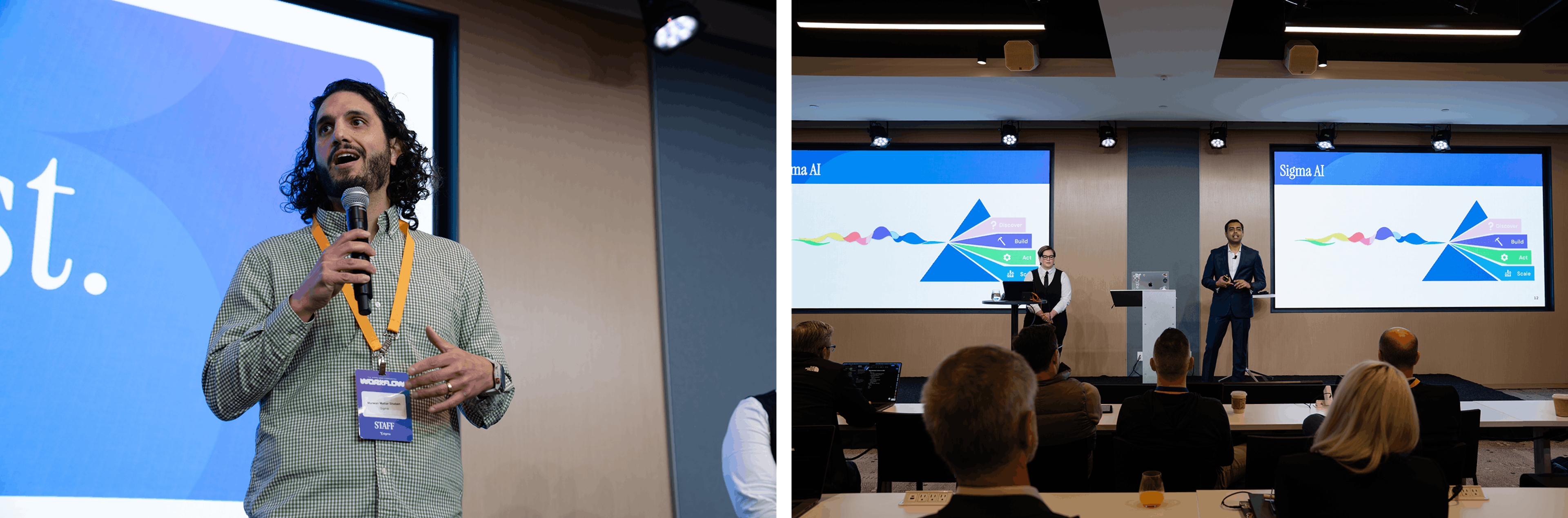
Menne and Trivedi also previewed several innovations designed to help teams build AI-powered workflows in Sigma while reducing the need for custom engineering or external tools. These included capabilities, such as:
- AI Query File Uploads: bring unstructured files into AI workflows so teams can analyze and extract insights directly in Sigma
- Scheduled Actions: automate recurring workflows, updates, and notifications on a set cadence
- Expanded API connectors: integrate Sigma applications with external systems and operational tools
- Conversational Sigma Agents: end users can interact with data using natural language to retrieve insights or trigger actions
- Autonomous Sigma Agents: train and curate an agent to trigger actions only when needed
- Natural language to data models: generate usable data models by describing data structures in plain language
- Sigma MCP Server: enable external AI systems and applications to interact directly with Sigma workbooks and workflows
While these capabilities were previewed during the session, Sigma Agents will take center stage at Sigma’s Spring Product Launch on April 2.
Menne and Trivedi also teased Sigma Public, an upcoming capability that will allow everyone to experience building in Sigma. More details on Sigma Public will be announced soon!
Hands-on Building
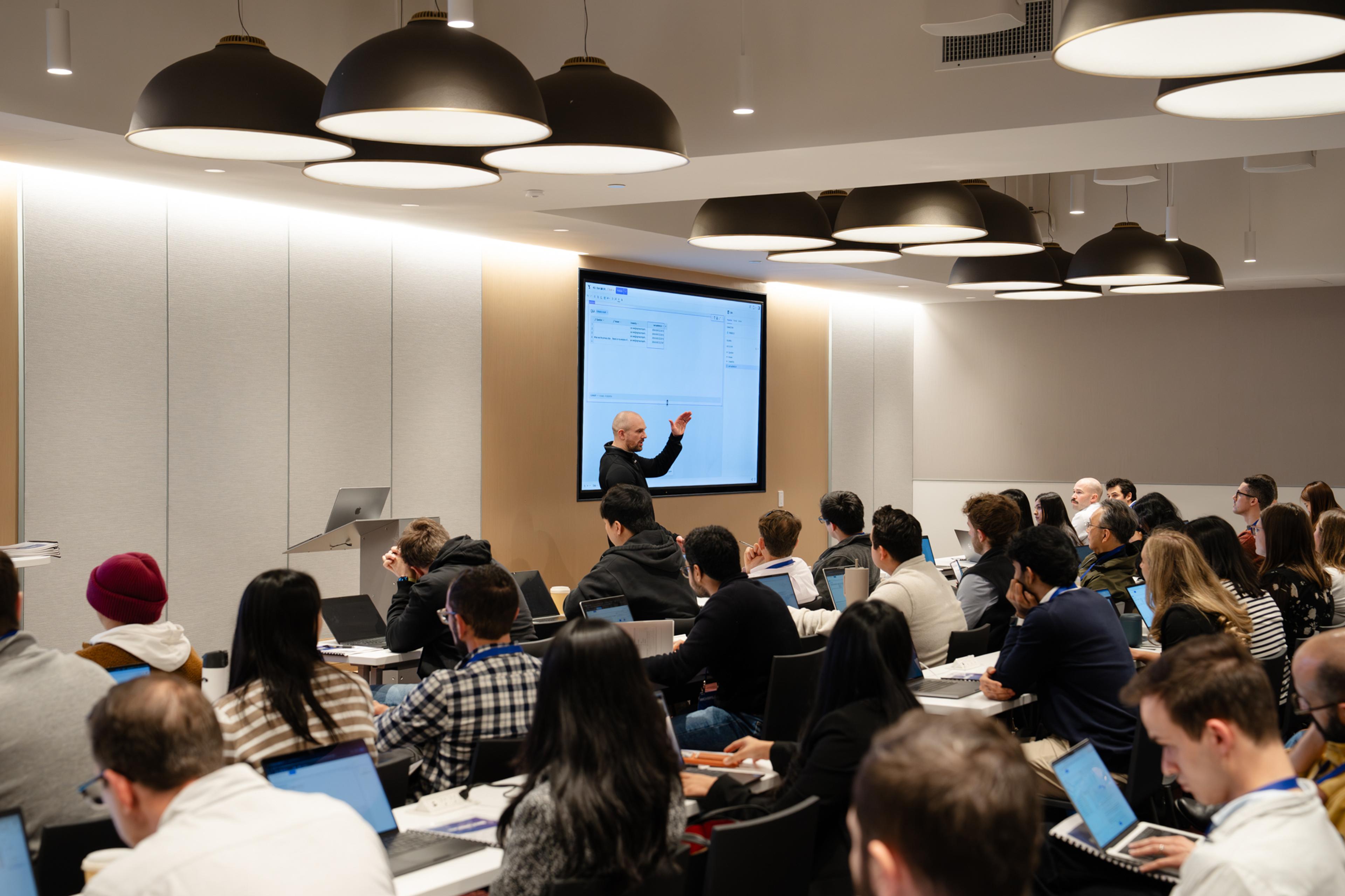
We intentionally designed Workflow to be hands-on and practical. Instead of focusing only on presentations, attendees participated in training sessions led by the Sigma team that walked through how to actually build AI Apps and workflows inside Sigma.
Sessions started with the core building blocks of the platform, including Input Tables, workbook actions, and workflow automation. From there, more advanced sessions showed how teams can use AI Query, Sigma Agents, and writeback capabilities to build applications that not only analyze data but also trigger actions, update systems, and automate business processes directly on top of warehouse data.
By the end of the day, attendees had seen how Sigma can move beyond traditional dashboards, enabling teams to build interactive applications that combine analytics, AI, and operational workflows in one place.
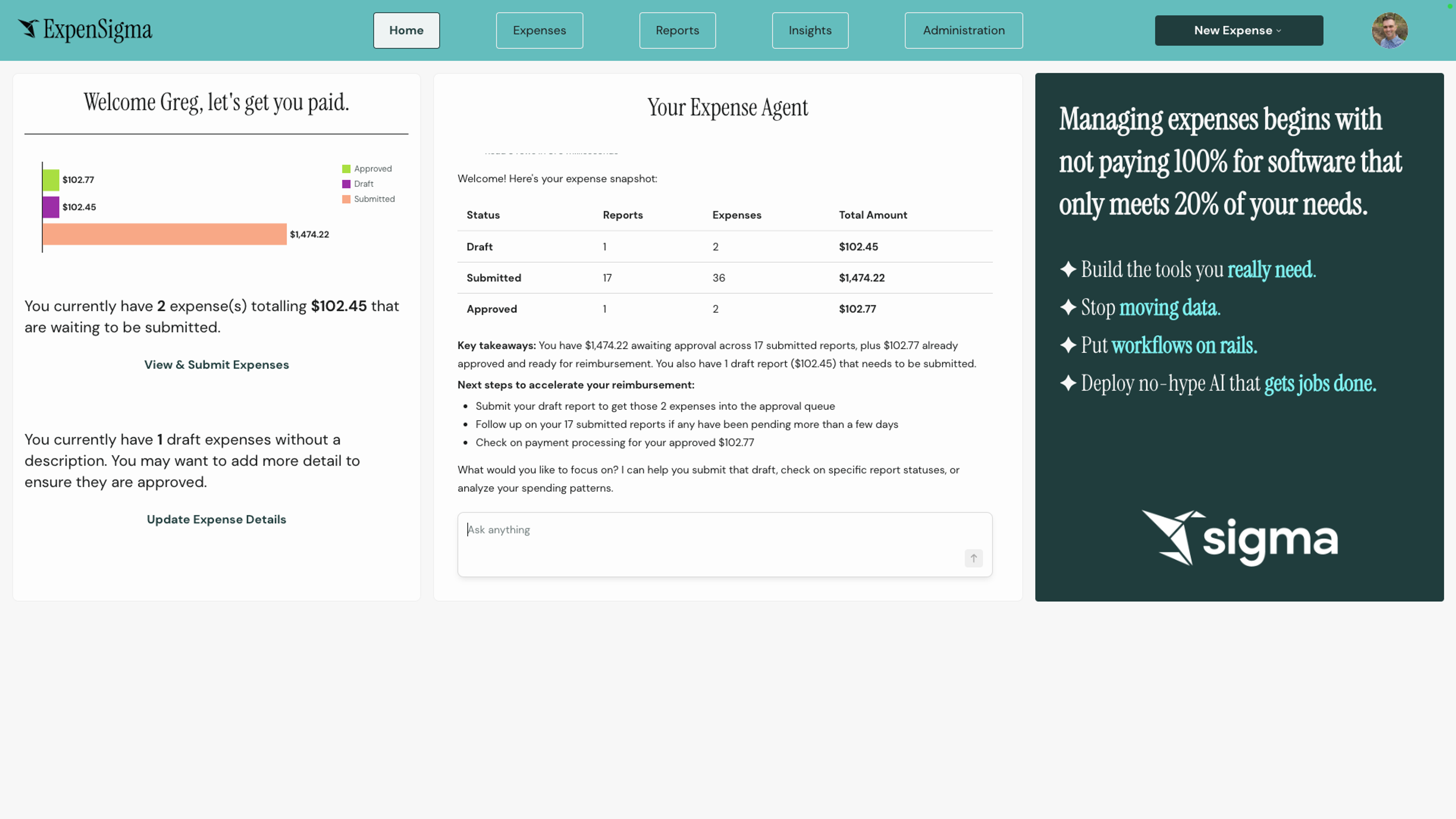
The “Art of the Possible” session inspired teams by demonstrating what is possible to build in Sigma today. Demos included “ExpenSigma,” an app that allows employees to submit travel expenses for administrative approval and reimbursement, and a custom cContent app that helps marketers draft content with the help of AI informed by internal call recordings and business information.
Customer Sessions
Attendees also heard directly from teams at DraftKings, Magnit Global, Aimpoint Digital, Upland Capital Group and Strategus, who showcased apps they built with Sigma
For example, the DraftKings team demonstrated how they use Sigma to enable live business insights and pilot new AI workflows, while Magnit Global shared how Sigma supports modernized finance operations and accelerated the month-end workflow. Strategus also highlighted how they built embedded AI applications for thousands of advertising customers, replacing manual processes with collaborative, data-driven workflows.
“Sigma went from a pilot tool to a business-critical platform powering DraftKings’ most important operational decisions,” said Vinod Paidakula, Director of Technical Program Management, Global Data at DraftKings.
Activations and the Builder Challenge
Beyond the sessions, attendees moved between Ask a PM booths, sponsor showcases, and hands-on walkthroughs throughout the day.
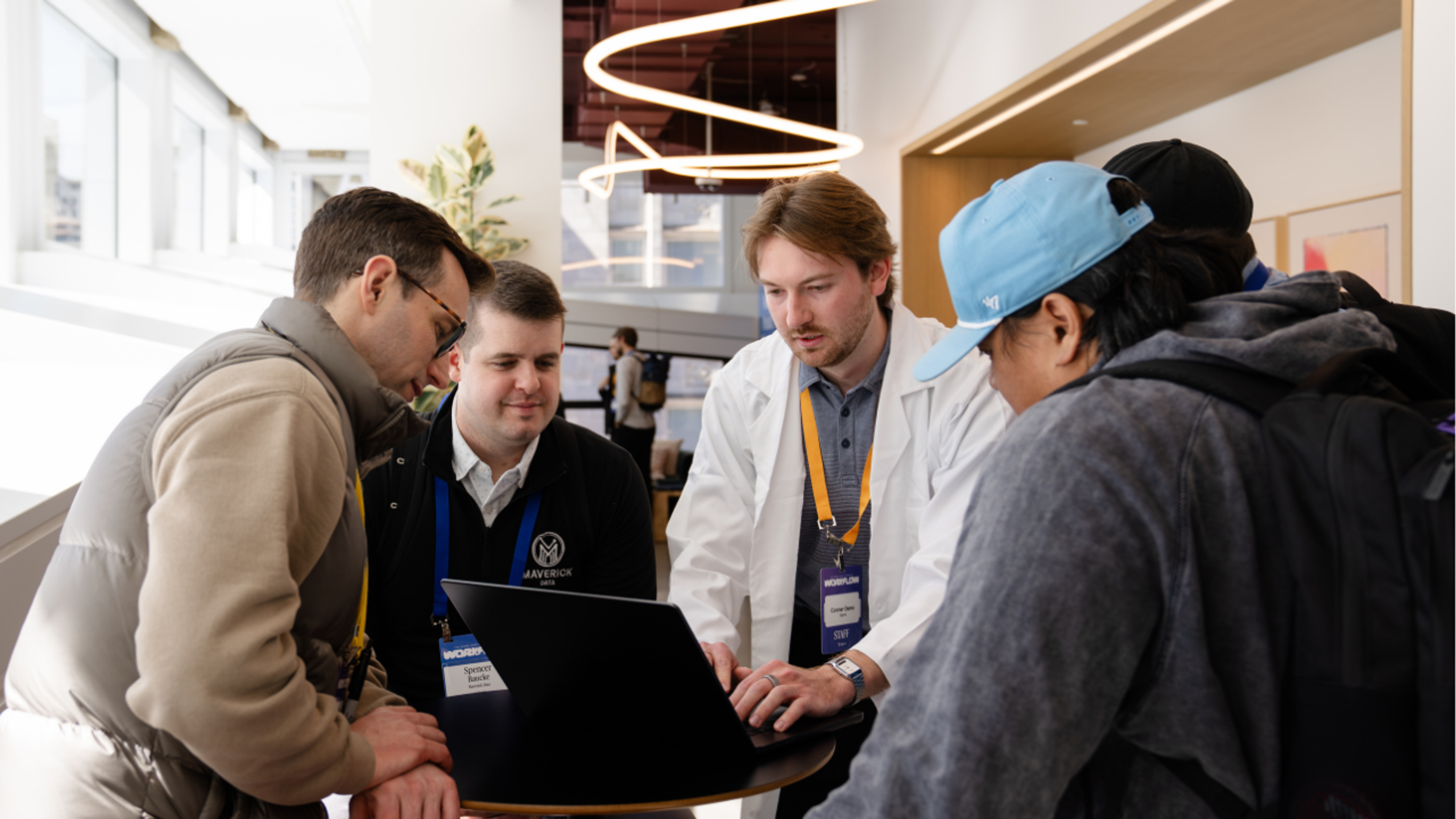
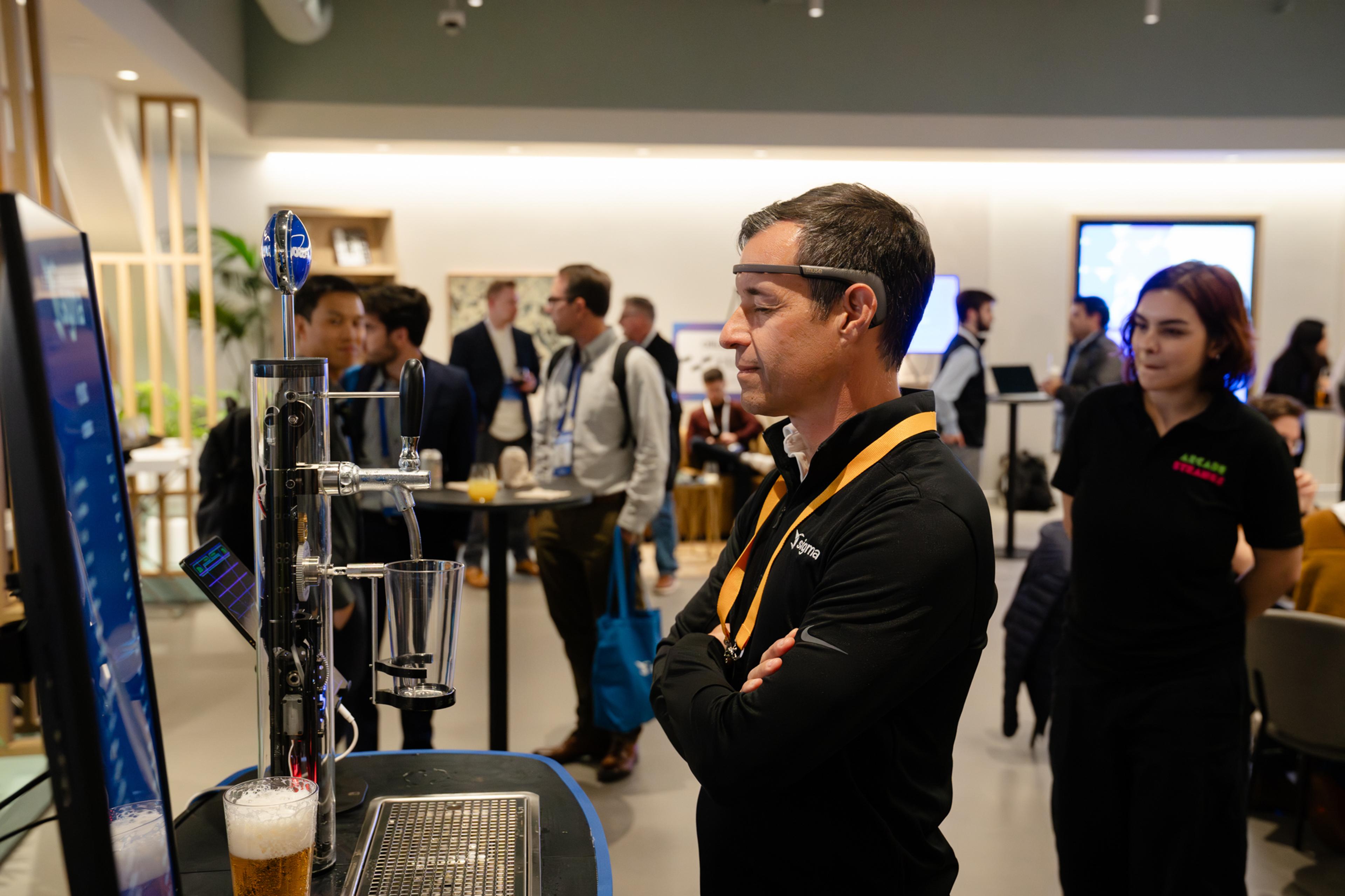
Along the way, they grabbed ice cream, picked up custom swag, poured beer with a mind-controlled robot, and connected through built-in icebreakers that made it easy to meet fellow builders and exchange ideas. The space stayed collaborative, energetic, and buzzing with conversation from start to finish.
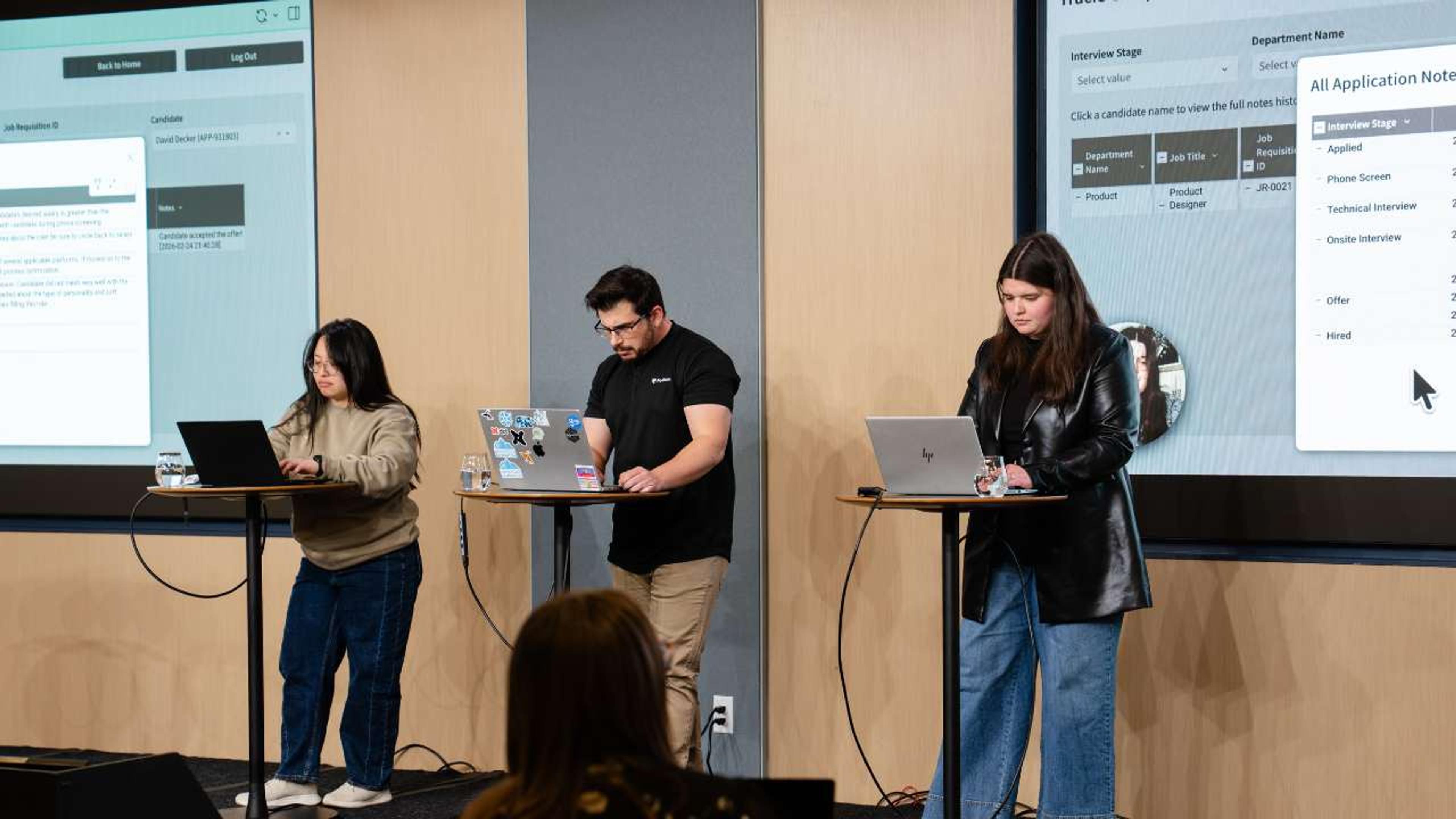
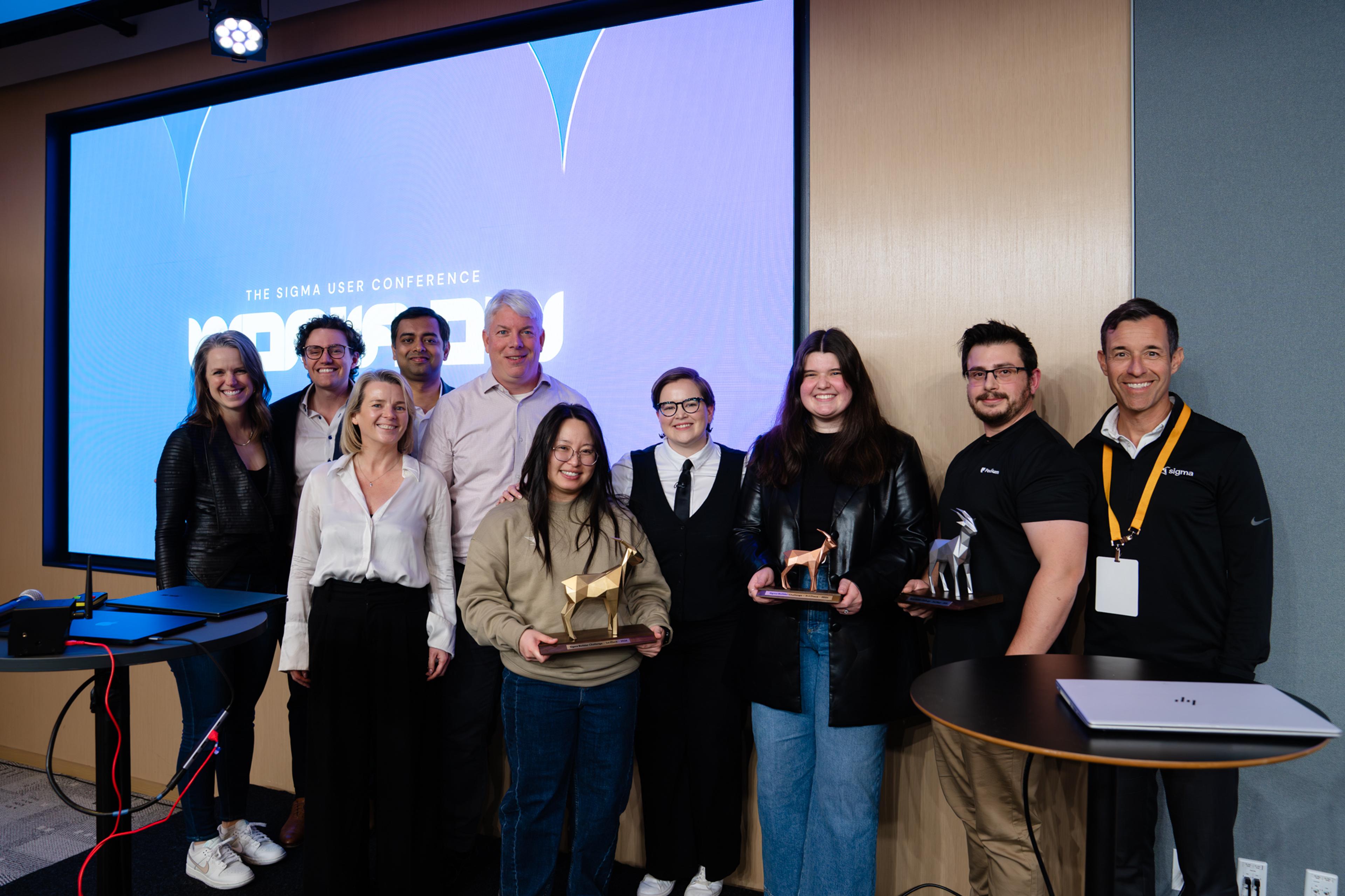
To cap off the day, attendees gathered for a happy hour and the Sigma Builder Competition, where three builders with backgrounds in analytics engineering, BI development, enterprise reporting, and the Workout Wednesday Sigma community took the stage: Cassandra McMorrow, Collin Austad, and Lynda Chao. In front of a live audience, they went head-to-head to create the most powerful AI app. Each competitor battled for the title of the Golden Goat, Sigma’s ultimate AI app builder.
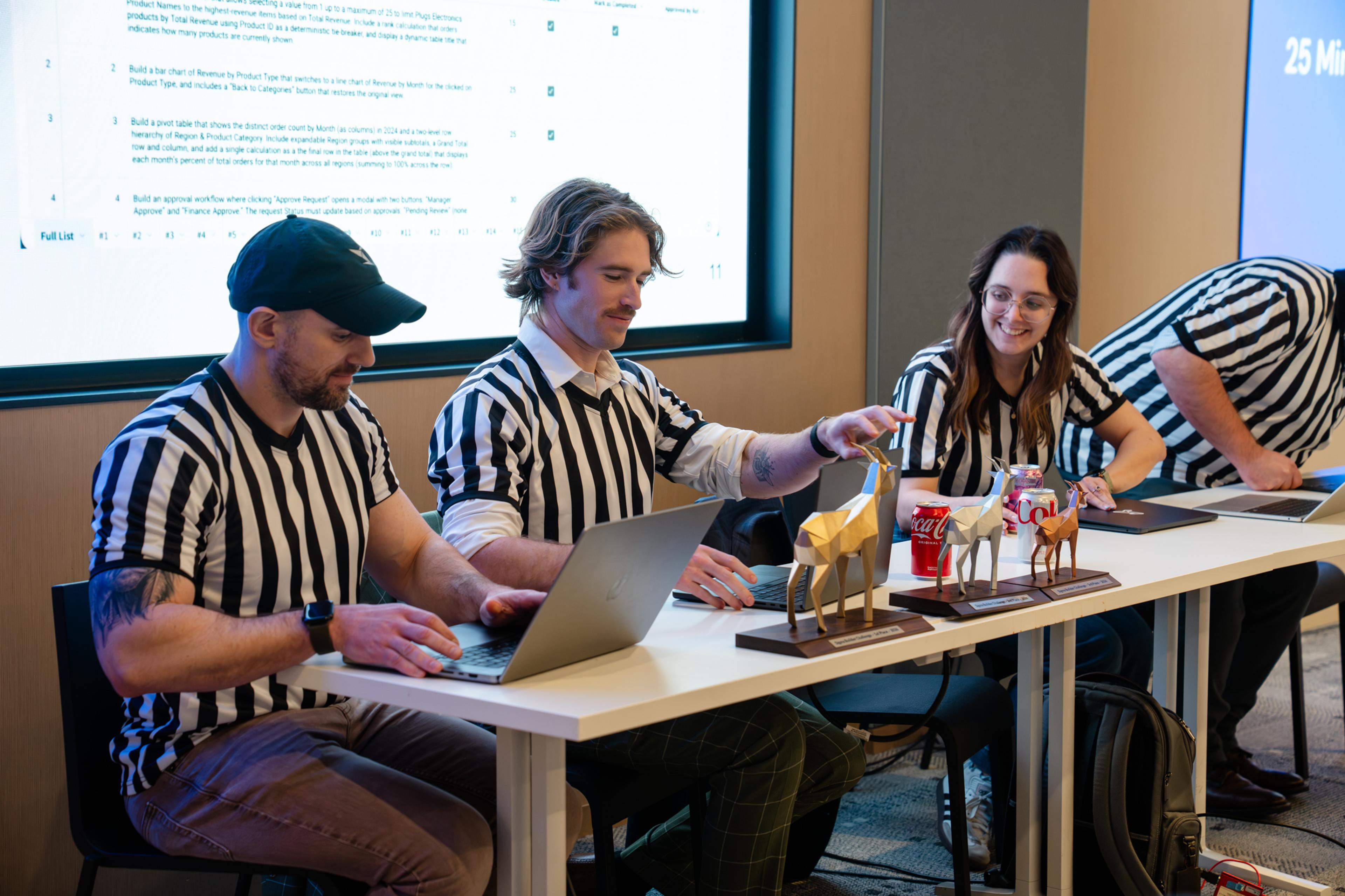
Each builder was tasked with creating an AI app for HR that included at least one Input Table, one Input Table Action, and one hidden component:
- McMorrow built an internal tracking application that helps hiring managers manage applications and quickly see where candidates are in the interview process.
- Austad developed HireView, an app designed to help recruiting teams engage with their active pipeline and better understand hiring trends.
- Chao built a hiring control center that centralizes workforce planning, candidate pipeline management, and approval workflows, helping HR teams move from passive reporting to proactive workforce management.
The 2026 Golden Goat went to Chao, who impressed the judges with advanced Sigma skills, strong app functionality, a sleek design, and a thoughtful approach to user experience that makes the final product both intuitive and enjoyable to use.
The competition showcased the power and flexibility of building custom apps—that can replace departmental SaaS—directly in Sigma.
What’s Next for AI Apps
Workflow 2026 sold out, which speaks volumes about the momentum behind this community and where it’s headed.
Events like Workflow involve hundreds of moving pieces, from session tracks and speaker preparation to sponsor coordination, venue logistics, activations, launch messaging, and cross-functional alignment. Fittingly, much of that planning happened directly in a Sigma workbook.
Thank you to our sponsors, including Aimpoint Digital, Evolv, Interworks, DAS42, Databricks, AWS, and Snowflake, for helping make the event possible. And to every attendee, speaker, and team member who helped bring Workflow 2026 to life, thank you.
If you weren’t able to attend Workflow 2026, you can still dive in:
- Watch Workflow sessions on demand
- Request a Sigma demo
- Watch the Spring Product Launch to learn more about Sigma Agents
- Read another Workflow recap: