Your company is already vibecoding. Do it on a platform IT can trust

A couple of months ago, I went into our database and counted the saved workbooks customers have built in Sigma. There were 1.9 million. By the time you read this, we'll have crossed 2 million. We only started selling apps a year ago, and a fraction of those workbooks were ever marketed as apps. The rest were called workbooks, reports, dashboards, "the thing finance set up." Every one of them is software, built by someone who needed it, used by people who needed it. This was vibe coding before there was a term for it. The only difference is that every one of those workbooks ran under the same governance as the rest of the company.
I tell that story because the way enterprise software gets made is changing for the first time in 20 years. It's already happening at your company, whether or not IT knows about it. The only question worth asking is who you trust to be in charge of it.
What "in charge of it" means architecturally is a runtime, the layer between your warehouse and your AI that takes what gets generated and makes it safe to operate. The warehouse stores the data. The AI generates the artifact. The runtime is everything between them: permissions, audit, version history, and the path from generation to production.
AI-assisted work is already moving past IT
There is no putting this back. Someone in Marketing, Finance, or Ops has a problem, opens an LLM, and ships an asset in an afternoon. The asset works, so they share it with their team, and the team just uses it. Nobody filed a ticket, double-checked the data, ran it past security, or got budget approval, and, by the way, the owner of that application is the person who built it on a Wednesday.
I have watched this happen inside companies that spent a decade building rigorous procurement programs and zero-trust architectures. Their best engineers cannot stop the vibe coding, because the gap between "I have an idea" and "I have a working tool" is now measured in minutes. If your default response is to ban it, you are not banning it. You are losing visibility into it.
So you have a choice. You can pretend vibe coding isn't happening and find out the hard way the first time a hand-built agent takes an action you cannot explain to a regulator, an auditor, or a customer. Or you can put it on a foundation that lets every app and every agent inherit the governance you already have in place.
I don't know how long the standoff between "IT bans vibe coding" and "IT enables vibe coding" lasts at any given company. The fastest cases I have seen took six months. The slowest will take two years. The endpoint is the same.
What "trusted" AI actually has to look like
Here's what IT should demand from any platform that offers vibe coding capabilities to employees:
- Warehouse-centric & secure: The build environment has to run on the warehouse you already secured, with whatever permissions and row-level security you set up carrying through automatically.
- No extracts: Data can't leave the secure perimeter, which means there should be no data extract option.
- Auditable: You have to be able to replay any run, roll back to any prior version, and hand the audit trail to a regulator in a format your compliance team already understands.
- Governed: Agents have to inherit the permissions of whoever called them, which means they can't see any data that the caller doesn't have access to.
If a vibe coding tool can't meet that bar, your employees can still build with it. They just shouldn't.
Apps and agents deliver the same value
Most of the apps built in Sigma that I referenced at the beginning of this piece operate like agents. They take input. They run steps. They write information from the user back to a centralized system (the cloud data warehouse). To some Sigma customers, these vibe coded assets are "apps." To others, they're "AI workflows." Increasingly—especially with the ability to bring custom Sigma Agents into any Sigma workbook—they're "agentic analytics," or "agent workflows," or just "agents."
Regardless of what you call it, the outcome is the same: AI-powered software that your team builds to do the work, sitting within the same governed and secured ecosystem that the IT team already approved.
For years, Sigma has been how millions of people answer questions, automate workflows, and take action on their cloud data — self-serve for the business, governed for IT, at speed for both. That mission hasn't changed in the vibe coding era. What's changed is the products we ship to help every business user build more than they ever could before. In just the last few months we've released:
- Sigma Agents to take action on data with simple instructions—no coding required
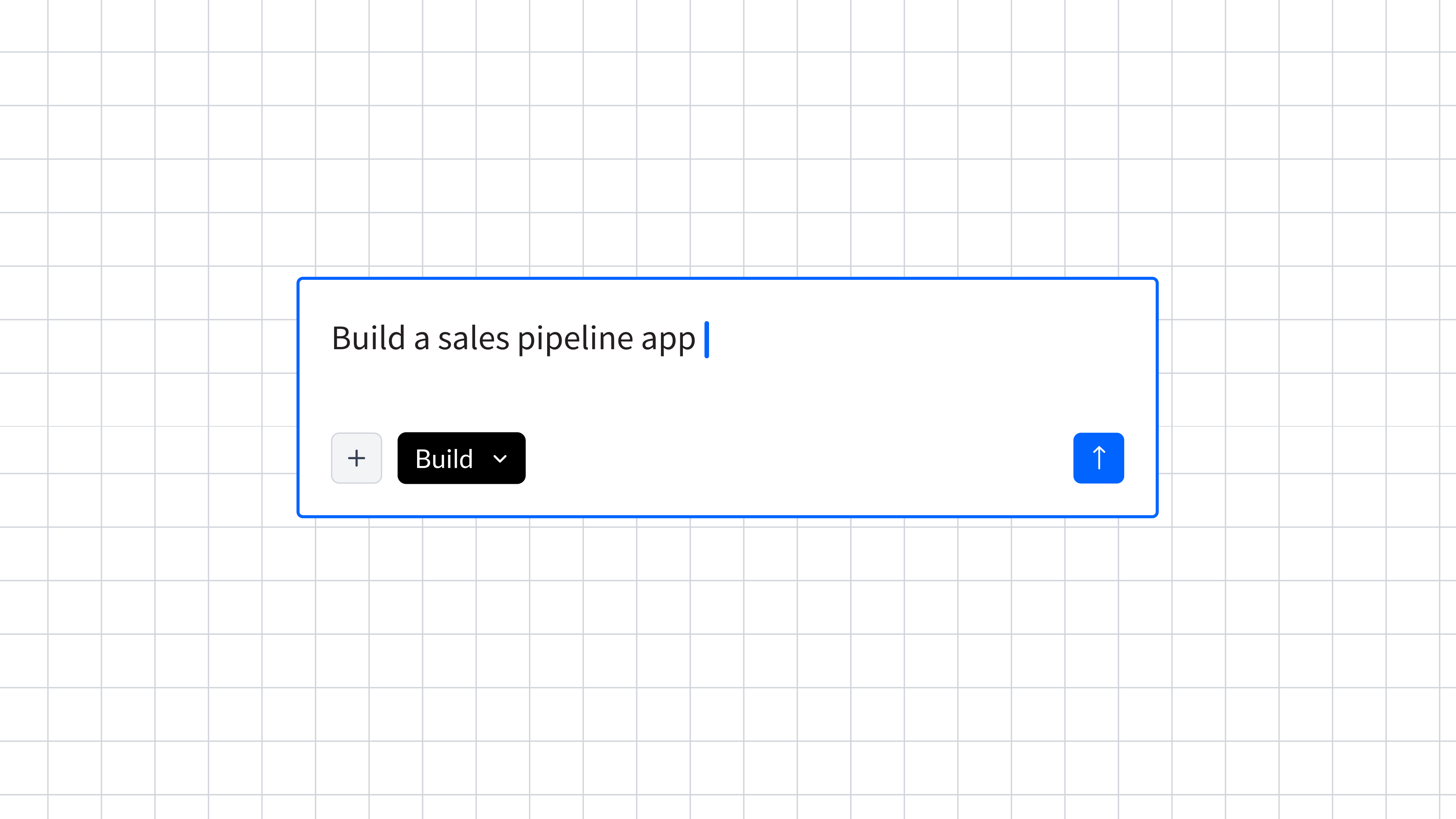
- Sigma Assistant to build apps, dashboards, and reports from natural language prompts
- The Sigma MCP Server and Sigma Skills for AI coding agents so anyone can get answers—or build assets like data models—directly from the UI of their preferred AI assistant.
And there's much more to come.
Where Sigma is going next
Sigma's next year is about making the runtime environment smarter and easier for anyone to use, so that vibe coding in the secure and governed system becomes an employee's first choice—not just an IT mandate. Here's what we're prioritizing:
More context for AI
The beauty of a platform like Sigma is that every team at your company can use it to build their workflows, dashboards, and AI-powered applications. This means Sigma contains deep context about how your business works, from the naming conventions behind Finance tables to the automated workflows set up by Marketing, to the comments left by the Sales team in the Customer 360 dashboard. This added workspace context makes AI in Sigma—or AI connected to Sigma via the MCP Server—more accurate and informed than AI simply pointed at a warehouse table. As we move forward, we'll ensure that even more Sigma artifacts are available to AI, so it has the critical business context to produce more effective, comprehensive outputs.
Make it easier to build the next app
Somewhere in your company right now, there is a person who built a Customer Success Scorecard last year and spent a week getting the joins right. Somewhere else, someone is about to build a similar app and spend another week getting the same joins right. With Sigma Assistant, the value of the first person's work is acknowledged and applied to the second person's work before they ask for it. Employees will get to better outputs faster, with the context of what their colleagues have already worked on.
Right model for the job
Sigma's job will be to read each question as it comes into the AI and route it to the model best suited to answer. The most expensive model on the market is often the wrong model for that job: too slow on simple translations, too expensive on questions a smaller model would answer better. Going forward, we'll automate the selection of the right model so users don't have to do the heavy lifting of comparing model speed and cost.
Coding agents that build Sigma
Today, your engineers use Cursor, Claude Code, Codex, or Snowflake Cortex Code to write SQL. They can also use their favorite coding assistant to plan, create, and deploy Sigma data models. The next step is for those same agents to build complete AI Apps in Sigma, including dashboards and workflows. These assets will get deployed directly into Sigma's governed runtime — permissioned, audited, and ready to run from the start.
More autonomy, more controls
Sometimes you want humans in the approval process, and other times you'll want full automation. Sigma will give agents permission to act on changes in your data. These agents will include audit trails so IT can replay and trigger rollbacks when behavior appears wrong. For example, when inventory drops from 50 units to 40 units at 2 a.m., the Sigma Agent watching that table catches the change at 2:01 a.m., places the reorder, and adds every step to that audit trail.
The future of work is your team building software
The companies that win the next decade will be the ones whose employees can build whatever they need, whenever they need it, without anyone losing sleep over it. The losing version is the one where IT believes it has things under control, only to find out later that it doesn't.
The AI runtime is now production infrastructure at more than 2,000 companies, including Fortune 10 companies. They are running Sigma Agents on data they've spent years securing, vibe coding applications their teams will rely on next quarter, and using Sigma Assistant to make their analyst and business teams increasingly multi-threaded and increase their capacity. The capital funds what comes next. The work continues.
Your company is already vibe coding. Do it on a platform you can trust.
—
To learn more about building AI Apps and agents on a governed runtime, schedule a Sigma demo.