Reflecting on 4 Years of Sigma Earning Snowflake’s “Partner of the Year” Award

I had been at Sigma for just over eight months when I walked into my first Snowflake Summit in 2022. Most of those eight months had been spent heads-down building the Sigma-Snowflake partnership, so Summit felt like a coming-out moment. I was still learning the ecosystem, still figuring out where we fit in it.
On day one, I was sitting in the theater at the partner summit when the BI Partner of the Year award was announced. I watched a team walk on stage and collect it. They had won it five consecutive times, and the room was warm for them. Something shifted in me sitting there. Not jealousy, exactly. More like clarity. I turned to my teammates and told them we were going to win that award the following year.
They did not particularly believe me. Sigma was a 200-person company at the time, with roughly a twentieth of the joint customers the winner had built over five years. The product was exceptional, I had known that since the first time I used it. But as a smaller, newer company, we still had a lot to prove.
What followed was twelve months of constant travel, evangelizing Sigma to every Snowflake team we could get in front of, and signing hundreds of joint customers who needed both platforms to do the work they were trying to do. A year later, we were back in Las Vegas. And we won the 2023 Business Intelligence Partner of the Year.

I had not felt anything like that moment since I was a kid playing sports. There’s something about setting a goal that nobody else believes in, then going and doing it anyway.
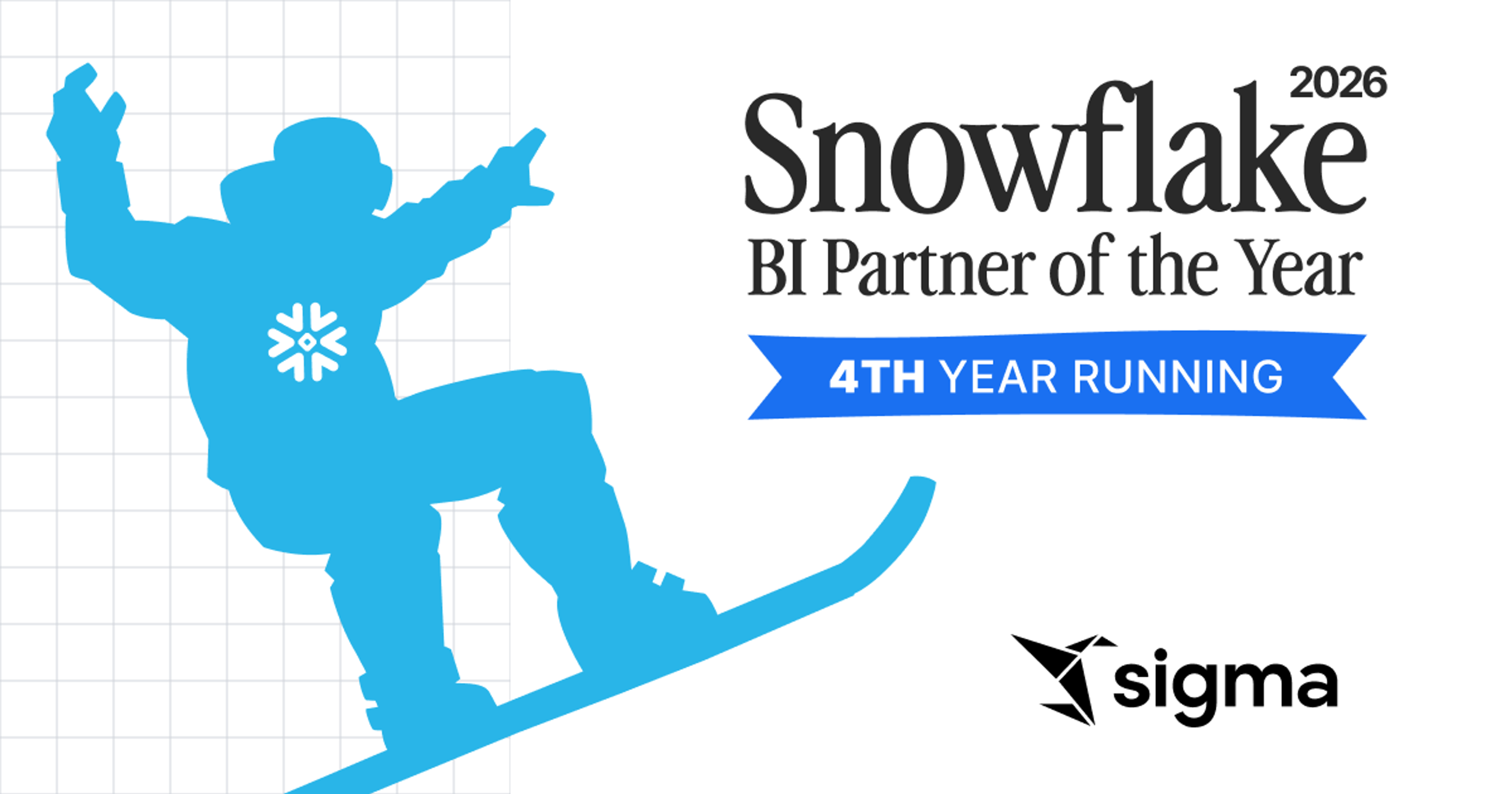
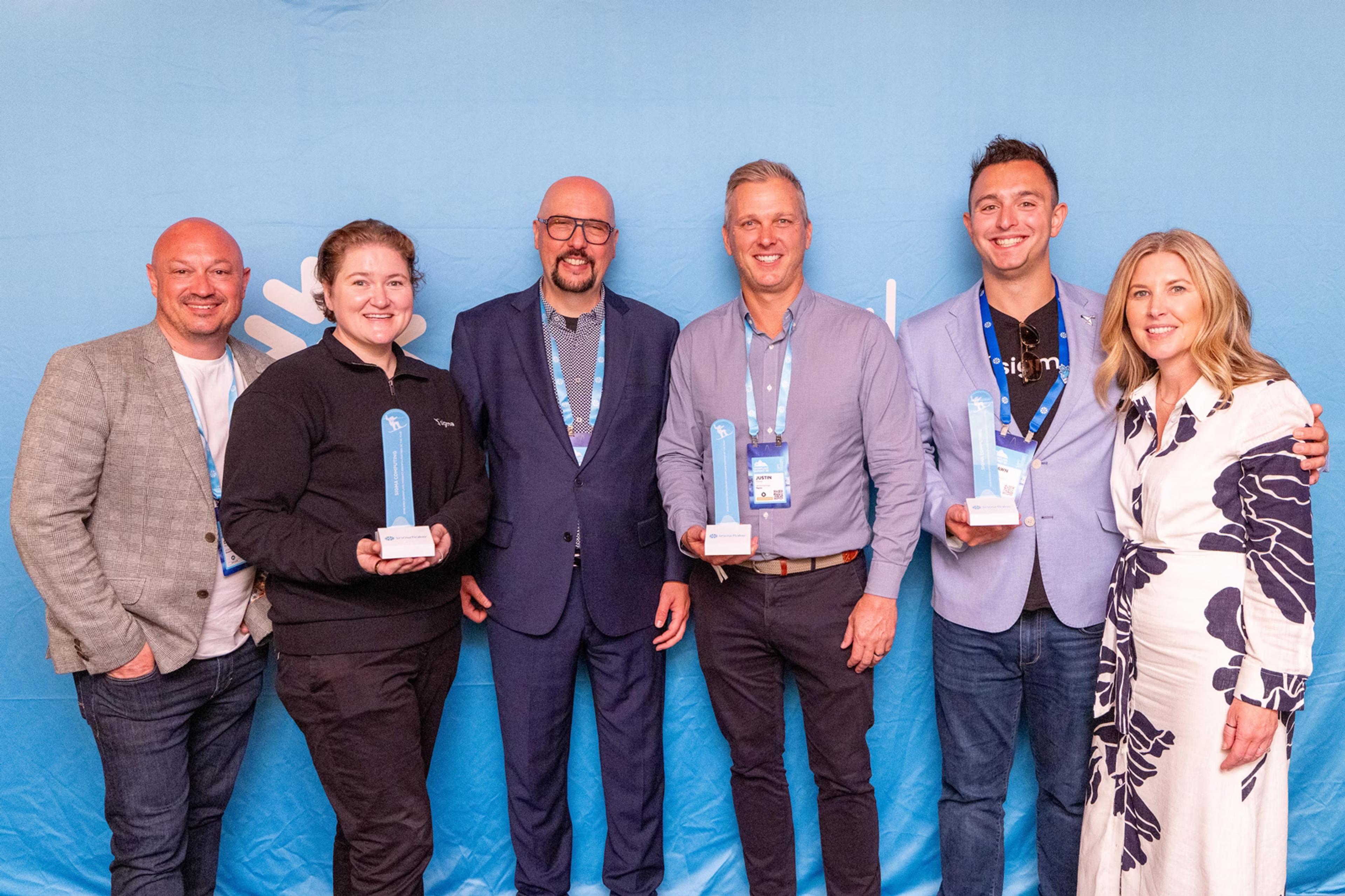
That was our first time earning Snowflake’s Partner of the Year award. This year, we won our fourth in a row. Winning it once felt like a statement. Winning it four times is something different: it means the first time was not a fluke, and the years that followed were not coasting. The Cloud Data Product Partner of the Year goes to the partner that has driven the most meaningful joint value for Snowflake customers. It is not a marketing award. It is a reflection of what actually happened in the field, in the product, and in the hands of customers.
We are still not done.
How We Got Here
Holding this award four years in a row comes down to three factors:
- product alignment
- a joint go-to-market we have never let up on
- and customer adoption that has compounded every year
On the product side, we made a decision early that shaped everything after it: Sigma would do our best to show up at every major Snowflake product moment as a build partner, not a bystander. That commitment is why we have been a launch partner year after year, and why the integrations we ship are deep rather than cosmetic.
From a go-to-market standpoint, we’ve spent constant time in the field alongside our Snowflake counterparts, making sure both sides understood what a joint win looks like. In recognition of this partnership, Snowflake presented another award to Sigma this year: the EMEA Product Growth Partner of the Year.
What Sigma Brings To Snowflake
Three capabilities sit at the core of why customers choose Sigma on Snowflake, and keep choosing it.
Writeback via Input Tables
The first is Input Tables in Sigma. Before Input Tables, a business user could pull up a Sigma dashboard sitting on top of a billion-row Snowflake dataset, spot something that needed action, and then do what everyone did: export to a spreadsheet and handle it offline. Input Tables—our writeback feature—closed that loop. For the first time, users could write data back into Snowflake directly from Sigma, turning an insight into an action without ever leaving the platform. Our joint customers ran with it. That demand pushed us to build a full actions framework, and what followed was a wave of line-of-business applications built in Sigma that finally replaced the desktop spreadsheets and Access databases that had been holding companies together with duct tape for decades.
Accessibility for all users
The second is the accessibility of the platform itself. Sigma's spreadsheet-like interface puts the full power of Snowflake in front of the people who actually need it most, without requiring a single line of SQL. That includes Snowflake's Semantic Views: the metrics and business definitions your data team has already built surface directly in Sigma, so end users work with concepts they recognize rather than tables they have never touched. We have said for years that if you can write a select statement on it in Snowflake, Sigma can interact with it. Semantic Views are the latest proof of that.
Productivity gains with AI
The third is Sigma Agents. As Snowflake built out Cortex AI, our customers needed a way to bring those capabilities into the workflows they had already built in Sigma. Sigma Agents gave them that on-ramp, not just exposing Cortex Agents but enhancing what they could do. An agent can now interact directly with the same Input Tables that power a workbook's workflows, which means customers can build genuinely agentic workflows, start to finish, in one place.
AI Innovation, Together
Sigma's position as the AI runtime layer for business workflows did not happen overnight. It was built step by step alongside Snowflake's own AI evolution.
Sigma + Snowflake Cortex Functions
When Snowflake released Cortex Functions, it opened the door to LLM inferencing directly inside the warehouse. Sigma moved quickly to surface that capability in the way our customers already work: rather than writing code to call a model, a business user could add an LLM call to a column the same way they would write a SUM or an AVERAGE. For enterprise teams that had been waiting for a way to use AI on their data without sacrificing governance, this was a major unlock.
Sigma + Snowflake Cortex Agents
When Snowflake went further with Cortex Agents, enabling curated agents to reason across both structured and unstructured data sources, we faced a new design question: how do you bring that power to business users in a way that fits how they actually work? We built two answers:
- Sigma Agents live inside the workbook itself, letting users bring AI directly into the workflows they have already built.
- Sigma Assistant serves as an exploratory starting point, helping users get to answers faster without knowing exactly where to look.
Both features have seen rapid adoption because they meet customers where they already are rather than asking them to go somewhere new.
Sigma + Snowflake CoCo (Cortex Code)
The most recent chapter is Cortex Code. When Snowflake released CoCo, we saw an opportunity that had not existed before: the ability to build and interact with Sigma artifacts from directly inside Snowflake. We built integrations to support creating and modifying Sigma data models and workbooks from within CoCo, and the response from customers and the broader community was one of the strongest we have seen for any launch in Sigma's history.
In fact, our deep commitment to building with CoCo is part of why we earned another recognition from Snowflake this year: the CoCo Adoption Award for leading adoption and delivering transformative results for customers via Snowflake's coding agent and control plane for builders.
What's Ahead
The next chapter for Sigma and Snowflake together is about raising the ceiling on what customers can build.
Sigma is actively building toward a code-back solution that will do two things at once: expand the complexity of the applications our joint customers can create, and open up new agentic experiences for building those assets. All of it lives inside the governed and secure environment that the Sigma-Snowflake ecosystem provides. The power gets bigger. The guardrails stay in place.
What the joint product looks like in three years is genuinely hard to predict. The pace of AI development makes telling the future even more difficult. What is not hard to predict is Sigma's role in it. Our team set out to build the most effective front end for interacting with data at scale. Every product decision we have made comes back to that. As Snowflake continues to develop and open new ways for customers to interact with their data, Sigma will be there to make those capabilities accessible to the people who need them most.
That has been true every year of this partnership. We have no plans to stop.
Four Years In
In 2022 I sat in a theater at Snowflake Summit dreaming of what our partnership could become. We had the ambition. And we had the right team.
Now, four years later, our position in the ecosystem reflects a group of people at Sigma who cared enough to keep asking the same question, month after month and year after year: “What does Snowflake need from us right now? What moves the needle for our joint customers?” Those questions, and the relentless execution that followed it across every part of Sigma, is how you end up winning Partner of the Year four consecutive times.
I think about the team that walked on stage in 2022 with five of these awards. At the time that number felt unreachable. It does not anymore.
We’ve got more work to do.