
Why teams choose Sigma vs Anaplan
Plan where your data lives
Budgets, forecasts, and assumptions write to your warehouse, next to the actuals they depend on.
Live actuals, no data hub
Plans read live from Snowflake, Databricks, BigQuery, and Redshift, with no staging model to load.
Down to the transaction
Drill from a plan line to the rows behind it, on billions of rows of warehouse data.
Built by the people who plan
More than 200 spreadsheet functions and Excel-style pivots, so analysts build the models they use.
Workflows and agents built in
Actions route inputs, update rows, and call APIs. Sigma Agents can ask for approval before they write.
One platform beyond planning
The same governed data powers reporting, data apps, and embedded analytics across the company.
Planning, analytics, and AI apps on one governed platform
Plans that write to your warehouse
Enter budgets, forecasts, and assumptions in Input Tables. Each change lands in a governed schema in your warehouse, with an audit history of who changed what and when, kept as long as your warehouse keeps it.
Actuals and plan on the same live data
Sigma queries your warehouse directly, so budget versus actual always uses current numbers. Drill from a variance to the transactions behind it, across finance, sales, and operations data.
What-ifs with the controls you choose
Feed drivers into formulas with controls, keep scenario assumptions in Input Tables, and save a version tag when a plan is final. Start from App Library templates for budget variance, headcount, and expense forecasting.
Route, approve, and automate on live data
Actions insert and update rows, call stored procedures and APIs, and hand work to Sigma Agents. Set an agent to require approval before it writes, so sign-off stays with the plan owner.
Plan in your warehouse with the spreadsheet finance knows
FEATURE COMPARISON
As of November 9, 2026
Sigma
Anaplan
Where plan data lives
In your warehouse. Input Tables write to a governed schema next to your actuals.
In Anaplan models, on the Classic or Polaris engine set when a workspace is provisioned.
Warehouse connection
Live queries on Snowflake, Databricks, BigQuery, Redshift, and more. No extracts.
Anaplan Data Orchestrator imports data from Snowflake, Databricks, and other sources into Anaplan.
Plans back to the warehouse
Already there. Every input is a warehouse table your team can query through a view.
Data Orchestrator pipelines write back to Snowflake when columns and data types match. CloudWorks exports to cloud storage.
Transaction detail
Drill from a plan line to row-level transactions on billions of rows.
Anaplan's Planual guidance stages data in a Data Hub workspace, at the granularity loaded from source.
Scenarios and versions
Controls drive what-if values, Input Tables hold assumptions, and version tags save final plans.
Versions are a default dimension for comparing scenarios in a model.
Formulas
More than 200 spreadsheet functions and Excel-style pivots, plus SQL and Python in the warehouse.
Line-item formulas in modules built from lists, line items, and timescales.
Who builds models
Analysts who already work in spreadsheets, with governance kept in the warehouse.
Model builders, supported by Anaplan's model-building certification path.
Workflow
Actions insert, update, and delete rows, call APIs and stored procedures, and run Sigma Agents.
Anaplan Workflow with page, decision, and approval tasks and reusable templates.
Analytics on all your data
Dashboards, pivots, and drill down on any warehouse data, plus embedded analytics for customers.
UX boards and report pages, with Anaplan XL Reporting as a separate Excel and web product.
AI
Sigma Assistant and Sigma Agents work on live warehouse data, with optional approval before an agent writes.
CoModeler plus Finance, Sales, Supply Chain, and Workforce Analyst agents.
Security and audit
Enforces warehouse row- and column-level policies. Input Table audit history lives in your warehouse.
Model roles and SSO. Audit logs are kept for 30 or 90 days by edition, with SIEM export.
Beyond planning
The same platform runs BI, data apps, embedded analytics, and agents.
Built for connected planning across finance, supply chain, sales, and workforce.
Trusted by 2,000+ leading enterprises around the world









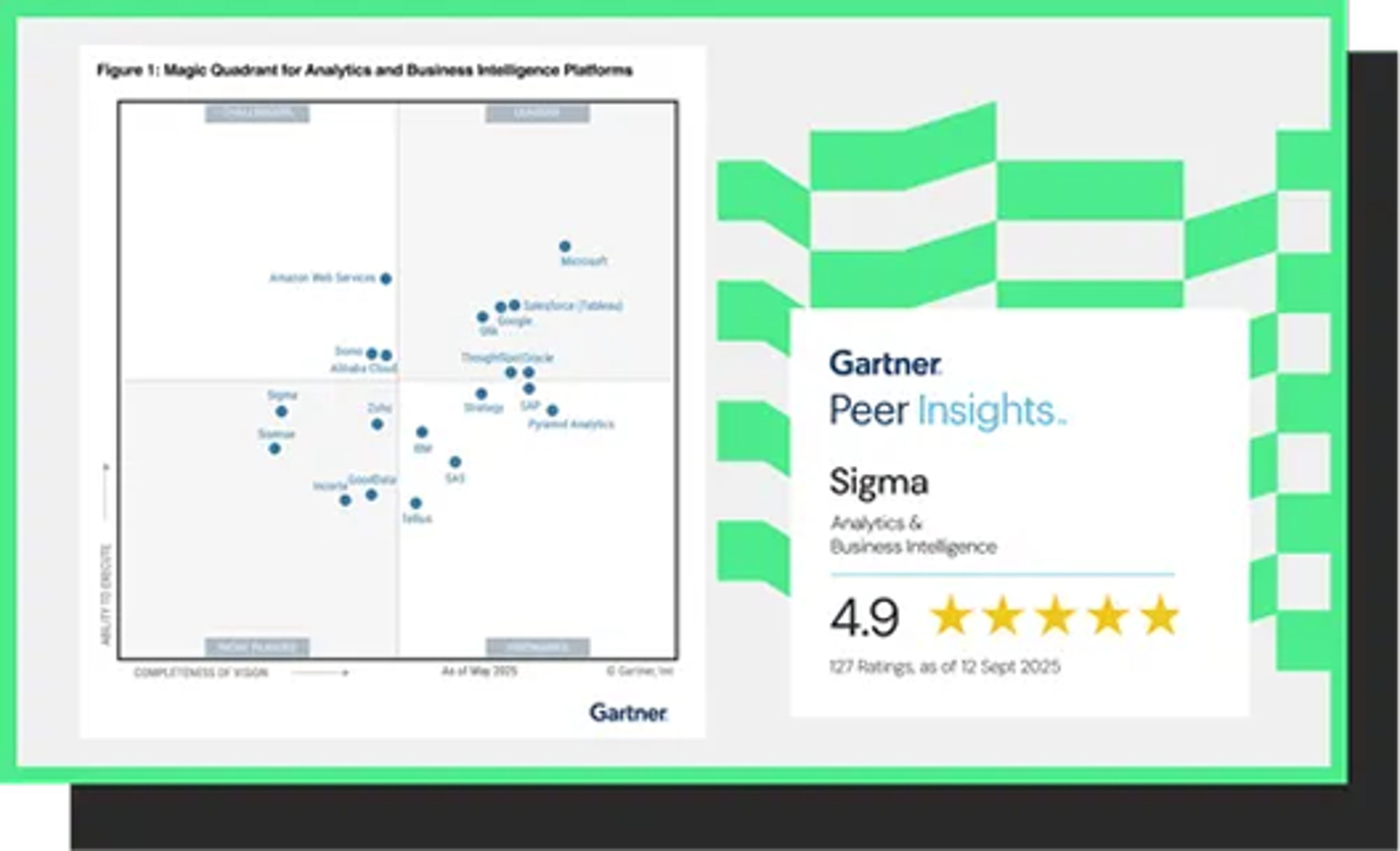
The 2025 Gartner® Magic Quadrant™ for Analytics & Business Intelligence
Read about Sigma's first-time recognition in this report.
Don't take it from us, take it from our customers
“Writeback changes the game. It lets us incorporate user inputs directly into our workflows, without spinning up a separate system.”
Albert Obeng
Head of Technology for Private Alternatives, AB CarVal
Top teams choose Sigma.
See for yourself. Sigma is a G2 crowd favorite, backed by countless reviews.

Additional resources

Automate 50% of finance: a guide for the office of the CFO
Learn why 50% finance automation is reachable now and how Sigma and Databricks give your team one governed place to start. Get the guide.

Automate the Manual Work of FP&A with AI and Sigma
Automate manual FP&A work with AI, governed data, and workflows to streamline reporting, analysis, and recurring finance processes.
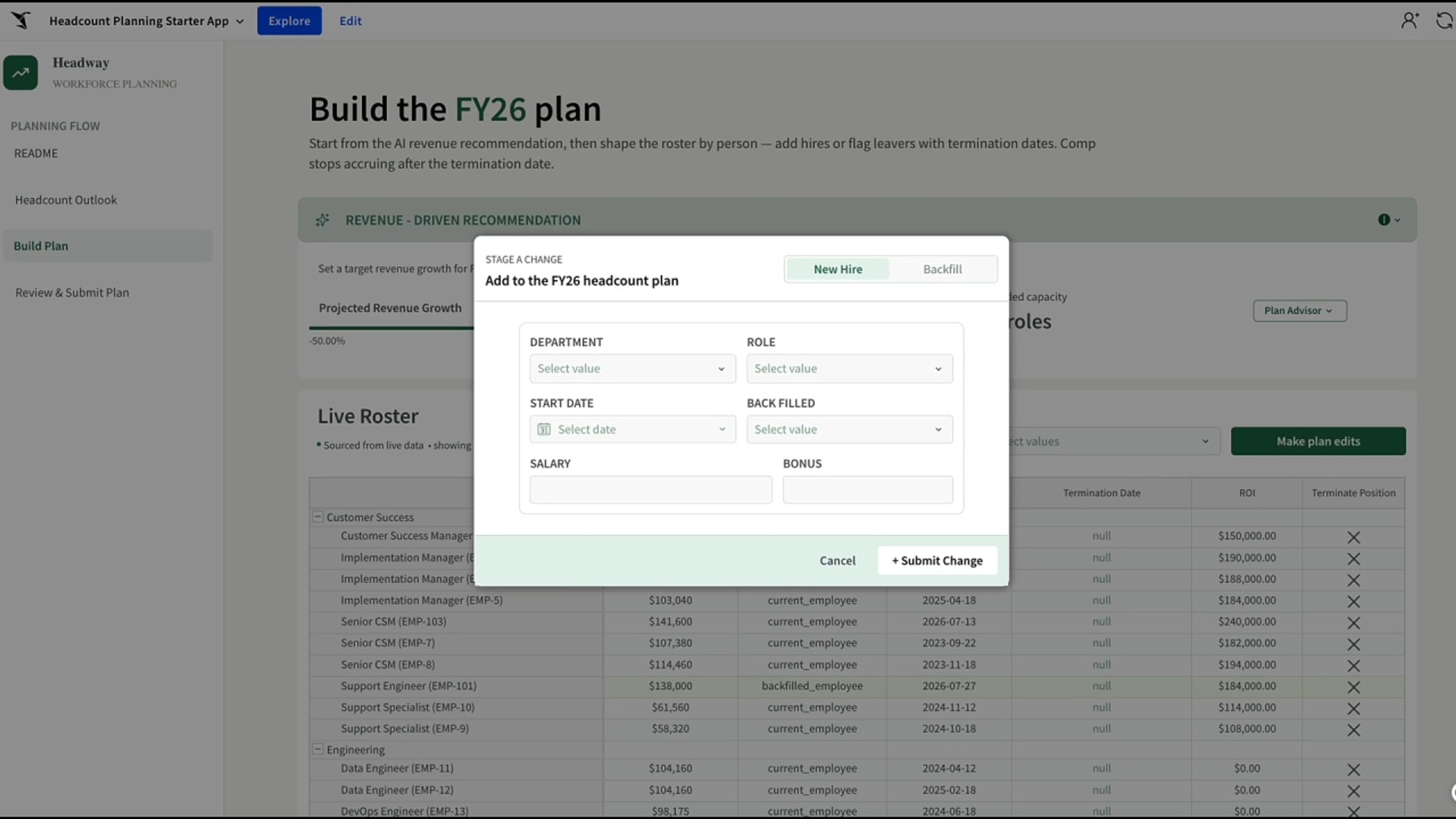
Headcount planning
Build a headcount plan tied to your revenue goals, with AI hiring recommendations and approvals that update the roster live, instead of a spreadsheet that drifts from the plan.
Ready to see the difference?
Join thousands of data teams who have transformed how they work with Sigma.