From Insight to Action: Introducing Sigma Agents

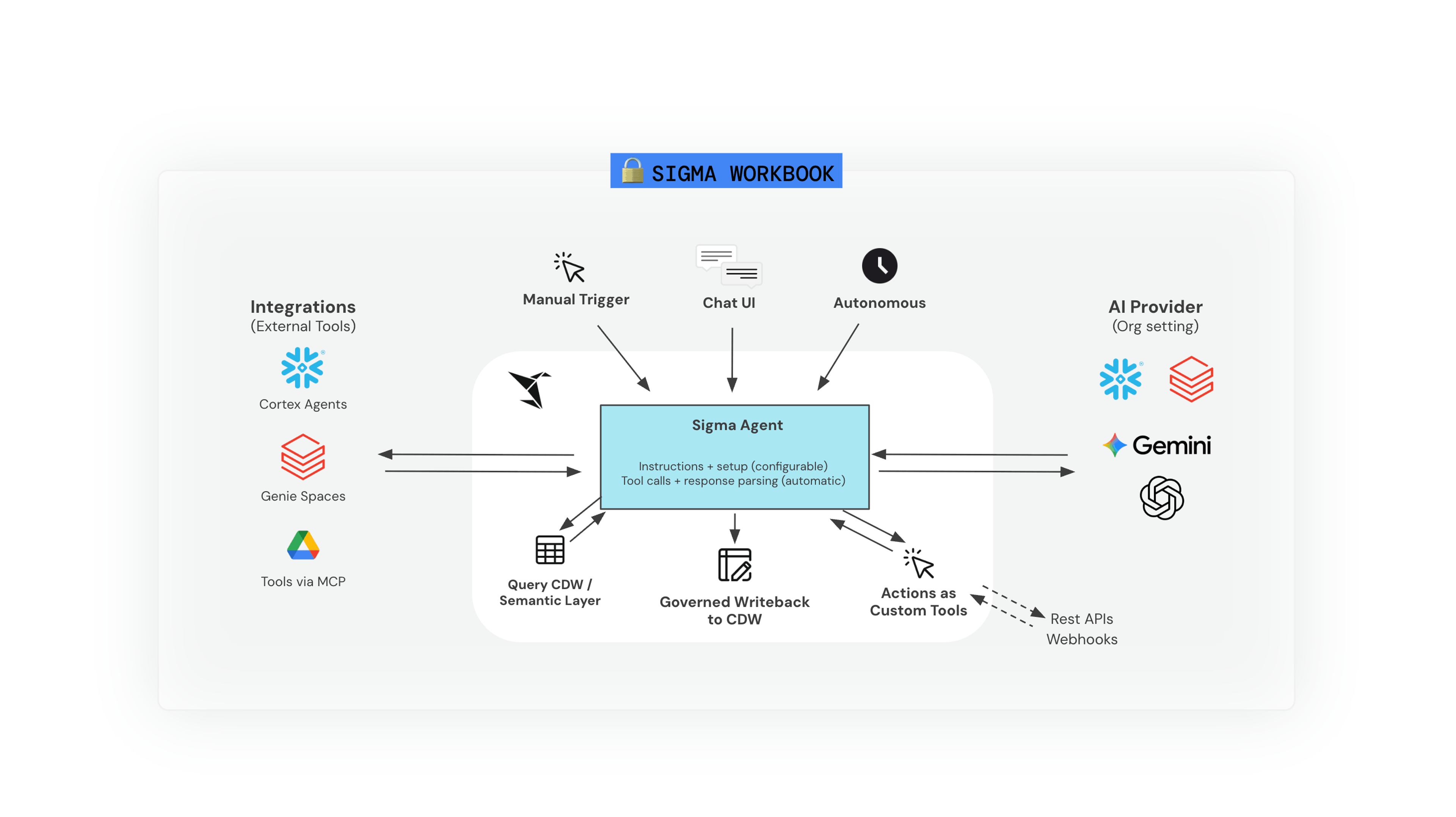
At our latest product launch, we announced Sigma Agents: autonomous and conversational AI agents built natively inside Sigma workbooks. They analyze your live warehouse data, act on what they find, and write results back without a separate AI platform, without bolted-on tooling, and without bypassing the governance model your team already relies on.
Think of Sigma Agents as configurable reasoning systems that live where your data already lives. You define the instructions, the data sources, and the actions available. The Sigma Agent handles the reasoning and then does something about it.
The gap that Sigma Agents solve
Business intelligence has had a dirty secret for years. It's built to answer questions and not just to solve problems.
The workflow has always looked like this: you open a dashboard, you see what happened, you close the tab, and then you go fix it somewhere else. You copy a number into Slack. You export a list and manually paste it into your CRM. You write a ticket for the analyst team to go deeper. Every time you find an insight, you immediately leave the tool that gave it to you to act on it.
That gap — between knowing and doing — compounds:
- A finance team spends hours chasing down incomplete expense submissions over email because no system connected the finding to the follow-up.
- A sales rep manually audits their territory accounts every Monday morning looking for engagement signals that a computer could surface in seconds.
- A marketing manager runs the same report on campaign performance three times a week because there's no reliable way to be notified only when something worth acting on actually happens.
Generative AI made this worse in a subtle way. Early LLMs were impressive at generating text — predicting the next token, producing a summary, drafting an email. But they had no agency. They couldn't reason through a multi-step business process, connect to external policy documents, or take a deterministic action on your behalf. They generated words. That's not the same as getting work done.
The shift to agentic AI changes the equation. Agents don't just generate output — they reason, decide, and act. That's the foundation Sigma Agents is built on.
"Almost every company has a different way that they want to work, and they need something that fits how they think about the world. Sigma Agents uniquely allow our customers to create that AI experience themselves."— Hassan Karaa, SVP of Product, Sigma Computing
3 ways Sigma Agents change how work gets done
1. Analyze: Instant Reasoning Across Complex Data
Most BI tools require you to know what you're looking for before you can find it. You build a chart, pick dimensions, apply filters. For well-structured questions, that works. For wide, messy data — a 200-column Salesforce export, a multi-source sales pipeline view — it breaks down fast.
Sigma Agents let you point the agent at your data and ask in plain language. It reasons across the available tables, surfaces patterns you wouldn't have looked for, explains what's driving metric changes, and responds in seconds without SQL or an analyst in the middle. This is particularly powerful for datasets that have historically been hard to get value from: anything wide, anything with multiple related sources, anything where the question "what matters here?" has never had a clean answer.
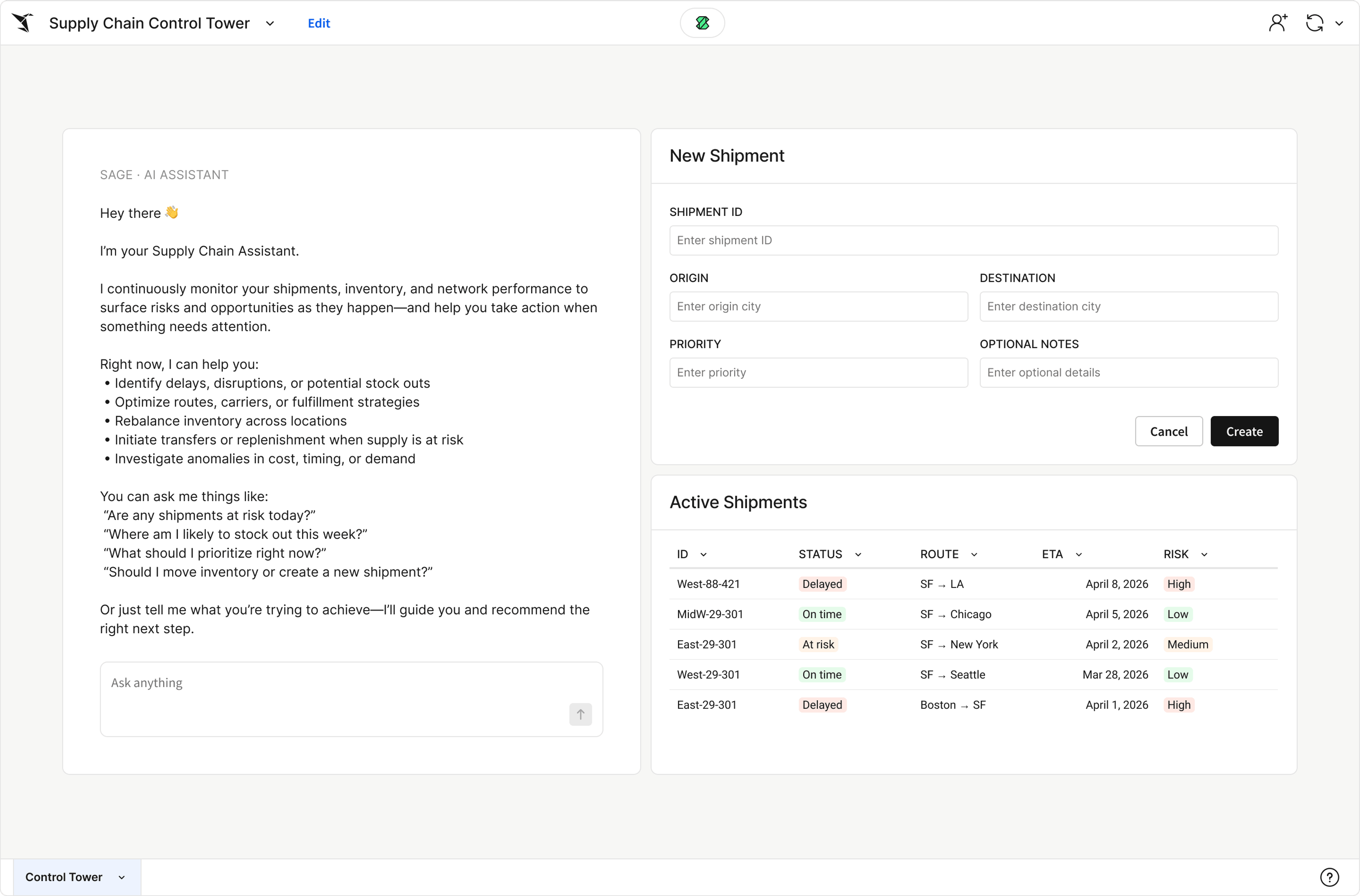
The business outcome: Individual contributors get answers at the speed of a question. Analyst teams stop fielding repetitive data requests and focus on higher-order work.
2. Automate: Sigma Agents That Work While You Sleep
The pattern of checking the same metric every morning — opening a workbook, scanning a dashboard, asking the same question you asked yesterday — is a workflow tax. It accumulates invisibly until someone sits down and calculates how many hours a week the team spends on manual monitoring.
Autonomous Sigma Agents run in the background on a schedule or trigger. You define what matters; the agent watches until something does. A prospect visiting your site three times in a week triggers an alert and creates a follow-up task. An expense report that hasn't been approved in 48 hours prompts an automatic message to the approver. A weekly usage summary gets assembled, formatted, and delivered to stakeholders — without anyone spending six hours gathering data.
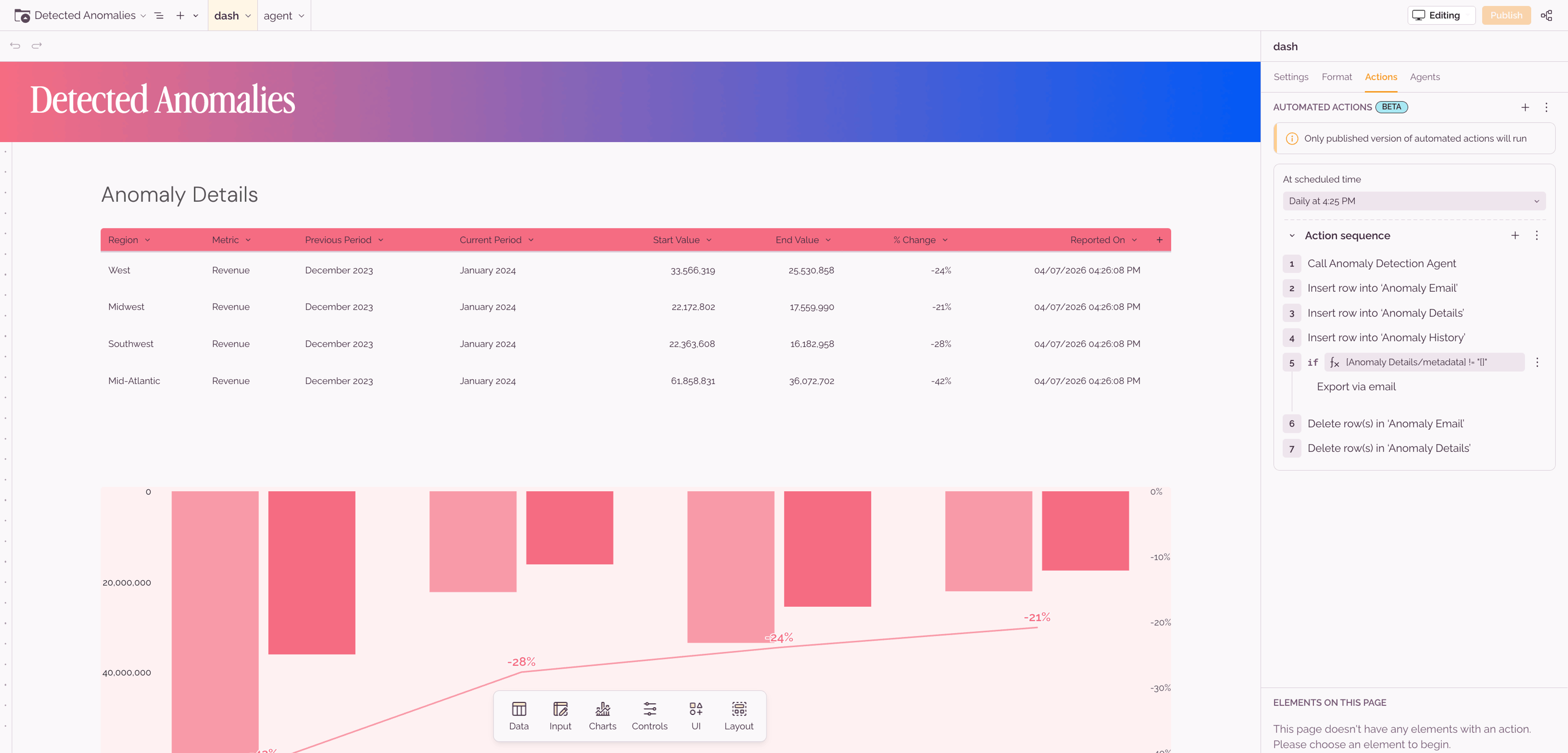
The business outcome: Critical workflows run consistently without requiring someone to remember to run them. Teams scale their operating capacity without scaling headcount.
3. Act: Human-in-the-Loop for What Matters Most
Not every workflow should be fully automated. When a campaign list is about to push to HubSpot, someone should review it first. When an expense report is ready to submit, the employee should confirm the details. When an agent surfaces an anomaly in purchasing behavior, a human should decide whether to escalate.
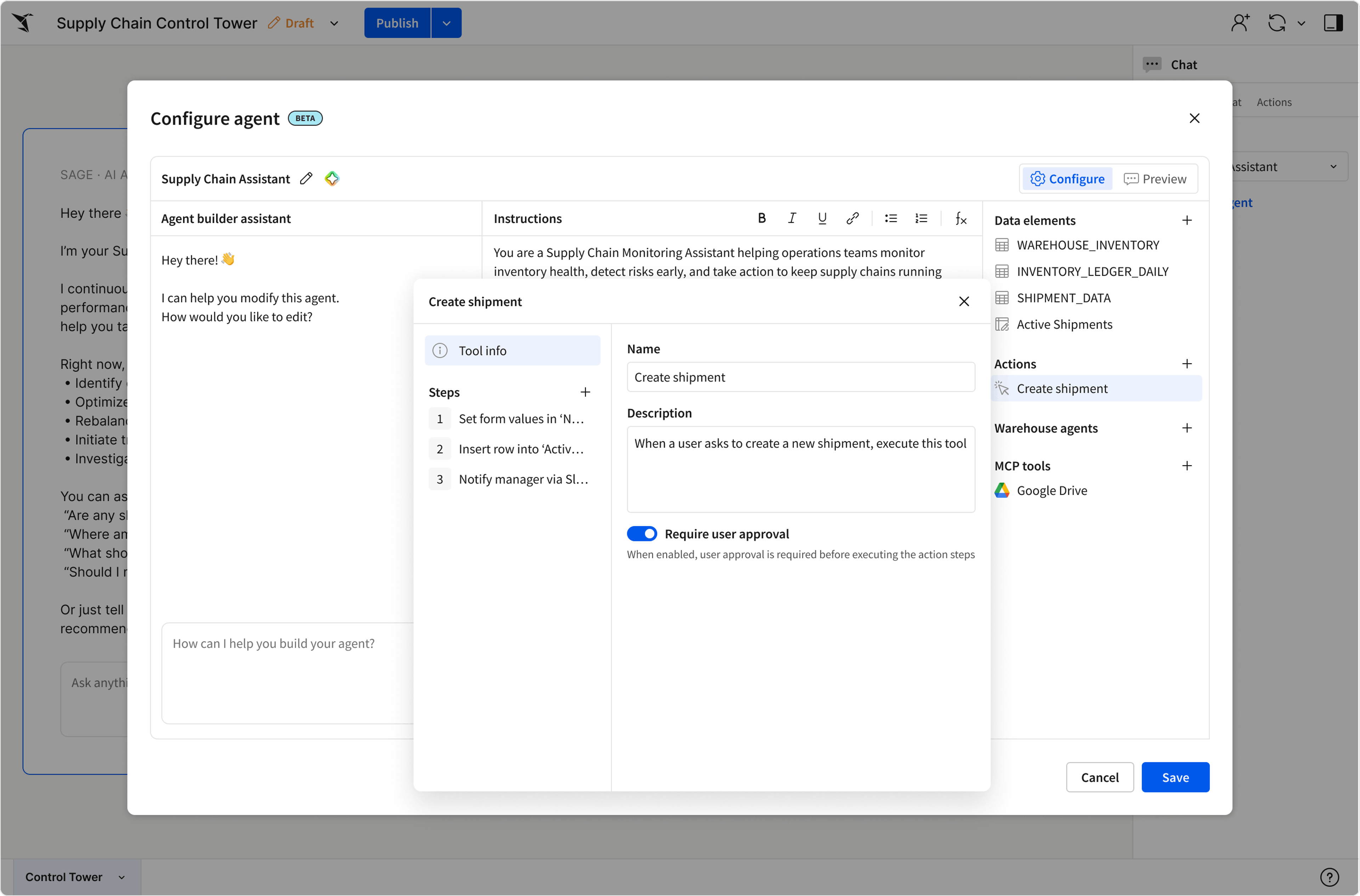
Human-in-the-loop agents — what Sigma calls “hybrid agents” — do the analysis, assemble the structured output, and hold for approval before anything moves downstream. The agent does the reasoning work. You retain control over the final action. This is where writeback to the warehouse becomes critical: the Sigma Agent can draft structured results into an Input Table, make them reviewable, and only push them to an external system like Salesforce or HubSpot after a human confirms.
The business outcome: High-stakes workflows get the speed of automation with the accountability of human review. Nothing moves without someone saying yes.
How Abnormal AI cut manual forecast prep down to 5 minutes with Sigma Agents
At Abnormal AI, speed and security aren't a tradeoff, they’re foundational. Jessie Alibozek, who runs sales analytics, cut her CRO's Monday night forecast prep from two hours to five minutes using Sigma Agents. That speed doesn't come at a governance cost. Sigma Agents inherit five layers of governance: warehouse-level permissions, data model column security, Sigma account type restrictions, workbook-level access grants, and agent-specific data source scoping. Agents mirror user permissions exactly — if a user can't write to a table, neither can their agent. This isn't optional configuration. It's built into the platform. The result: faster decisions, full governance, and no compromise between the two.
What comes next
The three core Sigma Agents capabilities — analyze, automate, act — get more powerful as agents become more connected and more context-aware. What comes next is about making each one smarter, more connected, and more reliable over time.
Scheduled actions will enable anomaly detection agents to wake on a preset cadence, scan for irregularities, and send structured alerts before anyone has to ask. Multi-agent orchestration — where one Sigma agent can call a specialized sub-agent with access to a separate data domain — will enable more sophisticated workflows with clean separation of duties. Context management, configurable evals, and feedback mechanisms are in development to help agents become more reliable as they're used over time.
The shift from analytics to action is already underway. If your team has been waiting for a moment to move from asking questions of data to building workflows on top of it, this is it. Talk to your Sigma account manager to get access, or watch the product launch to see Sigma Agents in action.