Governed at the Source: Sigma's Native Integration with Databricks Unity Catalog Semantics


Your engineering team defines "Monthly Active Users" in Unity Catalog. Your finance team has their own version in a BI dashboard. Your ops team pulled a number from a spreadsheet last quarter. By the time these three figures land in the same board deck, someone is already on Slack trying to explain the discrepancy.
This is the metric consistency problem. It persists not because organizations lack good data, but because the definitions of that data keep getting recreated downstream—in BI models, in dashboard filters, in ad-hoc SQL queries—rather than enforced at the source.
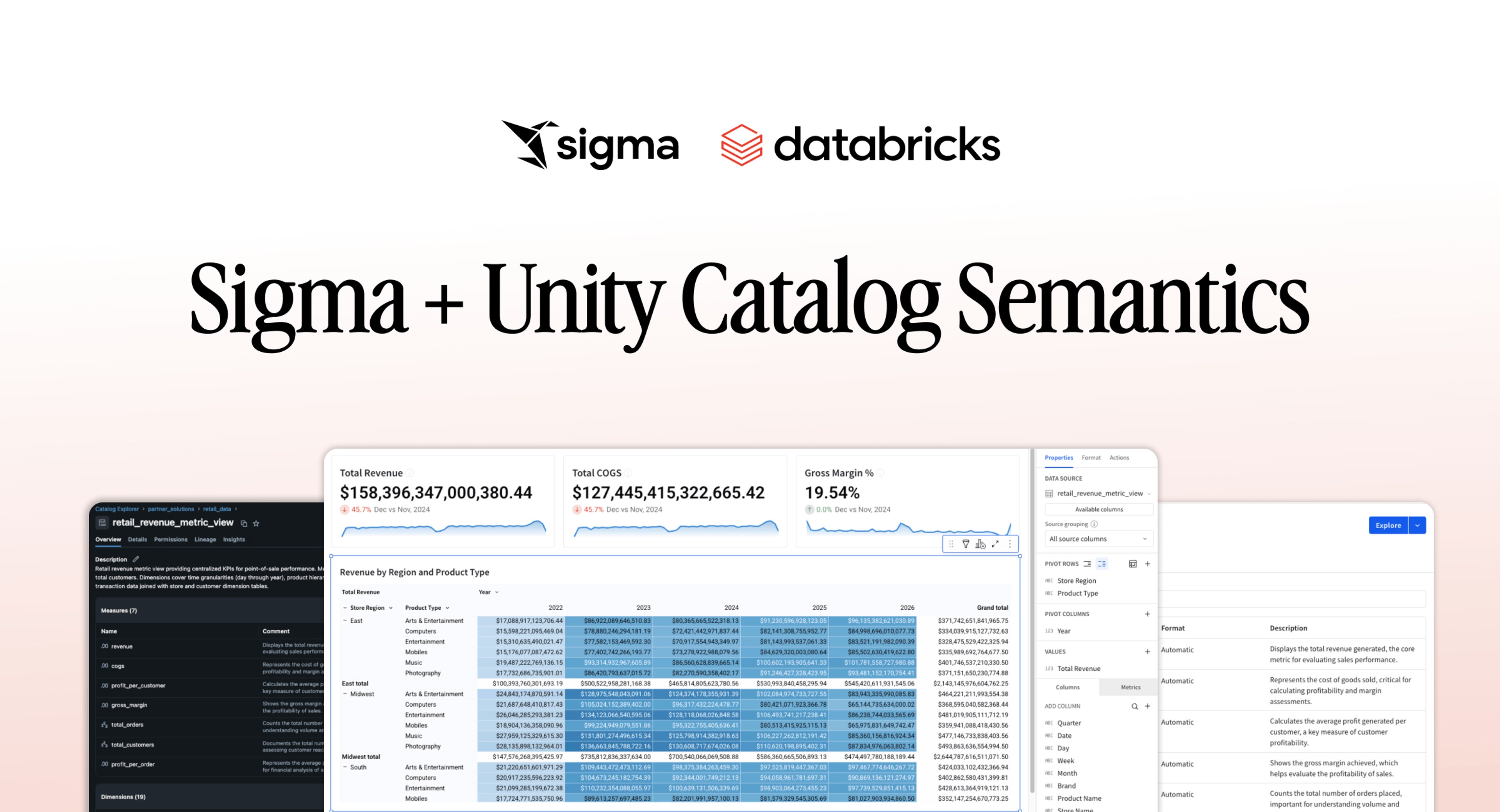
Databricks addressed this with the General Availability of Unity Catalog Business Semantics, and specifically Semantics: a way to define KPIs, dimensions, measures, and semantic metadata directly inside Unity Catalog, governed by the same access controls as your underlying data. Sigma natively integrates with UC Semantics, surfacing those definitions directly to your analysts and business users.
Note: This feature is currently in Private beta with Public beta expected in the coming weeks post-Databricks Summit. Reach out to your Sigma account team to request early access.
UC Semantics: Governed Business Logic at the Lakehouse Layer
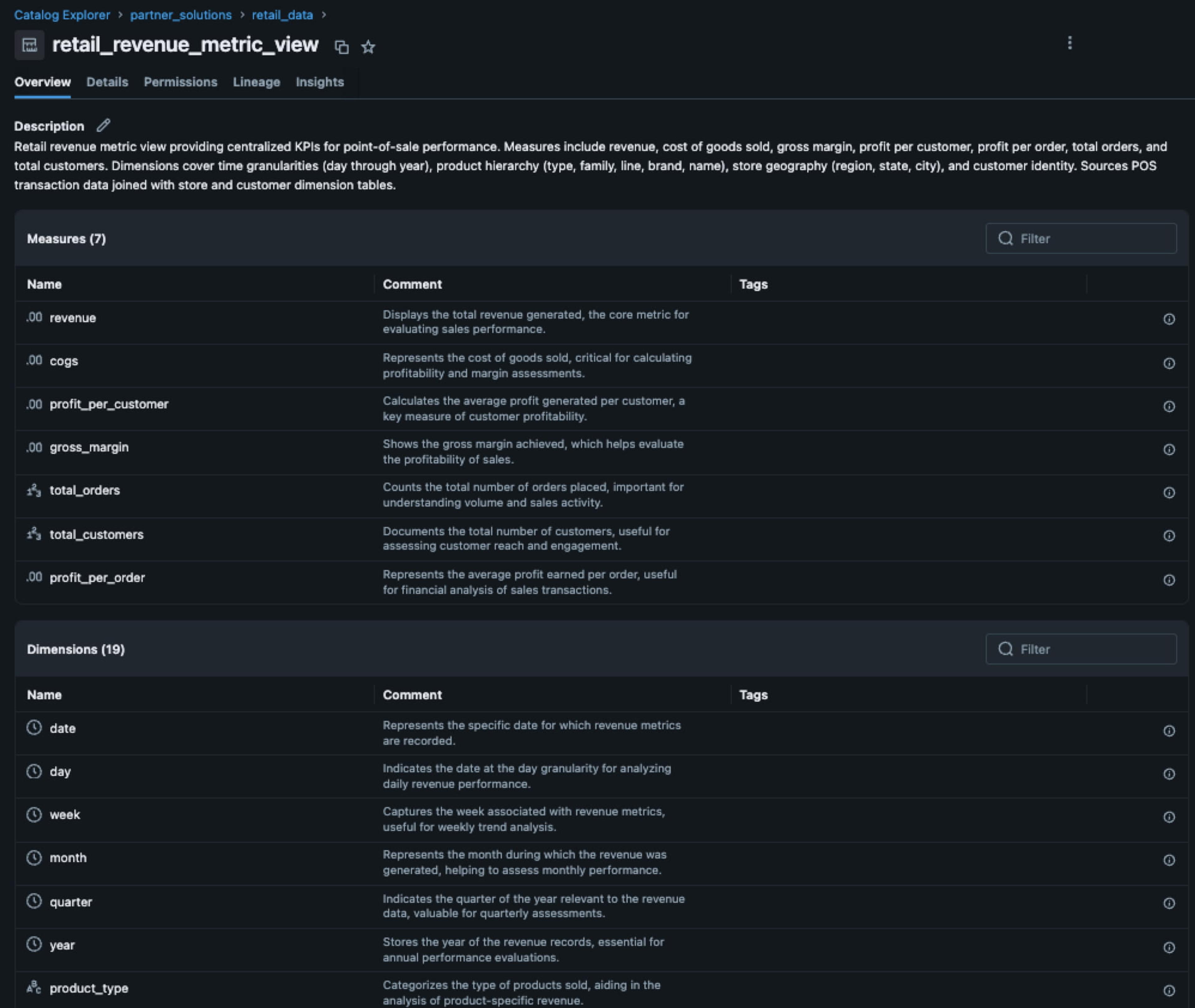
Using standard SQL, data engineers define measures, dimensions, display names, formats, and synonyms directly in Unity Catalog. The key architectural detail: Semantics don't pre-compute results in a separate store. They compile SQL deterministically at query time, so every consumer—dashboard, notebook, AI agent—executes the same logical definition and gets the same result. Permissions inherit directly from Unity Catalog access controls.
Semantics also carry semantic metadata—human-readable names, number formats, business synonyms—that make them legible to any interface that queries them, including natural language and AI-powered tools.
How Sigma Surfaces UC Semantics
Sigma queries UC Semantics in real time, directly through the Databricks connection. No ETL, no data movement, no sync pipeline.
First-class objects in the Connection Explorer
UC Semantics appear in Sigma's Connection Explorer alongside your regular tables and views. Dimensions map directly to columns in Sigma. Measures map to Sigma's native metrics. From a user's perspective it works exactly like any other data source, with the crucial difference that the logic behind every column is centrally defined and maintained by your data team in UC.
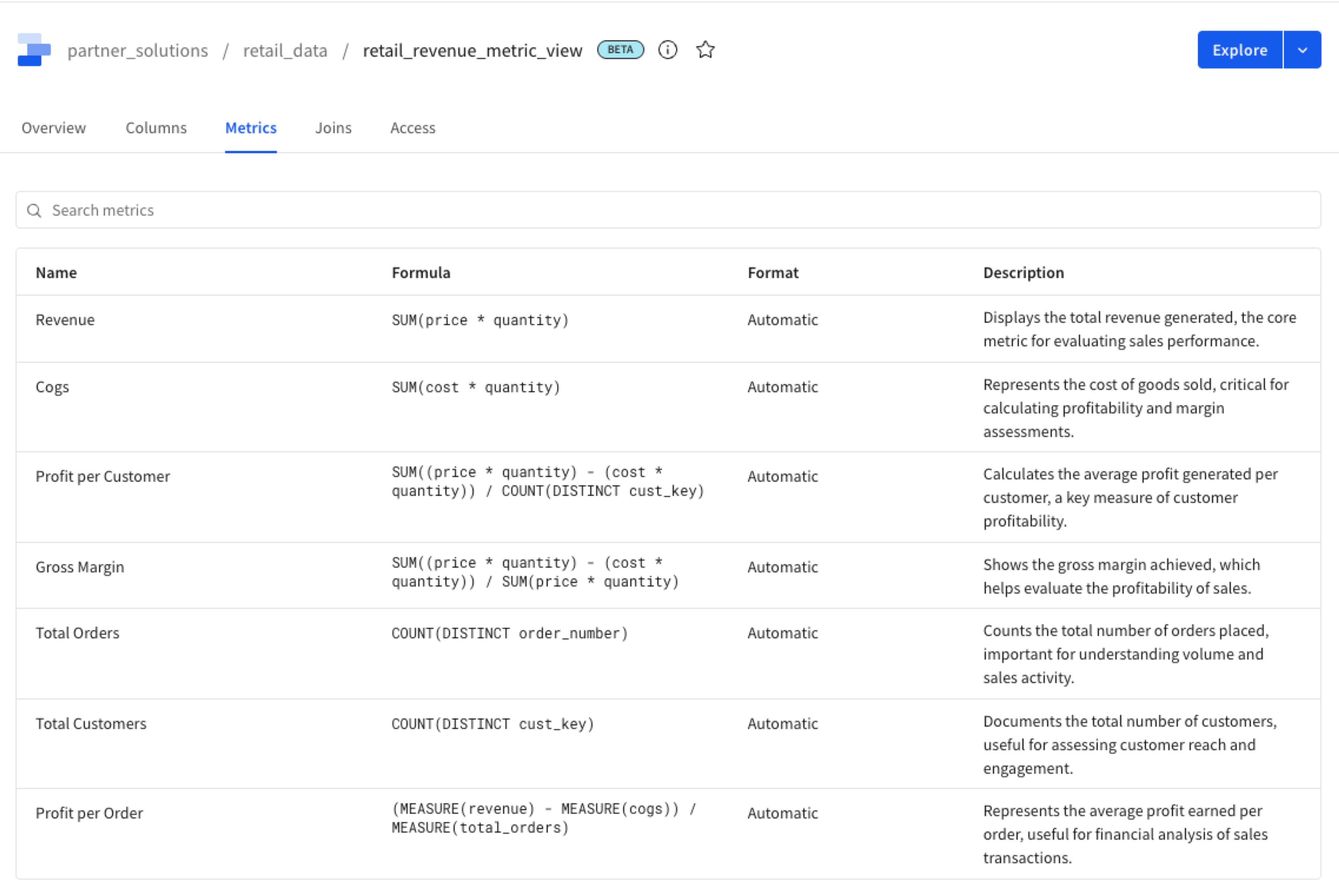
No pipeline. No lag. No version drift.
When a data engineer corrects a formula or adds a new dimension to a Metric View in Unity Catalog, every Sigma workbook backed by that view reflects the change immediately. No downstream ticket, no manual sync. For organizations managing hundreds of metric definitions across teams, this eliminates an entire category of maintenance work.
Governance that travels with the data
Because Sigma queries through the live Databricks connection, Unity Catalog's security protocols apply at execution time. Row-level security, column-level permissions, and access policies configured in UC are enforced the moment a query hits the Lakehouse. There is no separate permission layer for Sigma admins to maintain.
What This Looks Like for the Analyst
A revenue analyst needs to build a regional performance report. Historically, they might spend the first hour confirming that their definition of "Monthly Recurring Revenue" matches the one finance is using, pulling colleagues into Slack threads, or just making an assumption and moving on.
With Sigma's UC Semantics integration, that analyst finds the certified "Monthly Recurring Revenue" Metric View in Sigma and immediately starts slicing by region, cohort, and account segment using the spreadsheet interface they already know. The definition is the organization's definition. It travels with the data. Every stakeholder who opens that workbook sees the same certified KPI.
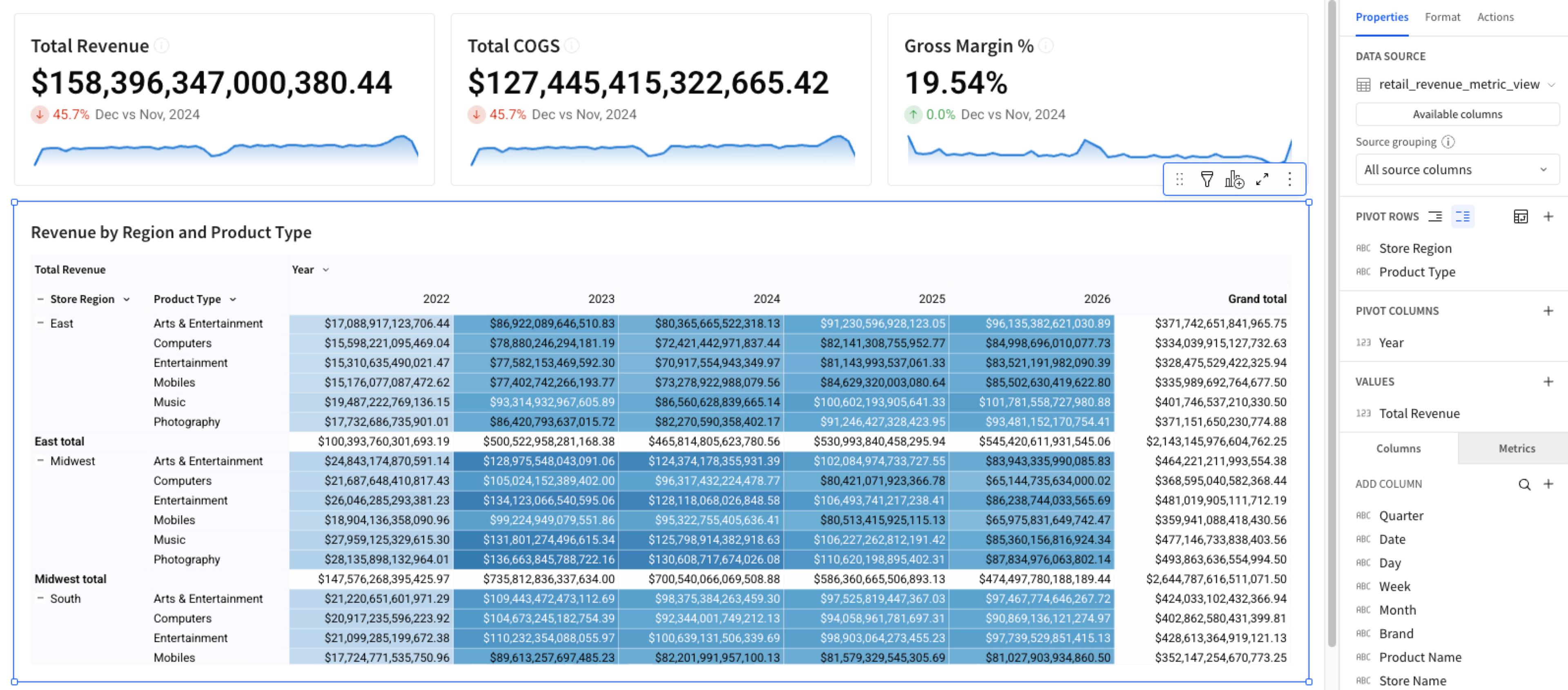
Governed Metrics and the Road Ahead for AI
As AI-powered analytics become standard, the quality of those systems depends entirely on the quality of the definitions they operate on. An AI agent that infers what "churn rate" means from raw column names is unreliable. An AI agent that queries a certified Metric View from Unity Catalog and returns a result grounded in your organization's canonical definition is trustworthy.
The Semantics your analysts use in Sigma today are the same semantic foundation your AI workflows will depend on tomorrow. Warehouse-native semantics are not just a governance investment. They are an AI readiness investment.
Your Databricks Definitions, Everywhere Your Users Work
If your team is already building Semantics in Unity Catalog, Sigma is ready to surface them—with no additional modeling layer, no ETL, and no duplication. If you're building your semantic layer now, this is the architecture worth investing in: define logic at the Lakehouse layer, let governance travel with it, and give every team a consistent view of the metrics that drive decisions.
Sigma’s UC Semantics integration is in private beta today, with public beta coming soon. To learn more, request a demo, explore the Sigma documentation, or contact your Sigma account team to request early access.
The feature mentioned in this blog is currently in private beta. Public beta availability is coming soon. Reach out to your Sigma account team to request early access.