How to Choose Embedded Analytics Platforms That Scale With User Growth

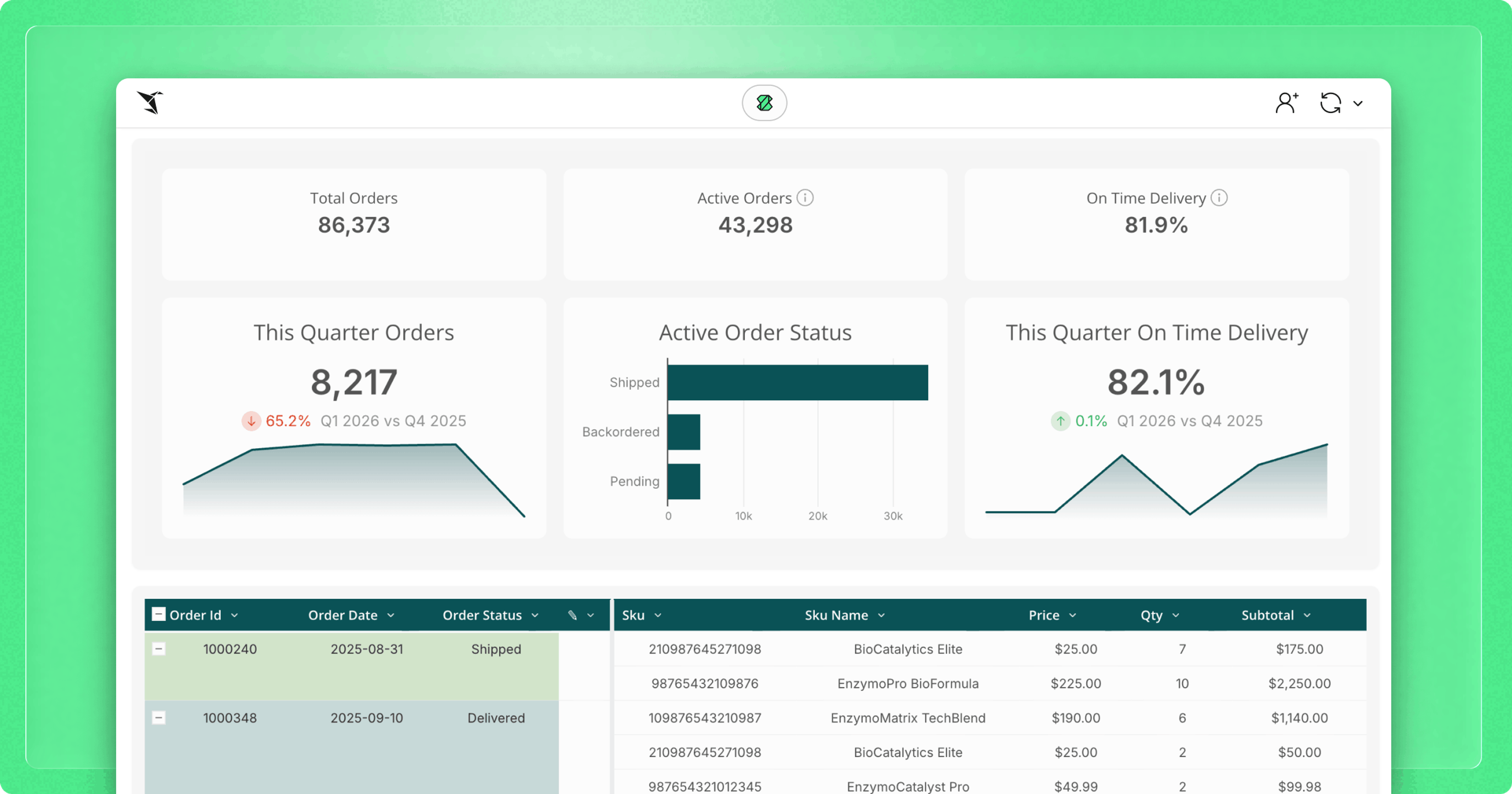
What works for embedded analytics at 10 customers rarely survives the jump to 10,000. As products scale, early decisions around data architecture, embedding approach, security, and pricing quickly determine whether analytics drives adoption or becomes a source of friction.
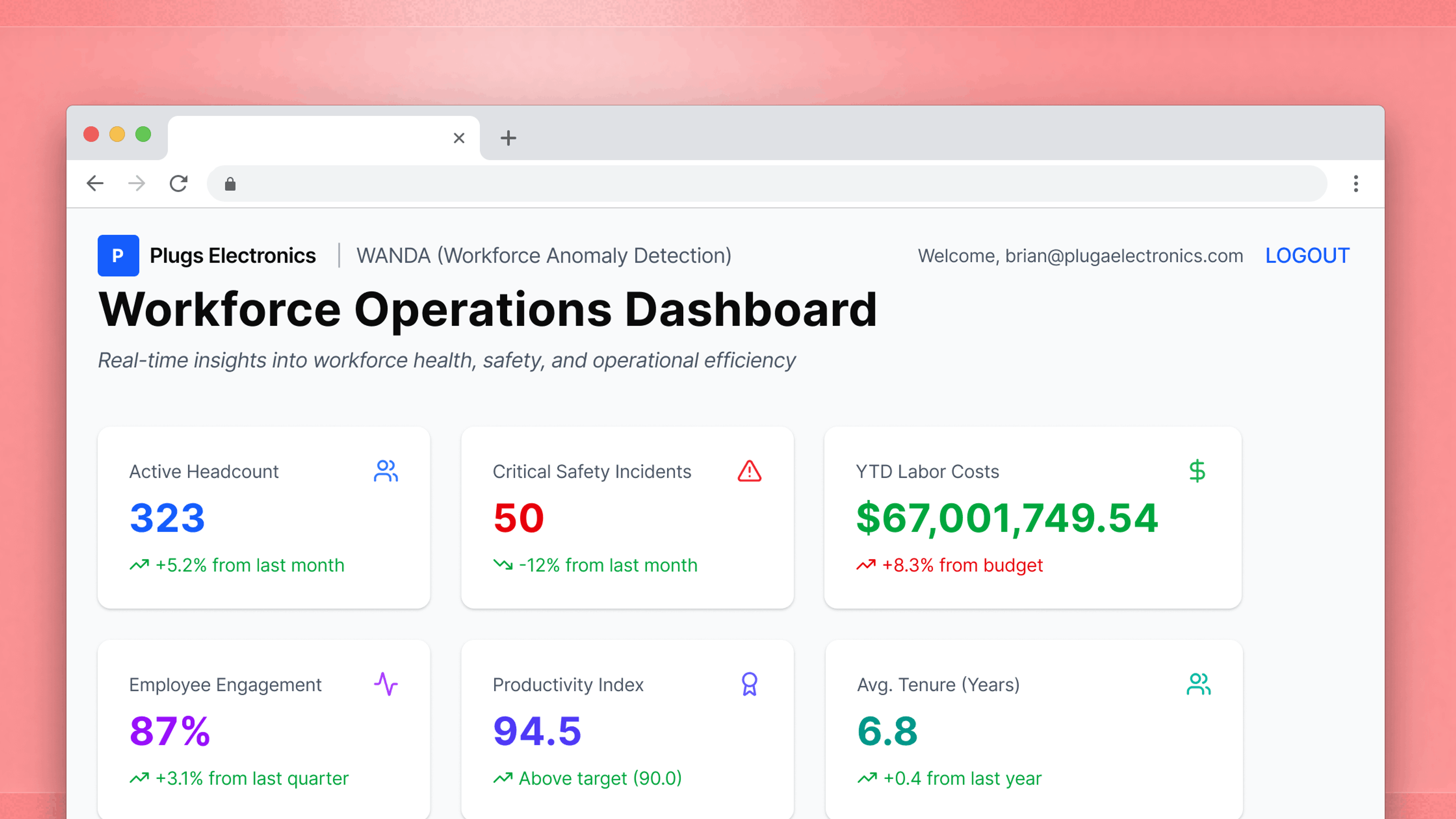
For many teams today, analytics live outside the product. Teams build dashboards in a BI tool, then share insights through links, PDFs, or exports. Users have to leave the product to understand their data, making analytics feel like an add-on rather than a core capability.
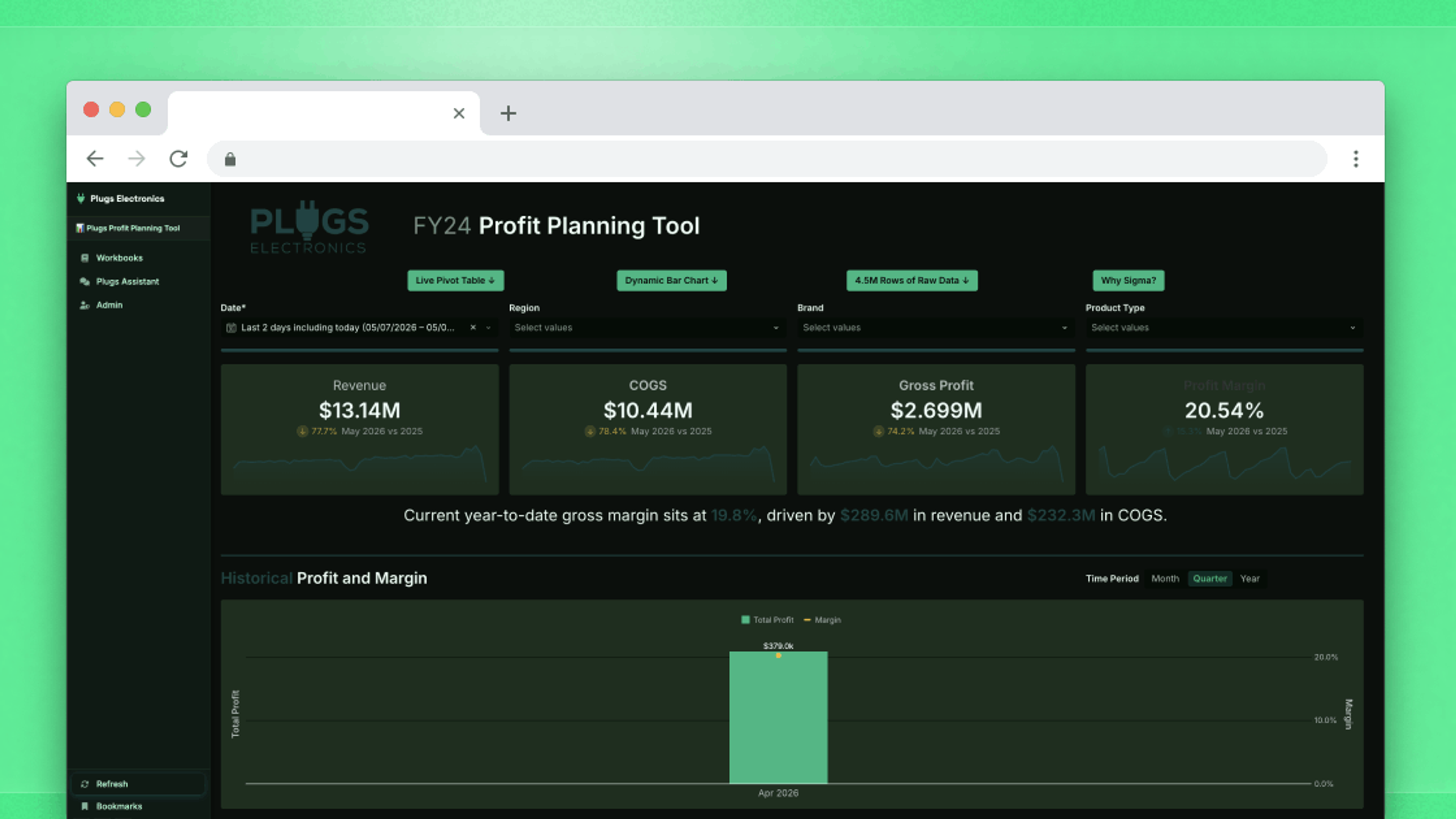
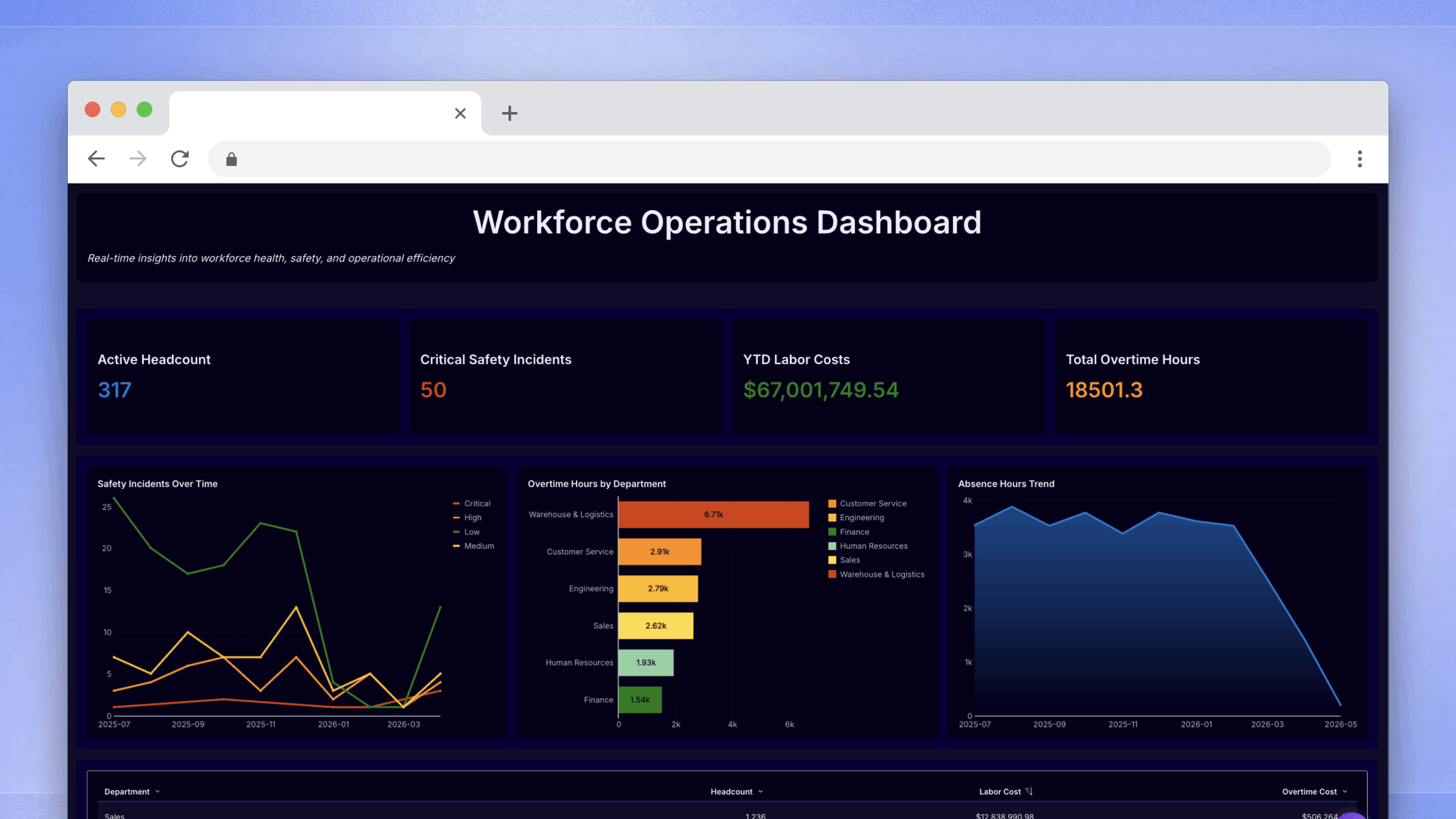
For embedded analytics to scale, teams need live warehouse queries, centralized governance, and a single source of truth. Sigma delivers this natively by connecting directly to the cloud data warehouse, allowing users to embed live analytics, maintain security, and expand into AI Apps built on live warehouse data without rework as usage grows.
Start with who you’re building for
Choosing an embedded analytics platform starts with clarity around who will use analytics and what outcomes the product needs to deliver. The needs of external customers, internal operators, executives, and builders directly shape requirements around customization, security, embedding depth, and pricing.
At scale, embedded analytics decisions are shaped by:
- Who consumes analytics? (Example:. external customers versus internal teams)
- How does usage grow? (Example: a small set of power users versus thousands of casual viewers)
- What does success look like? (Example: adoption, retention, revenue impact, or operational efficiency)
Choose an architecture that holds up as usage grows
As embedded analytics adoption increases, the underlying architecture determines whether analytics scales smoothly or introduces ongoing operational overhead.
Architectures that break at scale:
- Rely on duplicated data or secondary analytics stores
- Create multiple versions of the same metrics
- Require manual updates to security and permissions
Architectures designed to scale:
- Require manual updates to security and permissionsQuery governed data directly from the cloud data warehouse
- Maintain a single source of truth for metrics and access control
- Allow teams to scale performance as usage increases, without reworking your architecture.
A warehouse-native architecture allows analytics usage to grow without multiplying data pipelines, security logic, or operational complexity. This foundation that Sigma offers is critical as analytics becomes core to the product experience.
Selecting an embedding method that feels native as you scale
At smaller scales, simple embedding methods often work because requirements are limited and analytics is not yet central to the product experience. Teams can ship quickly, satisfy early customer requests, and avoid heavy engineering investment.
As analytics adoption grows, those assumptions change. Users expect analytics to reflect their role, permissions, and in-app context, while product teams need experiences that align with their design system and evolve alongside new workflows. Embedding methods that don’t support deeper, application-level control become harder to maintain and more costly to scale.
Platforms like Sigma are built for this transition—allowing teams to start with fast, lightweight embedding and layer in deeper, native experiences as analytics becomes core to the product, without reworking their implementation or adding operational complexity.
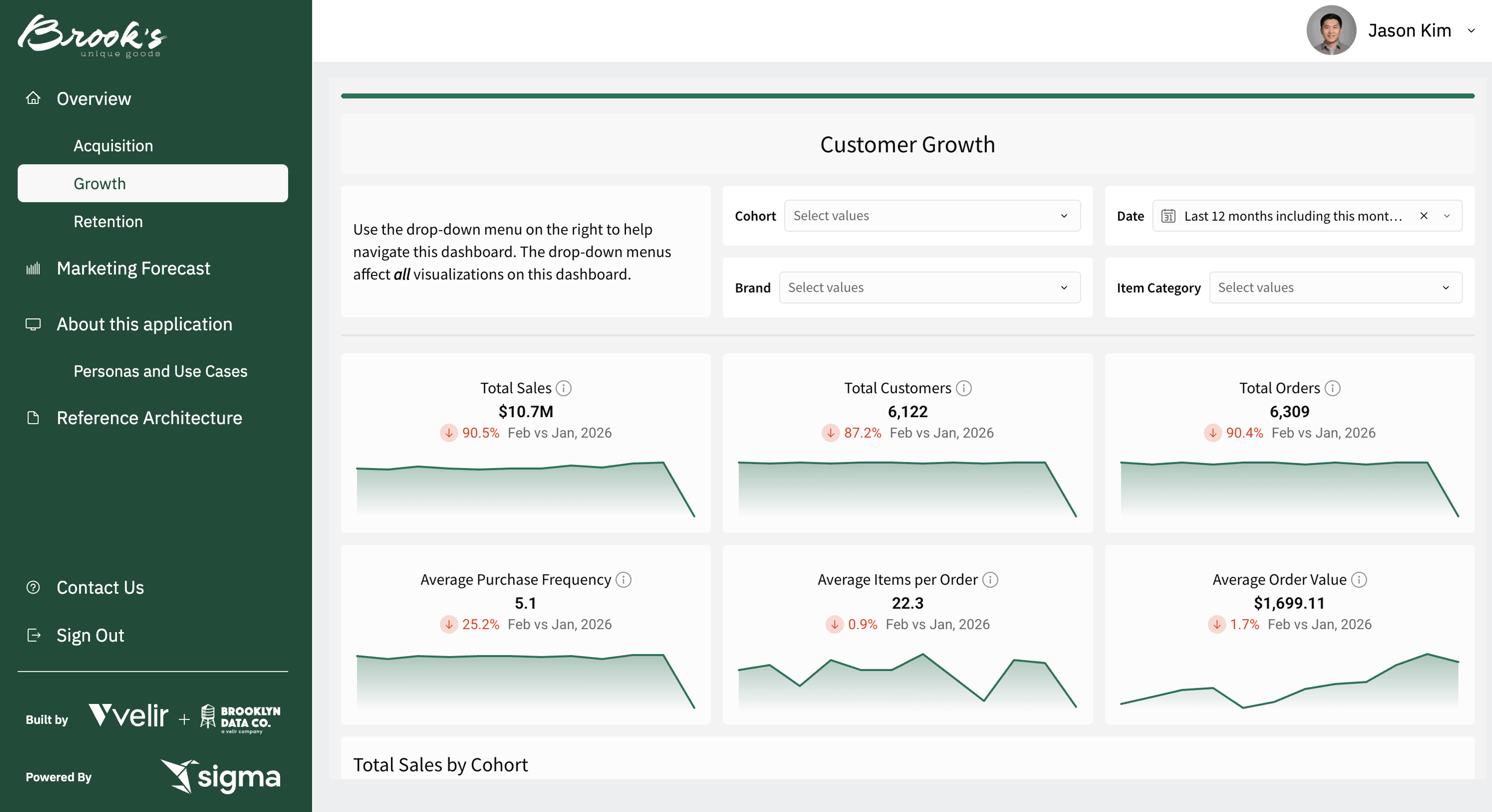
Can the platform support application-controlled experiences?
For customer-facing products, scalable embedded analytics typically requires more than basic embeds. SDK- and API-first approaches give teams control over how analytics behaves inside the application.
What to look for as usage grows:
- Analytics that respects application logic and user context
- Experiences that match your design system and branding
- Flexibility to evolve workflows and interactivity over time
This level of control ensures analytics feels native to the product and can grow alongside new use cases, features, and users.
Choosing for growth, not just early success
Choosing an embedded analytics platform isn’t about what works today—it’s about what still works when analytics becomes core to your product.
The platforms that scale with user growth are built around a few fundamentals: a warehouse-native architecture, embedding that feels native to the application, security that scales automatically, and flexibility to evolve without re-architecting. Teams that get these decisions right early avoid the operational drag that slows growth later.
Sigma was built around these principles, so analytics can grow alongside your product and users, not become a constraint as adoption increases.
Interested? See it for yourself in a Sigma free trial, or request a demo today.