Ad Hoc Data Analysis: How Teams Answer Unexpected Business Questions on Demand

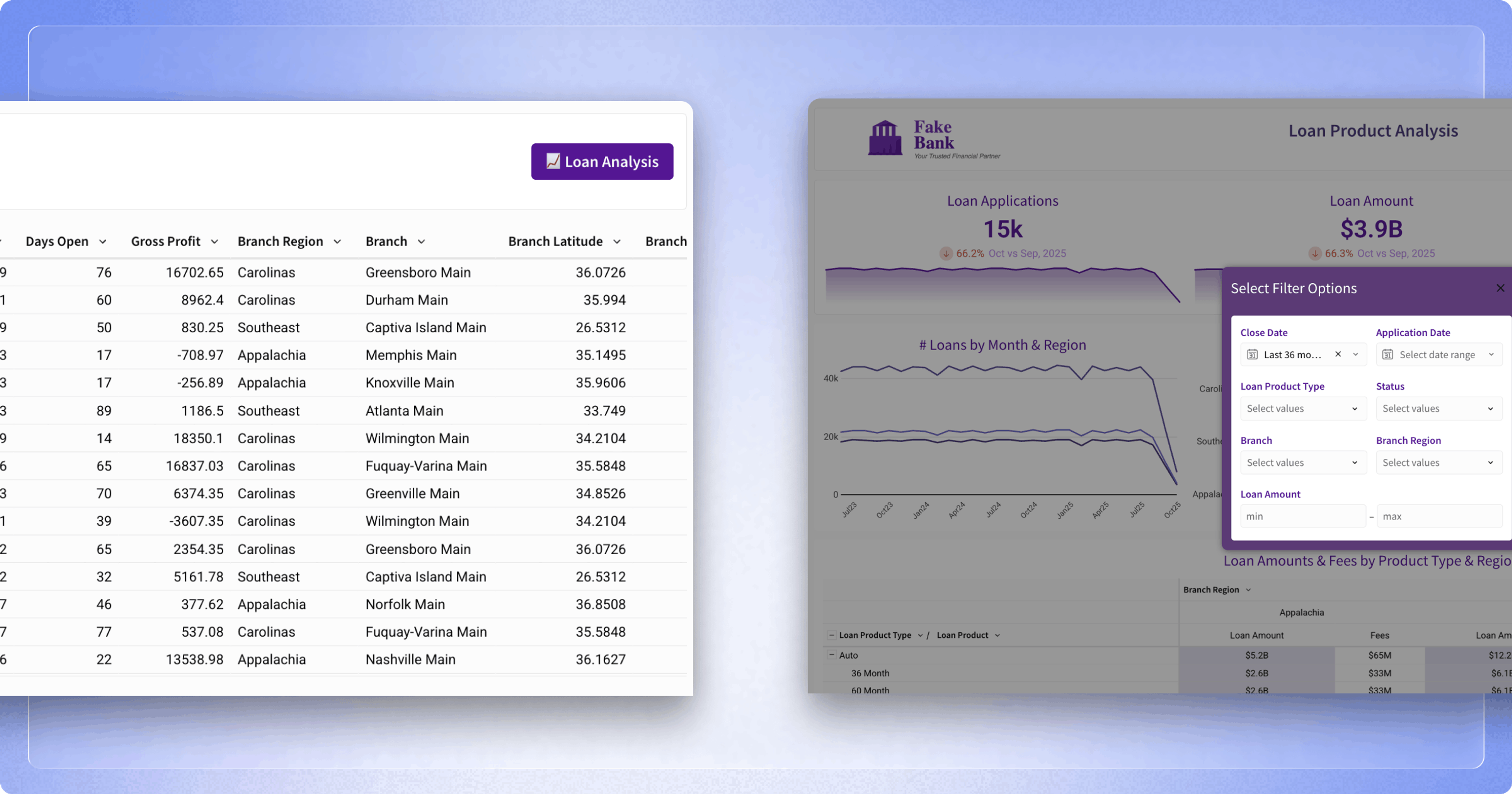
Ad hoc data analysis is how teams answer the questions their predefined reports don’t cover, like:
- Why did support tickets spike overnight in one product area?
- Why is the margin slipping in one region while order volume holds steady?
- Why did this campaign stall halfway through?
The answers are in the data, which lives in the warehouse. Reaching them might mean filing a ticket and waiting days for someone on the data team to write the query.
Ad hoc data analysis and ad hoc reporting close that gap. They let anyone with the right permissions investigate a specific question on live data, the moment it surfaces, then move from the answer to the next chart, the next decision, and, in the right environment, an action on the warehouse itself.
Key takeaways
- Ad hoc reporting surfaces a data point, and ad hoc analysis explains it. Both run outside the scheduled reporting cycle to answer one-off questions.
- Without a shared semantic layer and warehouse-inherited security, ad hoc reporting or analysis work can produce inaccurate results.
- The next generation of ad hoc work runs on a runtime layer where governed analytics, AI-assisted exploration, and agentic workflows live on the same warehouse.
An overview of ad hoc analysis and ad hoc reporting
Ad hoc analysis and ad hoc reporting are closely related practices. Both happen outside the normal reporting cycle, both are driven by the specific needs of the moment, and both produce one-time outputs rather than recurring ones. The difference is depth; reporting surfaces a fact, while analysis explains why the fact is what it is.
The phrase “ad hoc” means “for this purpose.” The work exists to resolve a single question at a single moment, not to track a known key performance indicator (KPI) on a schedule.
What is ad hoc analysis?
Ad hoc analysis is an investigation performed on demand to answer a specific, often unexpected business question. It starts with a question nobody anticipated, pulls from whatever data is relevant, and explores patterns across multiple data dimensions to explain why something happened or what might happen next.
For example, a finance team digging into why margin dropped 12% despite stable order volume is doing an ad hoc analysis.
What is ad hoc reporting?
Ad hoc reporting generates a one-time view of data, usually a filtered table or summary, to answer a specific factual question: “How many units did we ship last Tuesday?” or “Which accounts churned in Q3?” It surfaces a fact that the standard reports don’t already track. Explaining causality is a separate job.
In practice, reporting often precedes analysis. The report surfaces an unexpected number, and the analysis explains it.
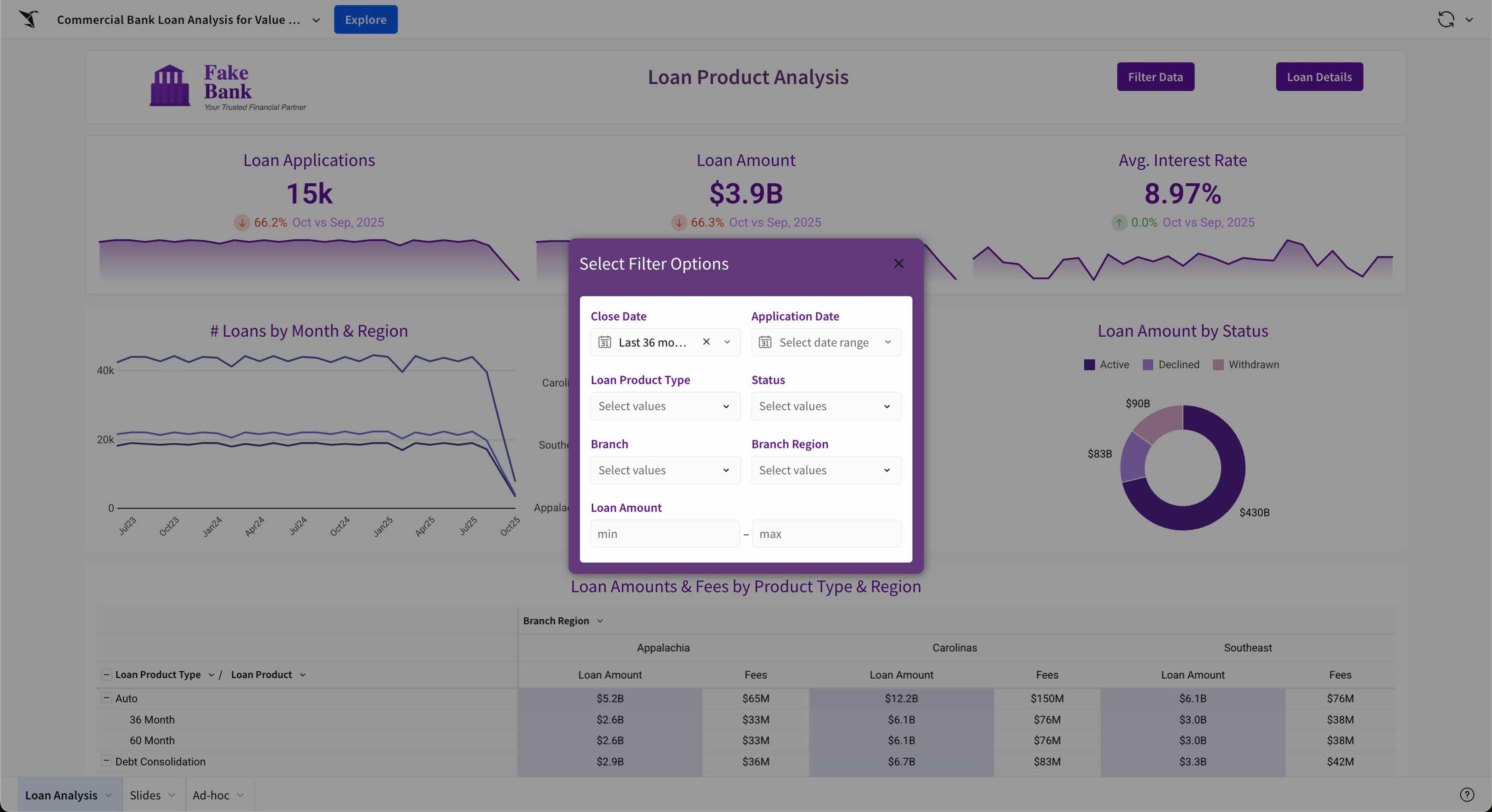
How ad hoc analysis differs from standard reporting
Ad hoc analysis answers the “why” and “what-if.” Standard reporting answers the “what” and “how many.” Confusing standard reporting with ad hoc work creates misaligned expectations about what analytics teams should deliver.
Standard reports monitor known metrics on a fixed schedule. They contain metrics like monthly revenue, weekly pipeline velocity, and daily active users. The format is predefined, the audience is known, and the cadence is set. These reports are the operational heartbeat of a business.
Ad hoc analysis and ad hoc reporting explain why something in those standard reports looks wrong, unusual, or unexplained. The work is on-demand, exploratory, and flexible in format. The analyst defines the scope, selects the data sources, and chooses the visualization based on the question at hand.
| Dimension | Standard reporting | Ad hoc analysis and reporting |
|---|---|---|
| Purpose | Monitor known KPIs | Investigate specific, unforeseen questions |
| Frequency | Scheduled (daily, weekly, monthly) | On-demand, as needed |
| Format | Predefined, static | Flexible, user-defined |
| Question type | "What happened?" | "Why did it happen?" and "What if?" |
| Audience | Broad, recurring | Targeted, situational |
Organizations need both because standard reports surface the anomaly, while ad hoc work helps explain it.
Benefits of ad hoc analysis and reporting
Ad hoc data analysis and reporting deliver value precisely because they operate outside fixed reporting structures. In fact, 93% of business intelligence (BI) and analytics projects report better business decisions as a proven benefit, the second most common payoff teams realize from their investments.
- Speed to insight: Teams investigate anomalies and validate hunches in hours instead of waiting weeks for a scheduled report.
- Flexibility for specific questions: Analysts select the right data sources, dimensions, and visualizations for each question rather than forcing answers into a predefined template.
- Hidden pattern discovery: Ad hoc work surfaces relationships that predefined dashboards miss, such as a correlation between supplier delays and customer churn that no standing report would catch.
- Risk identification: Anomalies often signal emerging risks, and quick investigation allows organizations to intervene before a trend becomes a problem.
- Foundation for future reporting: Many of the best recurring dashboards started as one-off ad hoc investigations that revealed a metric worth tracking consistently.
Each benefit comes from the same factor. Ad hoc work runs at the speed the business actually moves, not the cadence of the reporting calendar.
Types of ad hoc analysis
Ad hoc analysis takes different forms depending on the question being asked. The four most common patterns map to the standard analytics modes:
- Exploratory analysis starts without a fixed hypothesis. The analyst examines a dataset to identify patterns, outliers, or distributions that suggest where to look next. A marketing team reviewing campaign performance across channels and segments before forming a hypothesis is doing exploratory work.
- Diagnostic analysis starts with a known problem and works backward to identify root causes. When a hospital sees a sudden spike in patient readmission rates, diagnostic analysis segments the data by department, procedure type, and discharge timing to isolate what changed.
- Predictive analysis uses historical patterns to project future outcomes. A finance team modeling what-if scenarios around raw material cost increases over the next two quarters is running predictive ad hoc work.
- Online analytical processing (OLAP) analysis, also called slice-and-dice, rapidly re-dimensions a dataset, pivoting across hierarchies like geography, product line, time period, and customer segment to view the same data from multiple angles. Sales teams comparing performance by region, rep, and product category in rapid succession use this approach.
Most real-world investigations blend these modes. An analyst often starts with exploration, narrows to diagnosis once a pattern surfaces, and ends with a predictive what-if to pressure-test a recommendation.
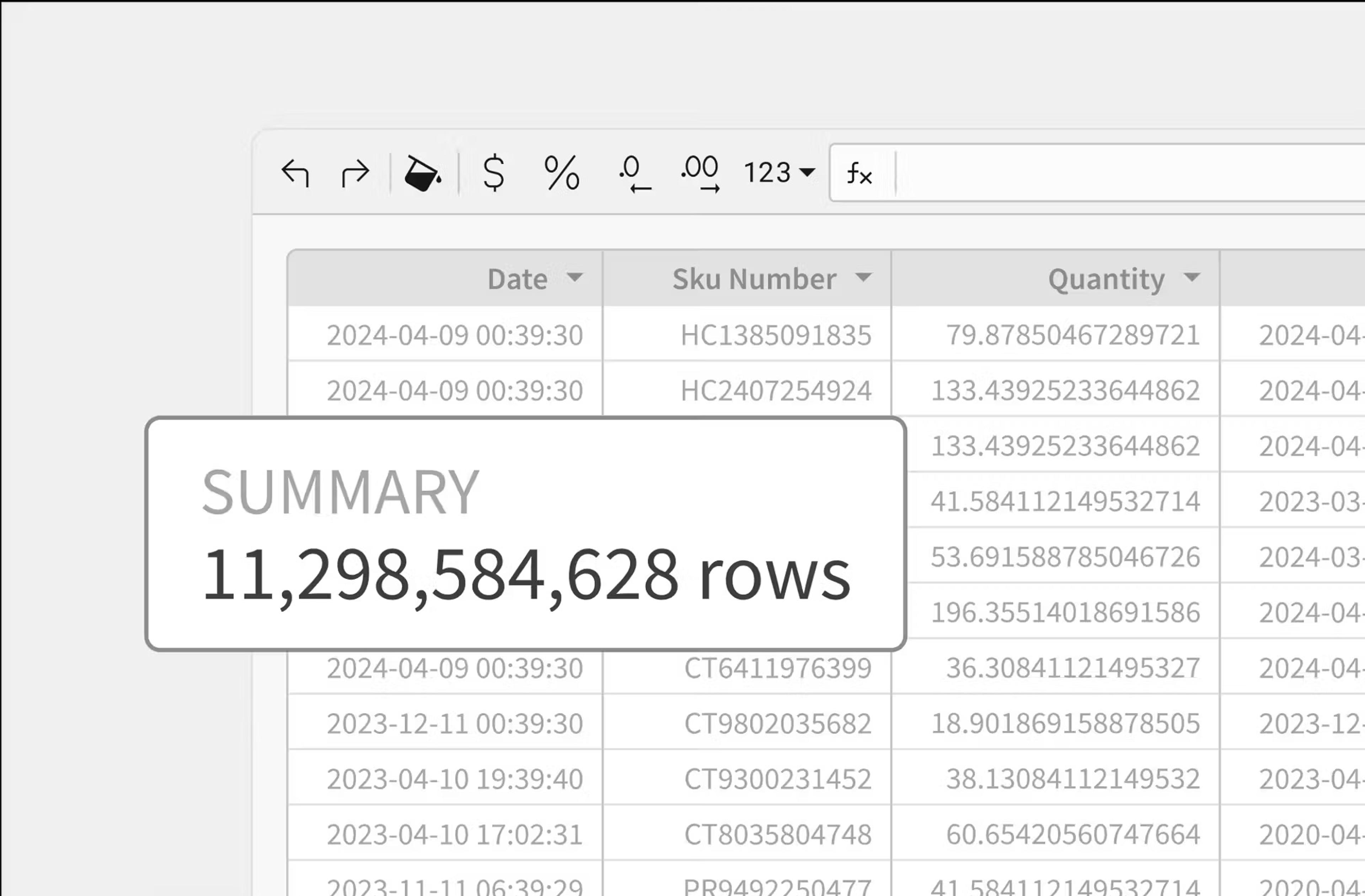
How to conduct ad hoc analysis
Ad hoc analysis follows a consistent process even though the questions vary. Five steps take a question from vague concern to an actionable finding:
- Define the question: Start with a specific, answerable question. “Why did revenue drop?” is too broad. “Why did revenue in the Southeast drop 12% in March compared to February, despite stable order volume?” gives the analysis a clear target and prevents scope creep.
- Identify and access the data: Determine which datasets contain the information needed. This might mean combining customer relationship management records, warehouse inventory data, and marketing spend tables. Access is where most ad hoc work stalls in organizations without self-service analytics: business stakeholders submit a ticket and wait for a data engineer.
- Explore, filter, and drill down: Interact with the data iteratively. Slice by different dimensions, apply filters, create pivot tables, and look for patterns. Exploration is the core of the ad hoc process, and it works best when the analyst can move between hypotheses without writing a new SQL query for each one.
- Visualize and validate: Translate findings into a visualization that makes the pattern clear to someone who wasn’t part of the investigation. A chart or comparison table can communicate in seconds what raw numbers take minutes to parse. Validate by testing against a second data source or checking with a subject matter expert.
- Share findings and decide: Present results to the stakeholders who need to act. The best ad hoc analyses include a clear recommendation tied to the data. If the finding is worth tracking over time, flag it as a candidate for a recurring report or dashboard.
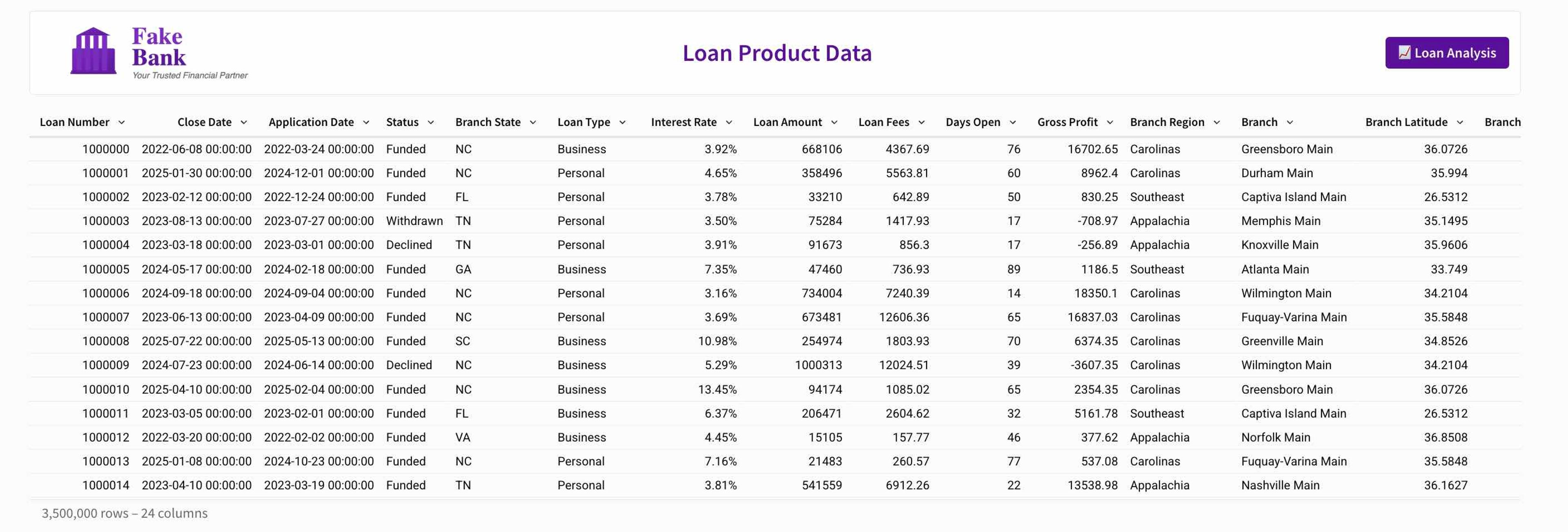
The steps are sequential, but the work rarely is. A finding at step four can send an analyst back to step two for fresh data, and a stakeholder question at step five can reopen the whole investigation. Treat the process as a loop, and keep each pass tight enough to finish before the business moves on.
Challenges with ad hoc analysis and reporting
The same flexibility that makes ad hoc work valuable creates risks when it operates without guardrails.
Data consistency
When different analysts pull from different tables, apply different filters, or use different metric definitions, two people investigating the same question can arrive at conflicting answers. Without a shared semantic layer or governed data model, ad hoc results are difficult to trust.
Access bottlenecks
In many organizations, ad hoc analysis requires SQL skills or a request to the data team. Leadership often endorses self-service analytics in principle, but the execution gap shows up when people don’t know how to use those tools, or governance policies push every non-trivial question back to the central data team.
Governance gaps
Ad hoc queries can touch sensitive datasets. Without role-based access controls and field-level security, an investigation into customer churn might inadvertently expose personally identifiable information to users who shouldn’t see it. The overprivilege problem, where users accumulate access rights beyond their role over time, compounds the risk.
Reproducibility
A one-off analysis that lives in a local spreadsheet can’t be audited, versioned, or re-run by someone else. If the finding drives a business decision, the organization needs to reconstruct how the analyst reached that conclusion. Without version control, that reconstruction is often impossible.
Data quality assumptions
Ad hoc analysts often skip data validation steps that production pipelines enforce. A quick investigation built on incomplete or stale data can produce confident-looking wrong answers, and the informality of the work means those errors are less likely to be caught before a decision is made.
What you need to conduct ad hoc analysis and reporting
Ad hoc work reaches its full potential only when four elements are in place:
- Governed data models: A semantic layer that enforces consistent metric definitions, business logic, and naming conventions across queries, so “revenue” or “active customer” means the same thing regardless of who runs the analysis.
- Data exploration tools: Interactive filtering, drilling, and pivoting on live warehouse data, so analysts can move between hypotheses at the speed of thought.
- Visualization capabilities: Fast charts, pivots, and comparison tables that translate findings into something a stakeholder can act on in seconds.
- Collaboration features: A shared workspace with version history, audit trails, and inherited security, so investigations are visible, reproducible, and safe to scale across the organization.
Platforms that combine all four are where ad hoc work stops being a bottleneck and becomes an organizational capability.
Run ad hoc analysis on live warehouse data with Sigma
Most ad hoc analysis stalls at one of two failure points: business users can’t access data without filing a ticket, or they access it by exporting to a spreadsheet and breaking governance controls in the process.
Sigma is the AI runtime layer that lets users build agentic analyses and AI Apps directly on a live cloud data warehouse. It removes both failure points with a warehouse-native approach. The spreadsheet-familiar interface lets business users move quickly while IT retains visibility and control. Filters, group-bys, pivots, and many formulas compile into SQL in the connected warehouse, where queries run, and data remains in the governed environment.
For ad hoc analysis or reporting specifically, three capabilities do the heavy lifting:
- Workbooks give analysts a shared, versioned workspace where investigations are auditable and collaborative by default. Users can run their own analysis in a familiar spreadsheet UI, drill-down into existing tables, or leverage AI features to get answers from natural language questions.
- Sigma Assistant is an AI copilot that returns transparent, step-by-step answers so users can verify the work.
- Inherited security means row-level security and some column-level security flow from the warehouse at query time, reducing the need to build a separate governance model for self-service access.
The result is a single environment where business users investigate questions on their own, and IT maintains governance, without the export-to-spreadsheet detour that usually breaks one or the other.
How Sigma uses AI for ad hoc analysis
AI is shifting ad hoc work from a specialist skill to an organizational capability. By 2027, it’s expected that at least 50% of business decisions will be augmented or automated by AI agents, which means parts of the loop of question, query, visualization, and recommendation will increasingly be assisted by AI.
Natural language interfaces are the most visible change. Instead of writing SQL or configuring a pivot table, a business user describes what they want in plain English, and the platform translates the request into a governed query, returns results, and presents a visualization. The barrier to entry drops from “knows SQL” to “can describe the question.”
Natural language to SQL translation still has limits. Queries that silently mistranslate a business question into incorrect SQL produce confident-looking wrong answers, which is why the semantic layer governing metric definitions for human analysts also has to govern the AI.
Sigma Agents extend this pattern from one-off questions to full workflows. Builders configure an agent with specific instructions, data access, and actions, and viewers interact through a simple chat interface. Every agent inherits the workbook or folder permissions in Sigma and the warehouse’s row-level security, so AI-powered ad hoc work runs on the same governance model as the rest of the platform.
Turn unexpected questions into fast, governed answers
Ad hoc analysis and ad hoc reporting are the difference between reacting to the business in real time and waiting weeks to understand what just happened.
The organizations that do it well share three traits: they give every team direct access to live data, they enforce governance at the data layer instead of inside each tool, and they treat one-off investigations as the seed of tomorrow’s standard reports.
The path forward is practical: define the question, give analysts a governed workspace that runs on the warehouse, keep metric definitions consistent so two investigations of the same question converge on the same answer, and layer AI on top of that foundation.
Try Sigma free or book a demo to see how your team can run ad hoc analysis and reporting on live warehouse data in a spreadsheet they already know how to use.
Frequently Asked Questions
What is ad hoc analysis?
Ad hoc analysis is an on-demand approach to data exploration designed to answer specific, immediate business questions as they arise, rather than relying on pre-scheduled reports.
How is ad hoc analysis different from scheduled reporting?
Scheduled reports are generated on a fixed cadence using predefined metrics for ongoing monitoring, while ad hoc analysis is performed on-demand to investigate unique, one-time questions.
What is an example of ad hoc analysis in business?
A common example is investigating an unexpected drop in sales or customer satisfaction to identify the root cause, going deeper than what a standard report would reveal.
What are the main benefits of ad hoc analysis?
It enables faster, more informed decision-making by giving teams the flexibility to explore data in real time without waiting for a scheduled reporting cycle.
Do I need technical skills to perform ad hoc analysis?
Modern self-service business intelligence tools allow non-technical users to explore data and create visualizations without writing code or depending on an IT department.