How Hakkoda Built a Modern Asset Management App in Sigma

In asset management, every decision depends on knowing the right number at the right moment. Yet too many teams still rebuild reports, chase conflicting figures, and manually stitch data together. That friction is one of the biggest forces slowing down the decisions that move markets.
Dam Weerasena, an Industry Consultant in Hakkoda’s financial services practice, and Andrew Visich, a Senior Consultant on Hakkoda’s data enablement team, set out to change that. As part of Hakkoda, an IBM company, they work with firms to build solutions that match how investment teams actually think and work.
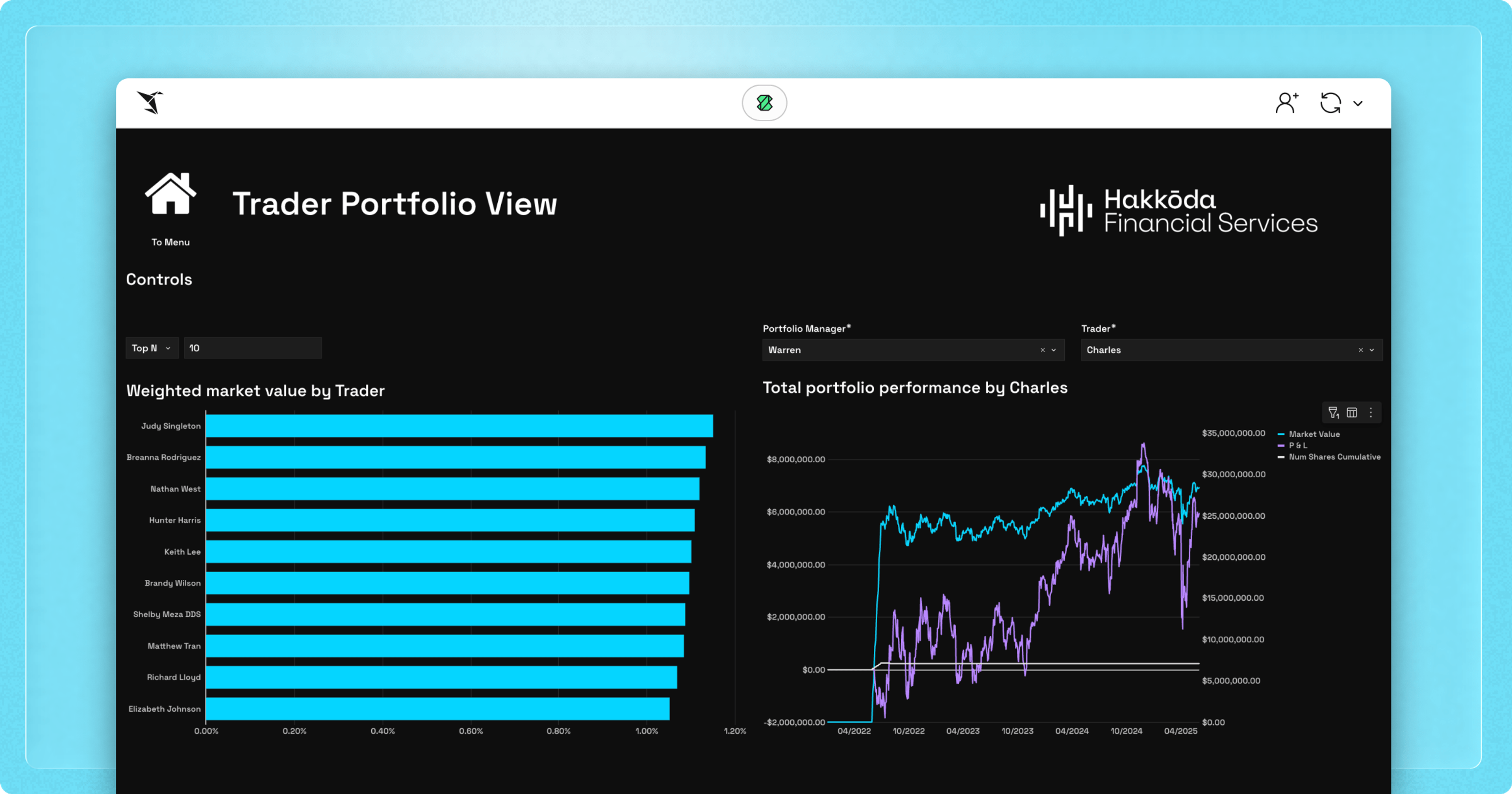
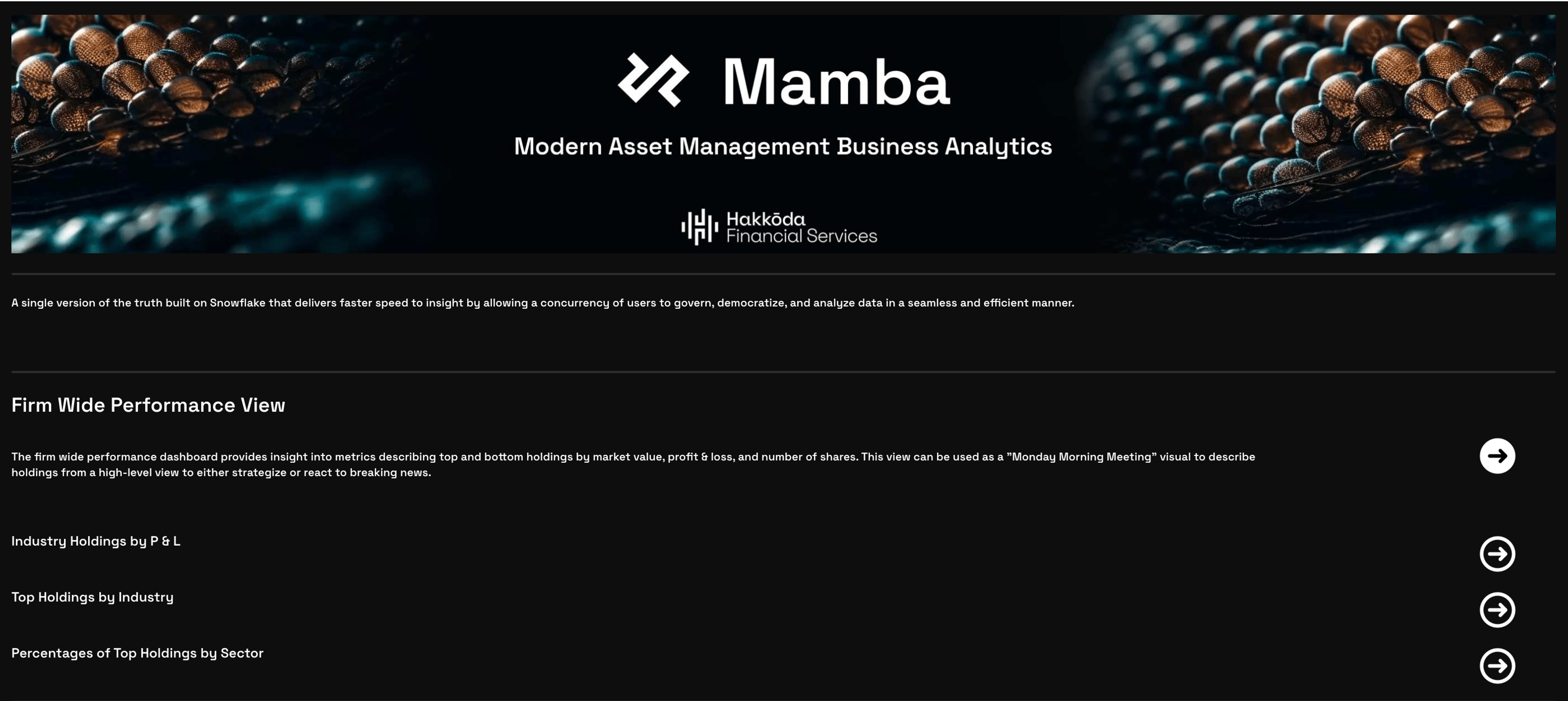
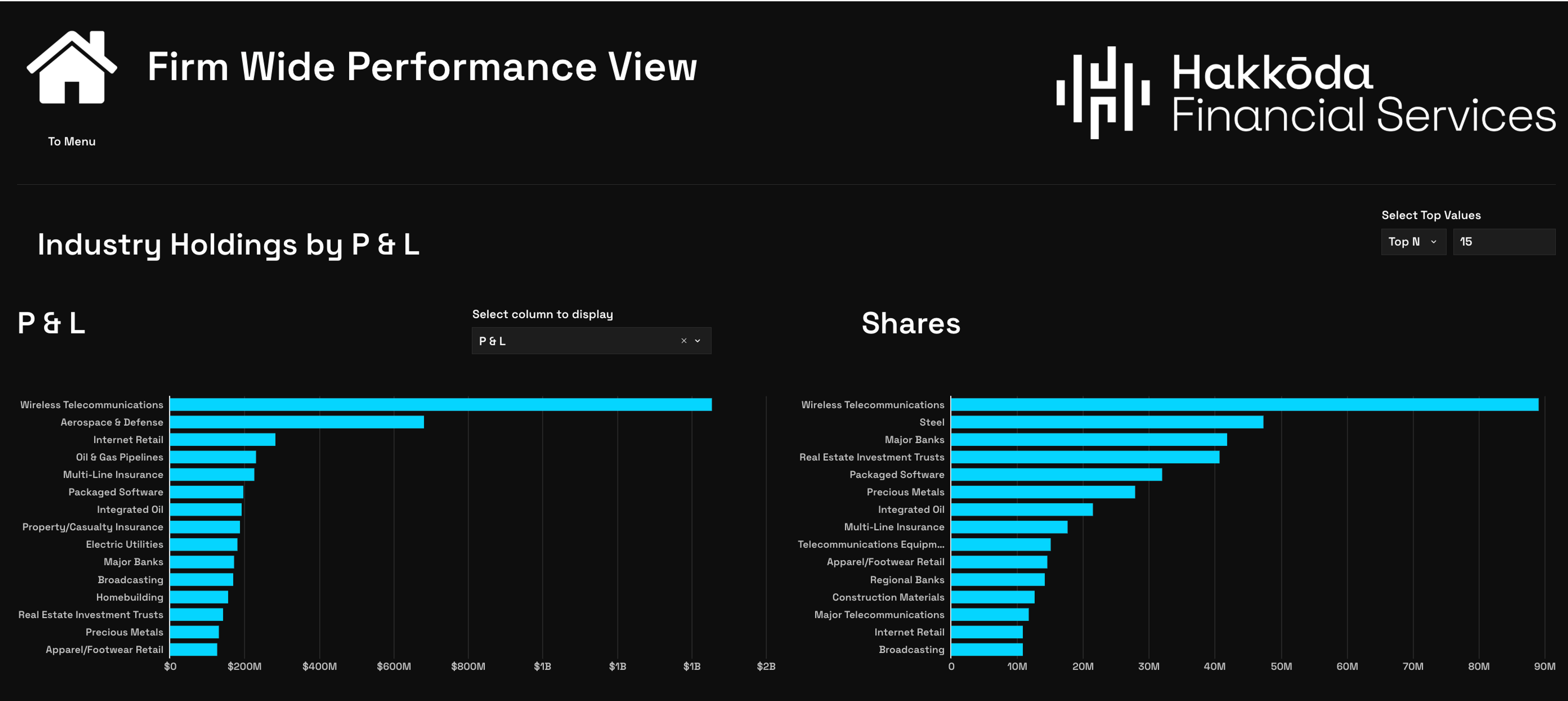
Their Modern Asset Management Business Analytics app, or MAMBA, puts that idea into action. MAMBA is an end-to-end solution built for asset management teams, streamlining how portfolio and market data come together, and giving portfolio managers, traders, risk teams, and research groups real time visibility into performance, exposures, and compliance needs. We sat down with Damindu and Andrew to understand how they built it in Sigma and why the platform gives their team room to create far more than dashboards.
The problem MAMBA set out to solve
“The business challenge we keep running into is pretty consistent. Teams recreate similar reporting and analytics in different places, making it hard to get a single view of what’s really happening.” explains Damindu. “The goal with this app was to provide a single version of truth, streaming real time analytics for a variety of personas without recreating the wheel for each and every analytical request.”
Under the hood, that meant leaning into Snowflake and Sigma in a way that maximized both speed and trust. “MAMBA leverages Sigma’s live connection to Snowflake to unify portfolio, benchmark, and transaction-level data, which ensures that every metric is always up to date,” Andrew said.
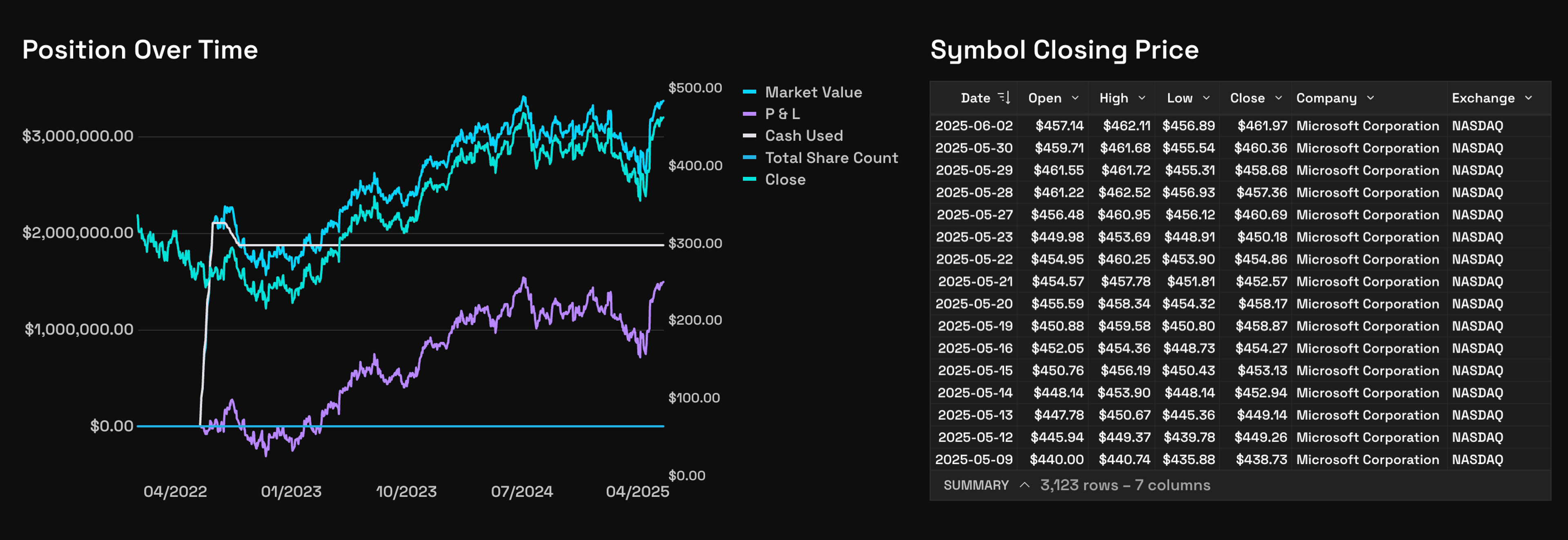
The app captures analyst and advisor context directly inside Sigma using Input Tables and writeback. Role-based access keeps sensitive information secure. Reusable workbook components make the solution scalable across business units.
“Together,” Andrew added, “these features allow users to explore data freely while maintaining a governed, enterprise-ready foundation.”
Prototyping, iterating, and designing MAMBA
The team approached MAMBA with a simple principle: create an experience that felt familiar and fast, that would empower analysts, portfolio managers, and risk teams from day one.
“We began by sketching key user journeys within the app, like how a portfolio manager might track growth across portfolios or how new exposures could impact overall risk,” Andrew said. Each journey became the backbone of the build, which followed a clear, repeatable process:
- Prototype directly in the Sigma workbook framework to give teams a living mockup rather than static wireframes.
- Iterate with real users by refining layouts and calculations in Sigma’s live and visual environment.
- Make the experience interactive with input tables, parameter controls, and dynamic filters that turned the app into something users could explore, not just read.
That focus on usability set the tone for everything that followed. Even small touches, like capturing notes inside the experience, made the app feel less like another dashboard and more like an application teams could rely on.
“It feels like the platform is built for the asset management world, not just a generic BI layer.”Dam Weerasena, Industry Consultant in Hakkoda’s financial services practice
But building for multiple personas introduced its own complexity. “One of our biggest challenges was striking the right balance between power and simplicity,” Andrew explained. The data was rich and the questions were complex, yet the interface had to stay intuitive. So, they started with only the essentials, then layered in additional detail when it added clear value. “Sigma made this easy because we could prototype directly in those workbooks, rolling back changes and gathering feedback from end users early and often,” Andrew said.
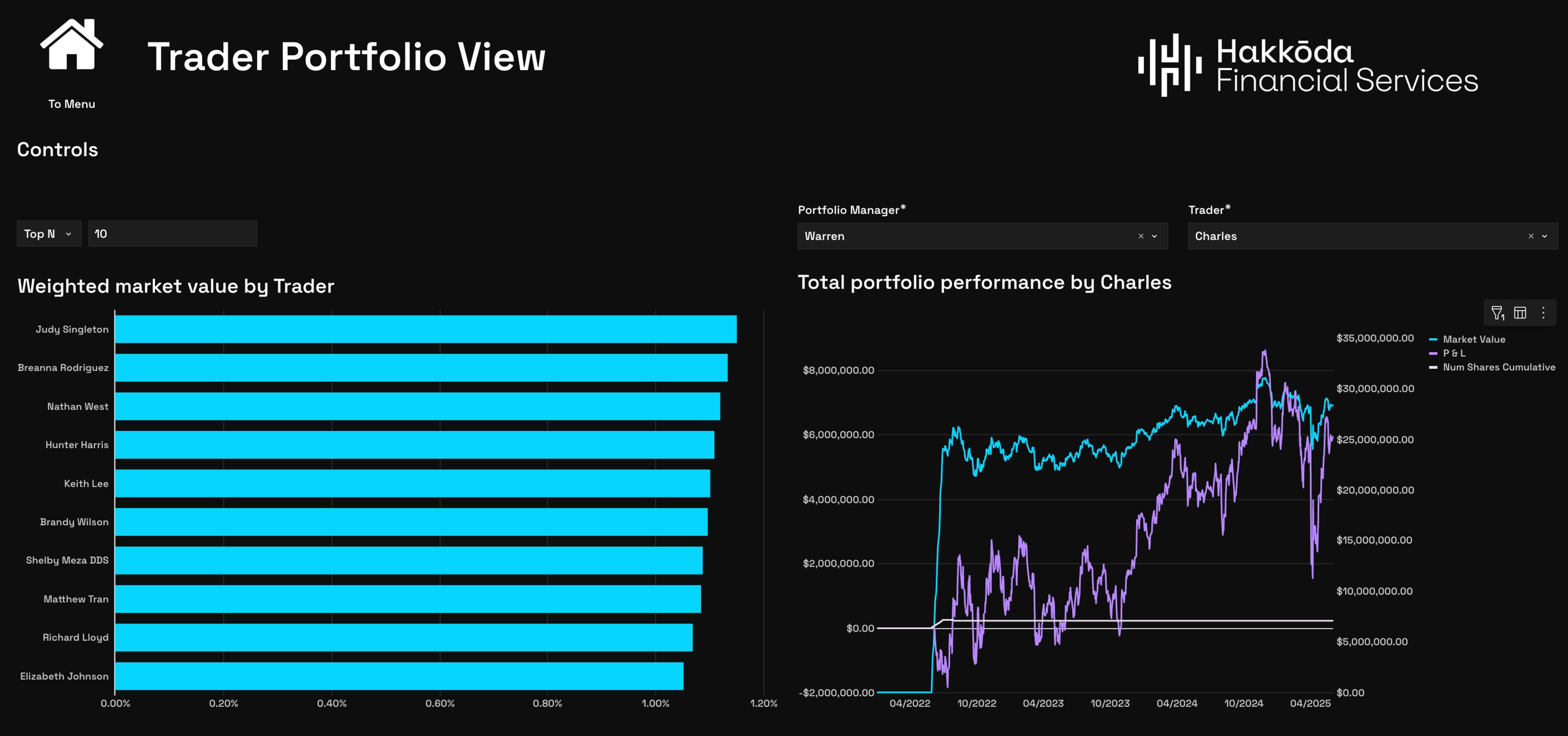
Designing for different levels of data fluency was just as important. “If it works for some but not all, how successful is that actually?” Andrew posited. He introduced controlled inputs, dynamic filters, and clean visual hierarchies to make the app more approachable for all, and shape a stronger and more inclusive solution.
How MAMBA transformed the workflow
The impact of MAMBA became clear instantly. As Damindu explained, “The biggest shift has been speed—to insight, to decision, and to iteration.” Work that used to take days or weeks now happens in seconds because teams are working with live analytics instead of stitching together ad hoc reports. “Because everyone is using the same definitions and metrics, there is a lot less reconciliation and second guessing now,” he added.
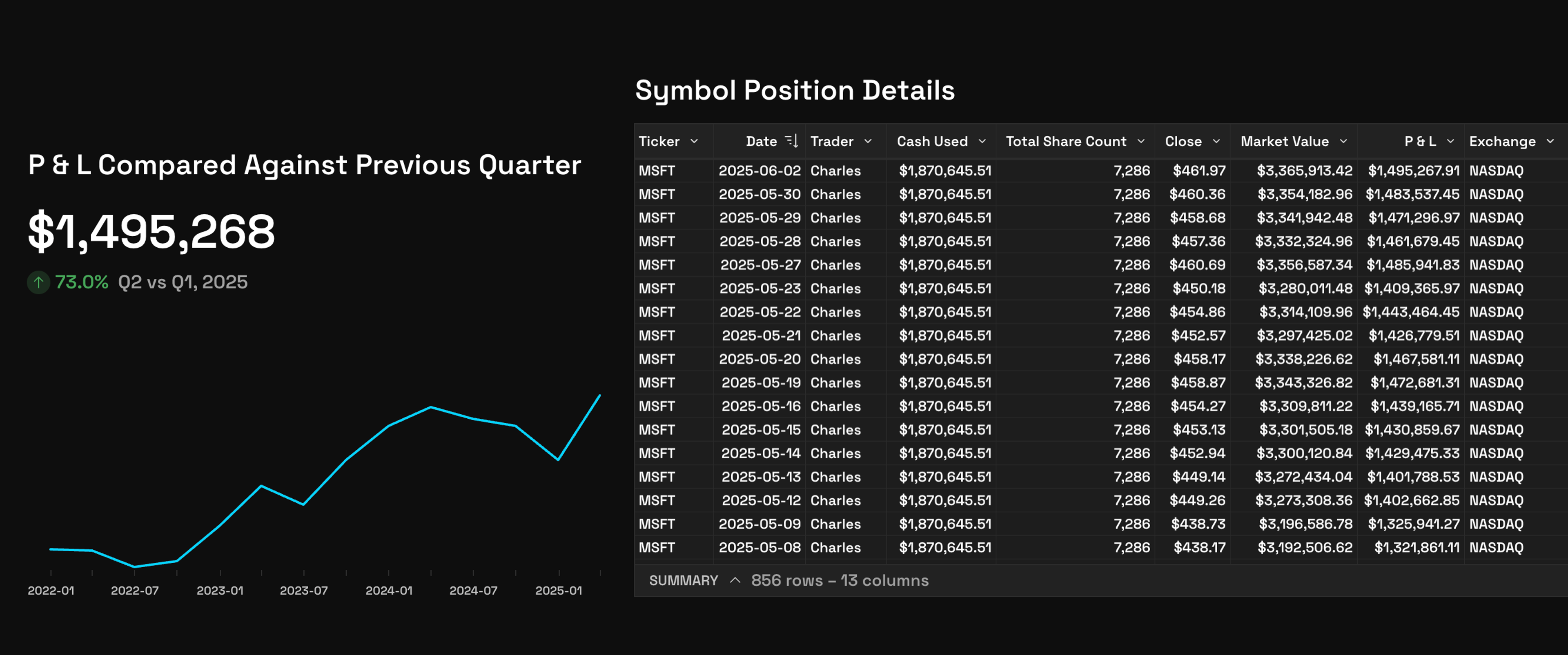
That consistency keeps decisions moving and reduces the operational drag that became part of daily life for many teams. It has also become a strong accelerator in client engagement, giving firms a clear way to demonstrate what a modern analytics stack can look like in asset management.
"Together, these features allow users to explore data freely while maintaining a governed, enterprise-ready foundation."Andrew Visich, Senior Consultant on Hakkoda’s data enablement team
Those gains extend directly into decision making. “Sigma allows us to bring analytics directly into the workflow, instead of reporting being a separate downstream step,” Damindu noted. Instead of reviewing reports after a decision, teams can now use the same views in the moment. Users highlight how easy it is to tailor the experience to portfolio managers, risk teams, and traders, and how seamless it feels to move from high level views into detailed drill downs.
Most importantly, the app mirrors how asset management teams already think and operate. As Damindu put it, “it feels like the platform is built for the asset management world, not just a generic BI layer.”
MAMBA and the road ahead
Looking back on the build, Andrew distilled their approach into a set of principles that apply to any team creating an app in Sigma:
- Start small. Don’t wait for every data source or metric to be perfect.
- Stay curious. Let questions guide the build, not assumptions.
- Build with your users, not for them. Remember, you’re not building another generic BI layer.
- Lean into Sigma’s speed. Sigma allows you to quickly go from an idea to something that is real and interactive.
The next wave of innovation for MAMBA focuses on intelligence and optimization. “We’ll be leaning into this new age of AI, and using more sophisticated predictive models,” Andrew said. With interactive data controls already in place, the team wants to explore more robust calculations to model how exposures shift and what that means for performance and risk.
Damindu sees additional opportunity in Sigma’s evolving capabilities. Snowflake Cortex has already been useful in research analytics work the team has done outside of Sigma. “Something we have been wanting to try out is that Cortex feature, to see if we can build that back into the Sigma platform,” he said.
The next chapter of MAMBA is already taking shape. Check out the app and see how real-time intelligence can change the way your team works. To learn more about building apps in Sigma with cloud data, sign up for Workflow, the Sigma user conference in San Francisco on March 5th, 2026.