Forrester TEI: Sigma Delivered 321% ROI and Payback in Under 6 Months

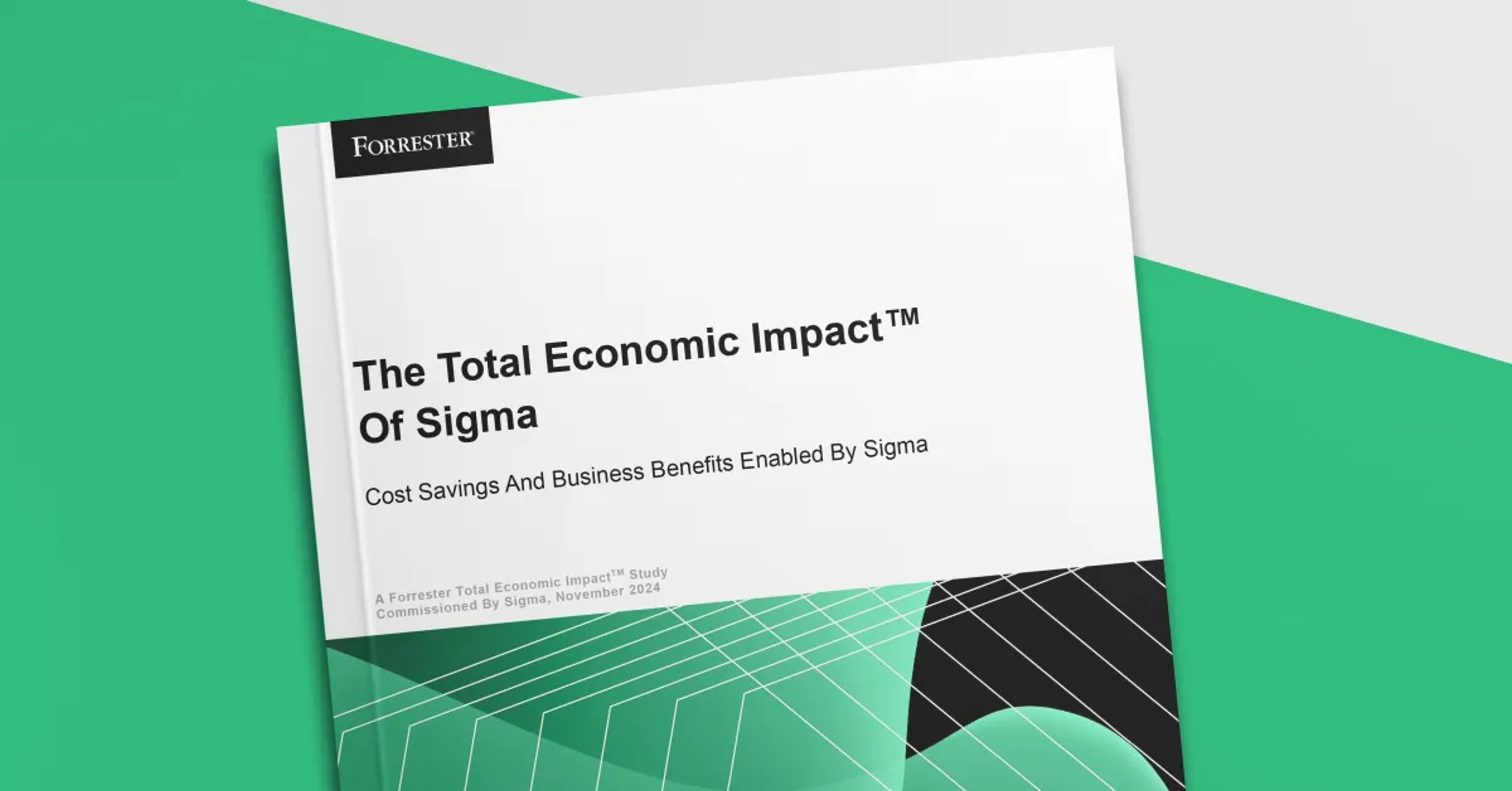
Forrester’s headline finding: 321% ROI over three years, with payback in under six months for a composite organization representative of interviewed customers.
That composite-org note is important. This is a commissioned study and Forrester is aggregating results across interviewed customers into a single model.
Forrester's Findings
ROI is the summary. The inputs are the useful part. The TEI page calls out a few drivers that are pretty straightforward:
- $2M in productivity gains from shifting work away from overextended data teams and into self-service.
- 49,400 end-user hours saved over three years, tied to Sigma being usable by the people who actually need the answers.
- $500K in legacy cost savings, plus a note that the composite org transitioned 95% of users to Sigma (which is usually where savings show up).
- Faster time to market: accelerating initiatives by three months, with $475K in new value attributed to that speed.
None of those are “feel good” metrics. They are operational: Less time waiting. Less time rebuilding the same thing. Less spend on overlapping tools.
Why the “hours saved” number matters
The 49,400 hours saved line is the one I keep coming back to. Most BI stacks are built around the idea that a small set of people will model everything, build everything, and distribute answers. That breaks the moment the business asks a slightly new question. Then it is tickets, backlogs, exports, and spreadsheet glue.
TEI studies are not perfect, but they tend to show the same pattern: if more people can work directly with governed data, the organization stops burning analyst cycles on repeat requests. The value is not just “self-service.” It is throughput.
The simplest way to read this study
If you are skimming, I’d do it in this order:
- Start with the drivers (productivity, time saved, tool consolidation).
- Ask yourself if those are problems you actually have. Most teams do.
- Then look at the ROI summary, not the other way around.
If you want the full details, the report is available here.