3 Key Investments Sigma Made for Enterprises in 2025

Sigma’s mission has always been to empower enterprises to work directly with live, governed data—securely, at scale, and without compromise.
And in 2025, we decided to take that even further by giving enterprises more flexibility for organization setup and management. As enterprises continued expanding and AI started moving closer to business-critical workflows, we invested in capabilities like Sigma Tenants, customer-managed keys, and simplified identity management for them to scale analytics and build AI apps, without sacrificing security.
In practice, supporting enterprise AI required rethinking some of the most foundational assumptions about how data platforms operate. Running a data platform at enterprise scale introduces three recurring challenges we set out to address in 2025:
Data platform challenges that enterprises face
1. Flexibly managing security and governance at scale
Enterprise organizations expect strong security and governance as a baseline. At scale, those controls also need to be easy to manage day-to-day and flexible enough to fit how each organization operates, especially across multiple environments, regions, or business units.
Companies like Duolingo and Doordash often require separate organizations to isolate development and staging from production, or to separate business units like HR and finance who work with sensitive data. While this structure provides clarity and isolation, it also increases operational complexity. Each additional org brings more warehouse connections, identity configurations for SSO, SCIM, or OAuth, and more users and permissions to manage. Without flexible foundations, that complexity compounds quickly.
2. Securing data end-to-end as AI moves closer to key business workflows
As enterprises began adopting AI more seriously, a new challenge became clear. AI is moving directly into business-critical workflows where accuracy, accountability, and governance matter.
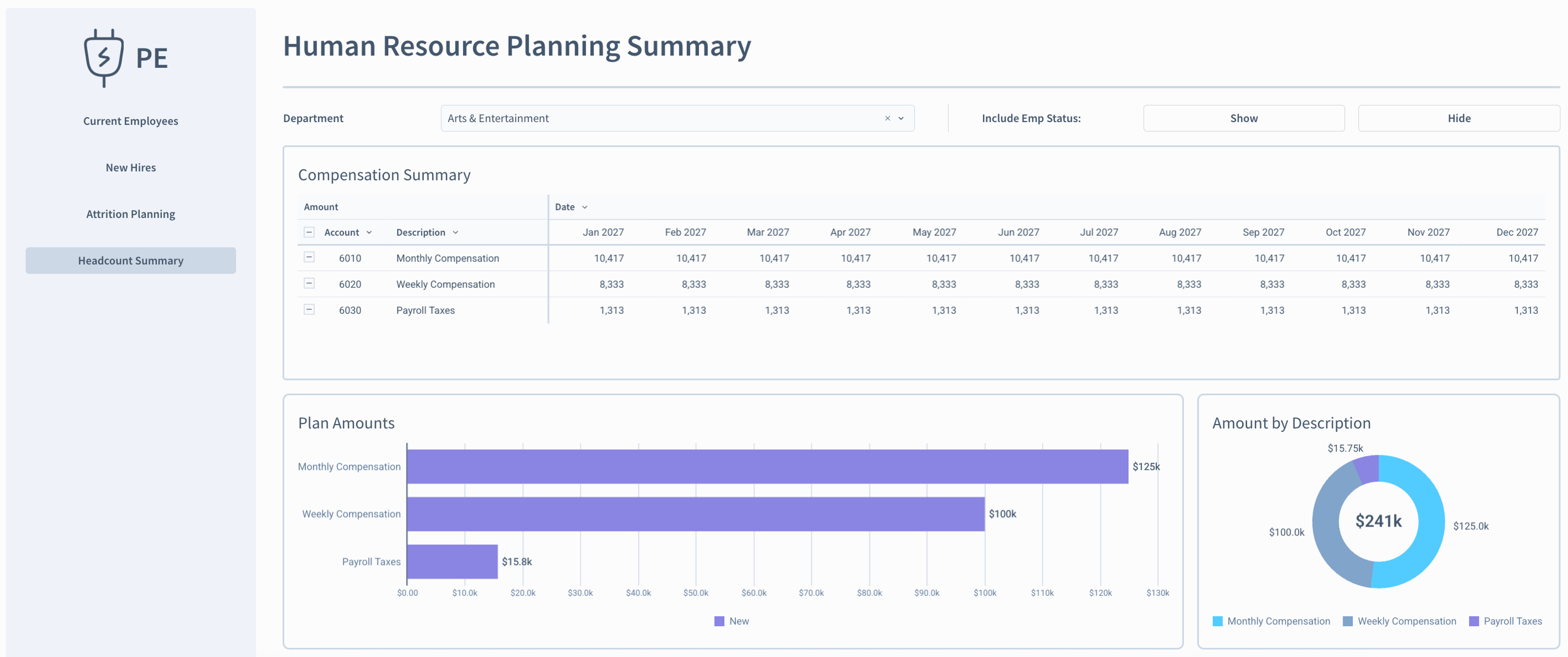
Headcount planning is a clear example where decisions about hiring and budgeting depend on sensitive data across finance, HR, and operations, and has traditionally been a manual, labor-intensive process. Enterprises want to use AI to support this kind of strategic planning, but once it touches workflows like these, the bar for governance rises. They need to know where the data comes from, who can access it, how outputs are generated, and how they are used.
As AI moves closer to decision-making, security and governance can’t stop at the warehouse or analytics layer. They have to extend end-to-end, across inputs, outputs, and the workflows that depend on them.
3. Serving business users without losing developer control
Enterprise data platforms have to serve two very different audiences at once: business users and developers. Business users need tools that make it easy to access and explore data without relying on technical teams. At the same time, these environments depend heavily on developers to build and maintain the integrations, automations, and tooling that allow platforms to fit into broader enterprise systems. They need control over configuration, deployment, and change management to ensure they operate reliably at scale.
Platforms that prioritize ease of use can limit enterprise control, while those built primarily for developers can slow adoption across the business. For enterprises, empowering business users while still keeping developers in control is essential.
What we built to support enterprise reality
To meet these needs, we focused on the systems enterprises rely on to keep complex environments running smoothly.
1. Making enterprise environments easier to run
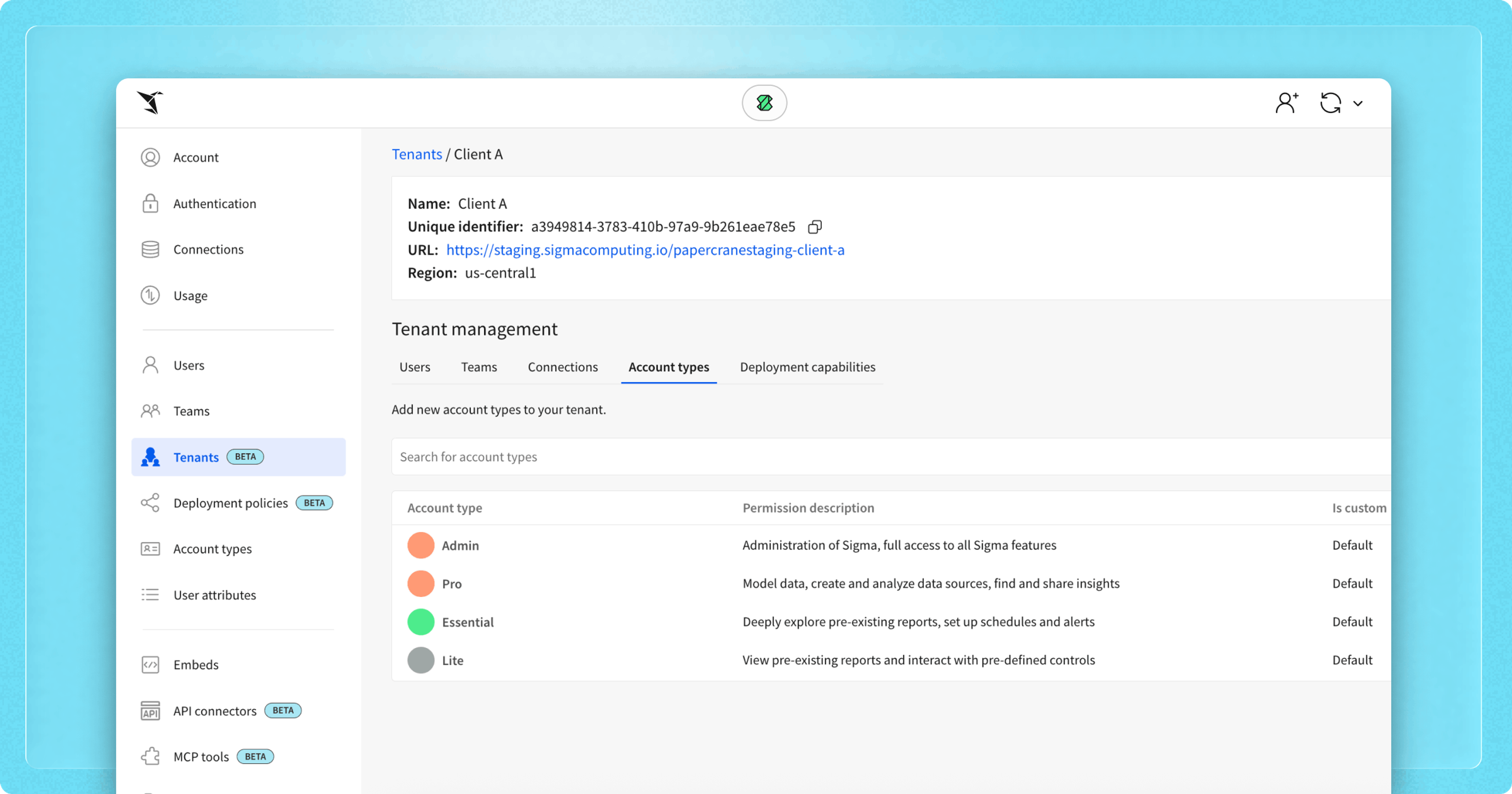
As enterprise usage grows, the challenge is not only supporting more users, but also managing more environments. Sigma Tenants solves that problem by allowing each group, or tenant, to operate independently with its own data, workbooks, users, and permissions—while still benefiting from centralized visibility and governance as part of a single enterprise platform. Instead of treating every Sigma organization as a standalone system, enterprises can operate Sigma as a coordinated whole.
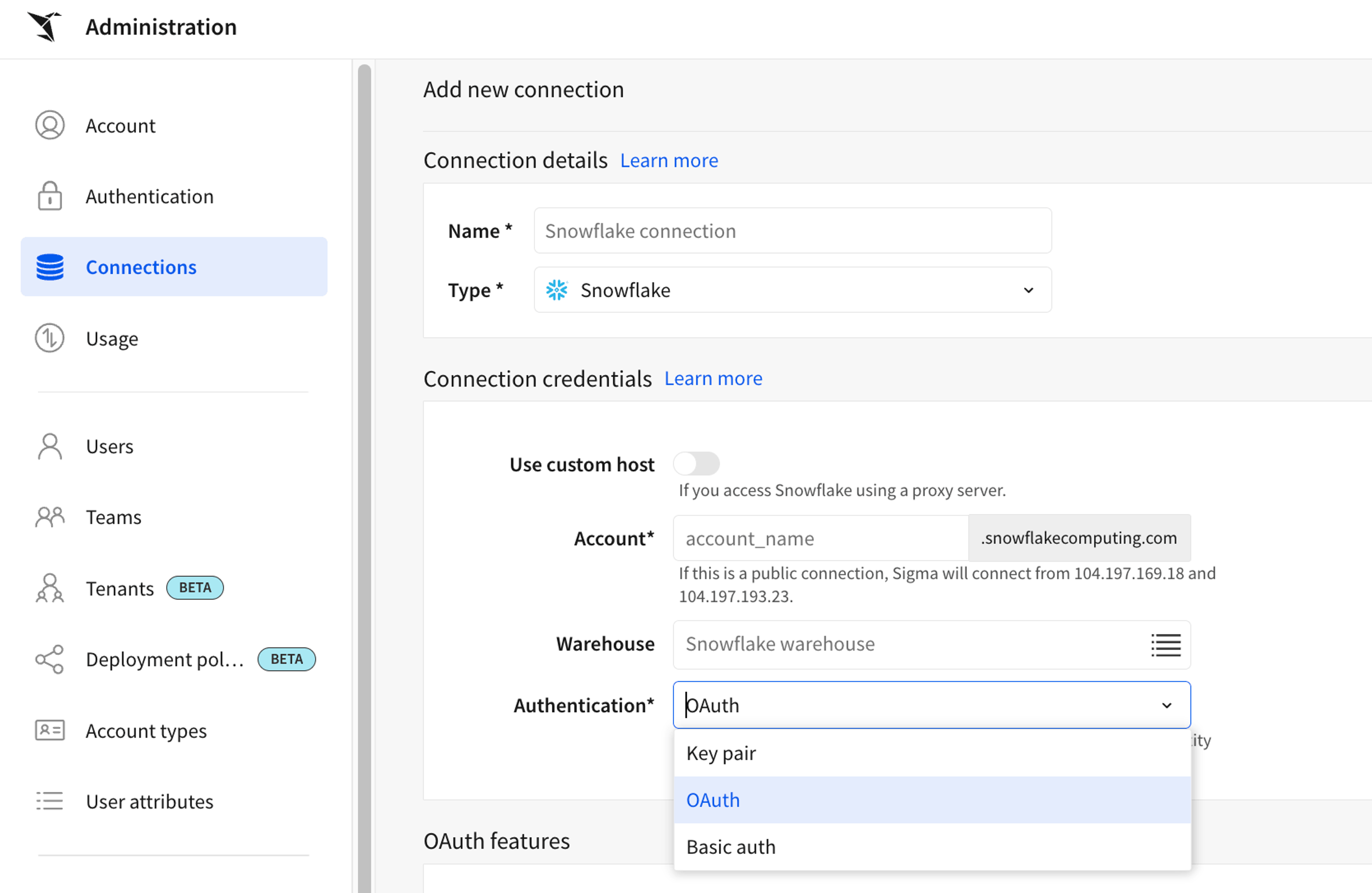
As environments scale, so does the need for greater identity and authentication flexibility. To address this, we introduced capabilities like connection-level OAuth that allows for independent configuration at the SSO or the connection level, improving warehouse resiliency. Expanded IDP capabilities support both a single SAML provider across multiple Sigma organizations or multiple IDPs within a single organization, reducing duplication and simplifying onboarding.
Another addition was more granular permissions to help enterprises manage risk as access expands. Controls around exports, copying data, and column-level access using user attributes make it possible to give more teams access to data without increasing the likelihood of accidental exposure. As Sigma deployments expanded globally, we also extended audit log support to additional regions, including Europe and the Middle East, so enterprises can meet local compliance requirements without added complexity.
2. Securing data end-to-end
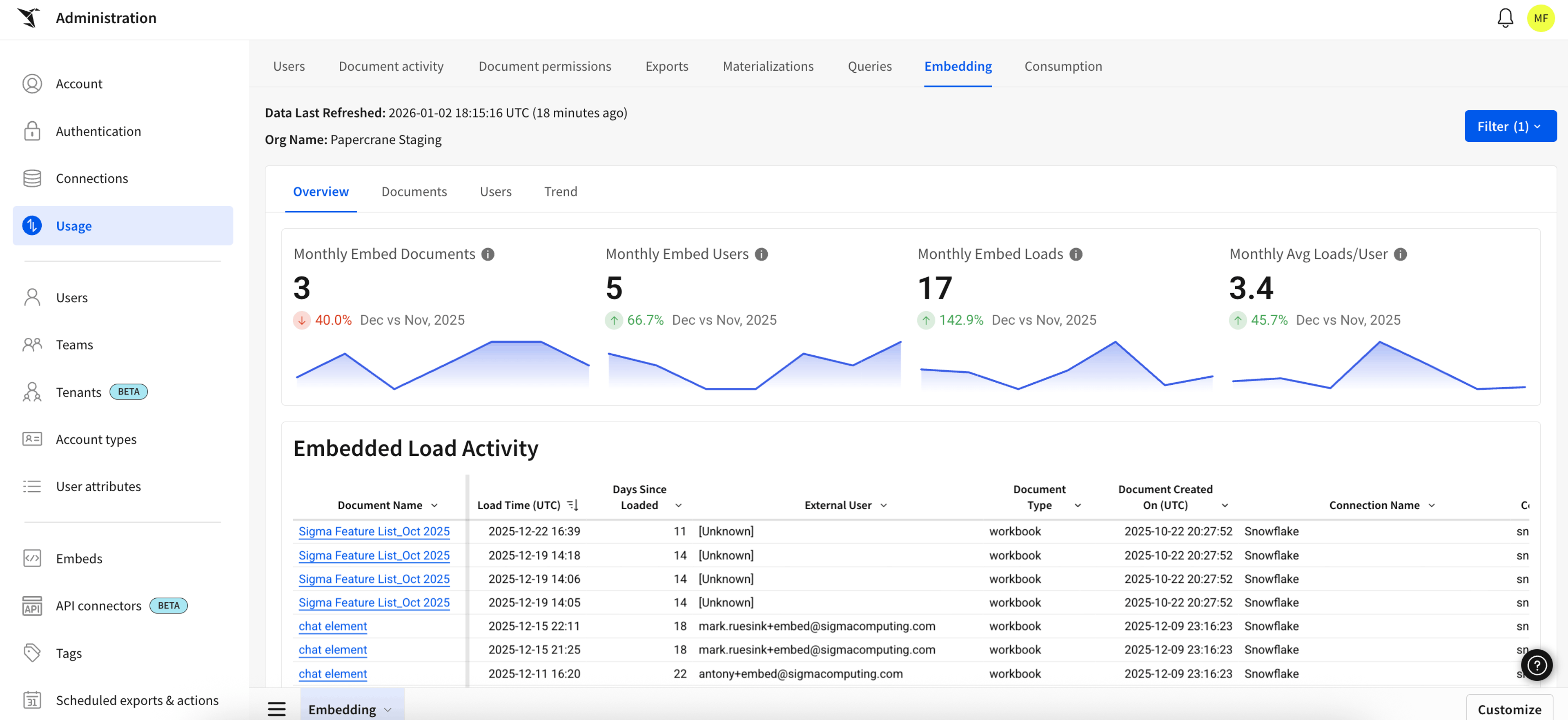
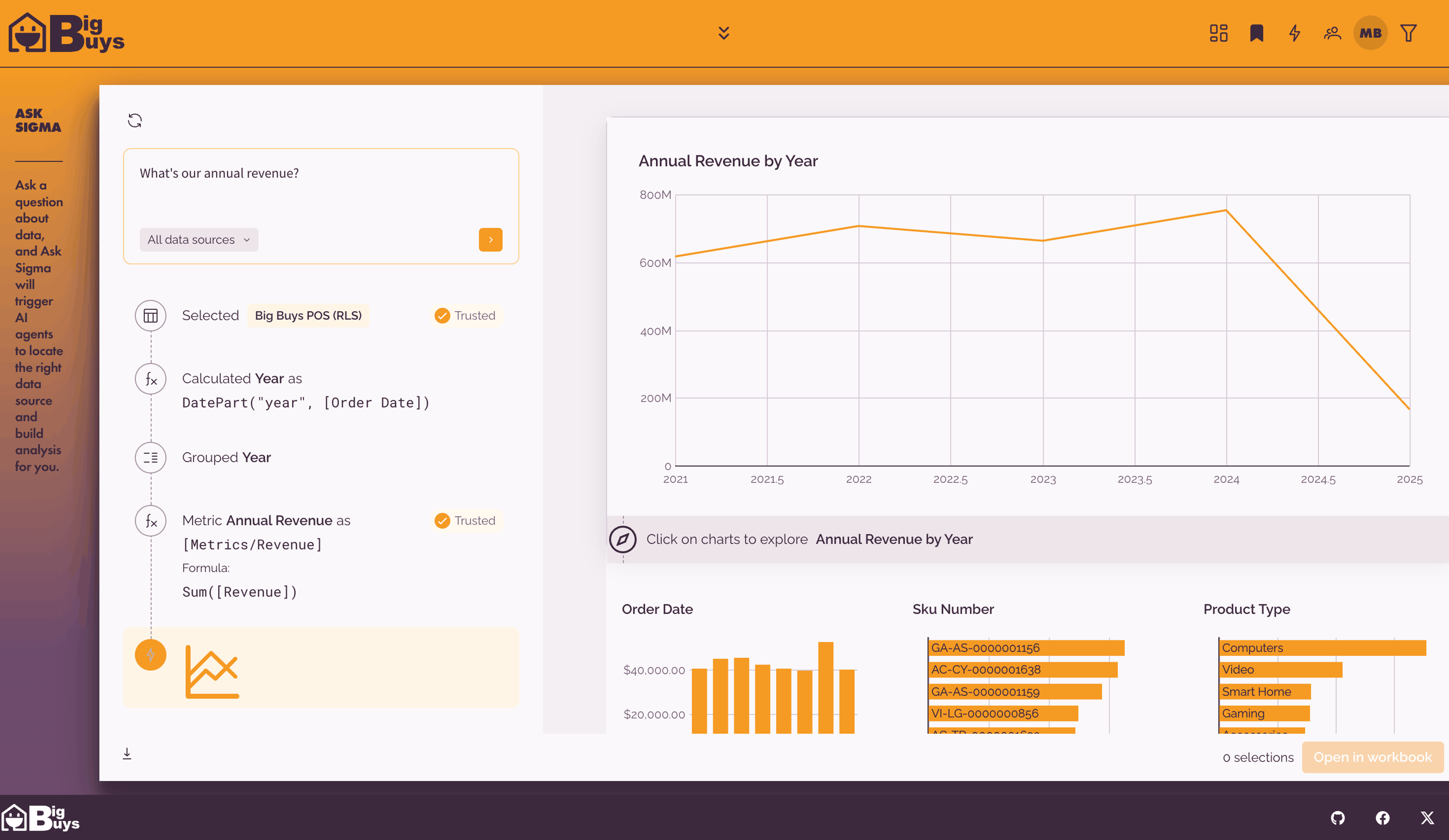
With the introduction of customer-managed keys, enterprises have direct control over the key management lifecycle and encryption. For embedded experiences, we enabled seamless access for internal and external users via JSON Web Tokens (JWTs) without separate URLs or additional user setup. In addition, Ask Sigma can now be embedded securely with just a few clicks, bringing natural language querying and AI capabilities directly into customer-facing applications.
3. Giving developers the control they expect
Enterprise deployments often depend on developers to integrate platforms into broader workflows. In 2025, we expanded our Admin APIs to support programmatic configuration, administration, and user management, and strengthened built-in version control with version tagging for input tables and warehouse views for easier iteration and development lifecycles. We built on this foundation with code-based representation of Sigma data models, enabling developers to define, version, and deploy analytics assets using familiar development workflows and tools, making it easier to integrate Sigma into enterprise CI/CD pipelines and broader platform architectures.
The impact of our efforts was most evident with clients operating in highly regulated industries with strict data security and isolation requirements, like financial services or healthcare. With the right enterprise foundations in place, these organizations can scale to thousands of users and multiple environments while maintaining tight access controls and low operational overhead.
The next chapter for Sigma and enterprise companies
Looking ahead, our work with enterprise customers is only going to grow. In 2025, we focused on building a first-class experience for enterprises to manage Sigma from the top down, across organizations, environments, and data platforms.
As we step into the new year, that foundation will continue to deepen but our focus is also expanding. The same level of control, governance, and operational rigor that enterprises expect needs to extend further to AI applications built on Sigma. That means securing application data, managing users, auditing activity, and integrating AI apps into a broader software development lifecycle.
In practice, this is where Sigma’s platform comes together. Teams can build AI-powered applications directly on governed data, using the same analytics they already trust to drive real-time decisions and actions—without copying data, weakening security, or adding another platform. Whether used by internal teams or embedded in customer-facing products, these applications operate under the same governance and controls already in place.
Learn more about Sigma and join us at Workflow, Sigma’s first-ever user conference on March 5 in San Francisco.