Input Tables for Postgres: Build AI Apps with Data Writeback

The modern data stack has achieved massive scale for data processing, yet a critical gap remains between high-performance infrastructure and operational action. While developers rely on Postgres as the industry standard for its reliability and sub-second performance, business teams are often forced to manage operational logic in spreadsheets or software. This creates a disconnect between where business processes happen and where the data lives—and I believe can lead to failed AI initiatives.
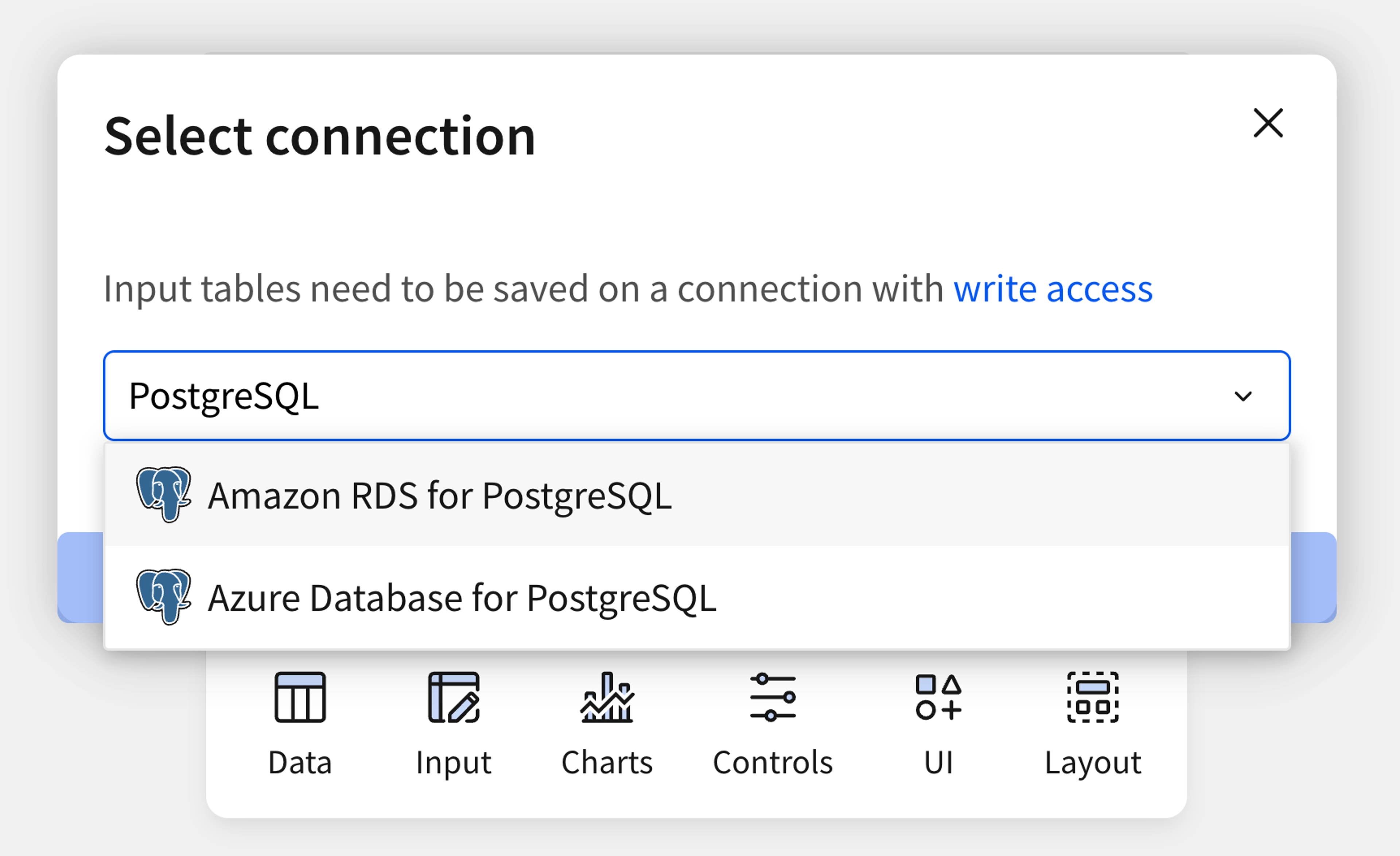
We are closing that gap with the recent GA release of Sigma Input Tables for Postgres. This release provides a warehouse-native interface that allows users to write data directly back to Postgres, leveraging its stability to build functional applications on a single data foundation. By moving "human context" and manual workflows into the database, teams can finally bridge the gap between developer-first infrastructure and business-led data entry—creating the governed truth required for production-ready Apps, Agents and AI.
A unified interface for Postgres
Sigma Input Tables for Postgres provide a high-performance writeback layer that aligns engineering requirements with business usability. By writing directly to Postgres and leveraging its native transactional performance—which is nearly an order of magnitude faster than traditional analytical warehouses—Sigma enables a writeback experience that feels like a native application rather than a delayed batch process.
This architecture allows developers to manage the secure database schema and governance in Postgres while business users contribute the essential commentary and context through the Sigma UI. Because this setup is warehouse-native, it offers immediate portability; as organizations adopt Postgres-based architectures like Snowflake Postgres or Databricks Lakebase, these Sigma workflows remain functional and future-proof. This symmetry effectively eliminates the need for developers to build and maintain bespoke internal CRUD tools, allowing both teams to operate on a single, live foundation.
From data workbooks to operational applications
While modern data stacks provide the high-performance infrastructure needed for scale, they remain "developer-first" environments that require technical coding to be useful for applications. Sigma addresses this problem with its platform by providing a business-ready interface that requires no code.
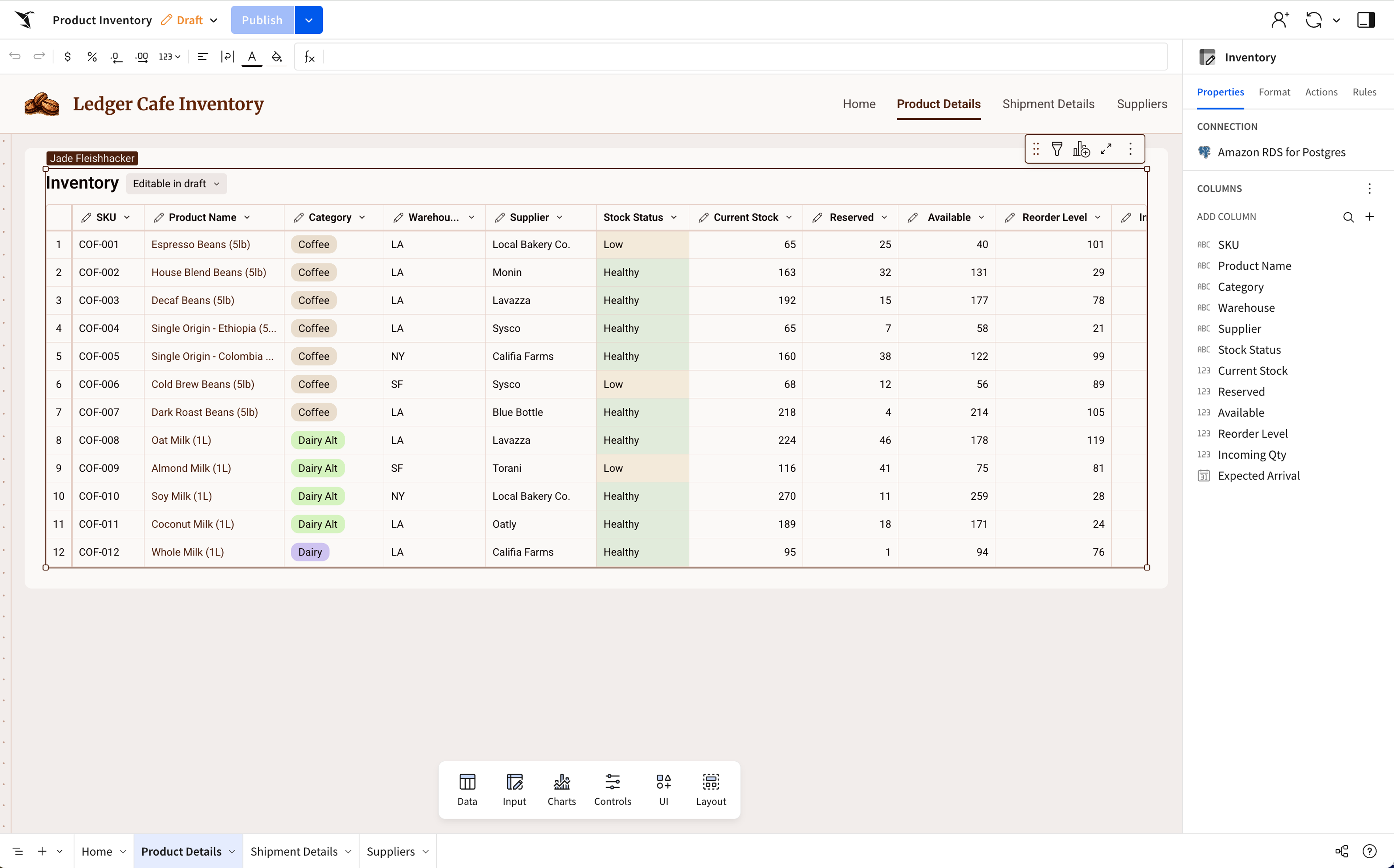
By using Sigma Input Tables, the workbook itself becomes the application. This allows non-technical users to build and manage workflows using their existing spreadsheet skills, removing the developer as a middleman. By centralizing this logic in Postgres, you eliminate the need for custom-built frontend tools that force data replication and create security risks. This commonly powers "What if" analysis and forecasting AI Apps easier than any other no-code solution:
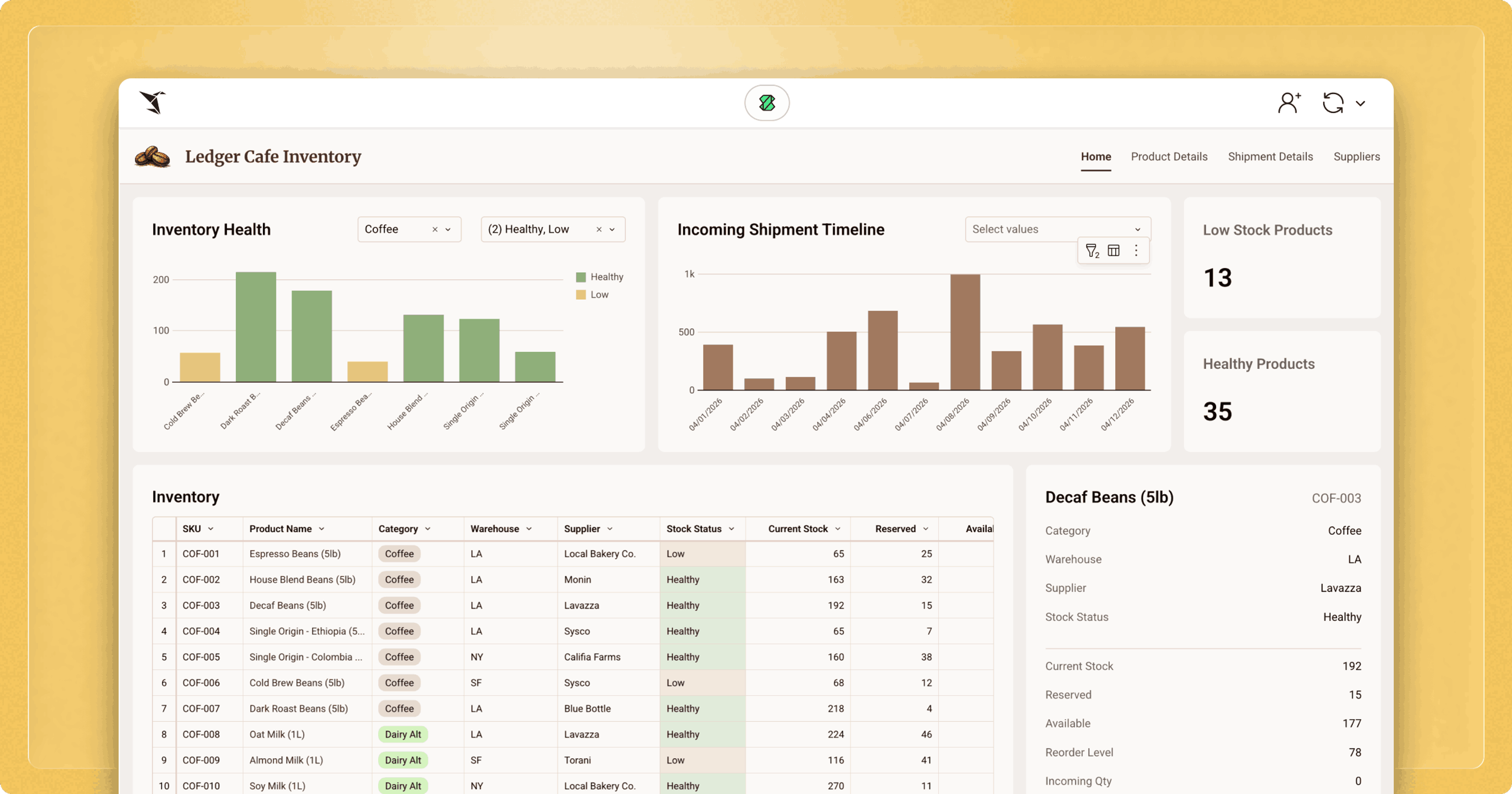
- Inventory Management: Operations teams can manually override stock levels or input "expected arrival" datebus for shipments directly in a dashboard.
- Territory Planning: Sales leaders can assign reps to new regions in a simple interface, and immediately see how those changes impact revenue projections based on historical Postgres data.
Crossing the "GenAI divide"
This unified approach is what makes AI production-ready. AI ROI fails when agents are applied to "unnatural" or manual business processes that live outside the warehouse in disconnected spreadsheets. As technologist Jason Alan Snyder notes in Forbes, research from MIT reveals a stark "GenAI Divide": 95% of AI pilots fail because they "lean on generic tools, slick enough for demos, [but] brittle in workflows," leaving companies stuck in a cycle of high adoption but low transformation.
The remaining 5% of companies succeed because, as the MIT study highlights, "they design for friction." Rather than avoiding the complexity of human-driven data, they embed GenAI into high-value workflows by shipping tools with "memory and learning loops." This is where Input Tables can help those in the 95%. By moving "human context" and business logic into the data foundation via Sigma, you capture the ground truth that AI agents need to function effectively. This creates a legitimate learning loop: business users can direct and correct models in real-time via Input Tables, while technical teams receive a clean, governed data stream to power their models. This shift moves the organization from experimental AI to production-ready AI within a single, secure environment.
Build from the data up
Sigma transforms your cloud data warehouse into a unified platform for building AI Apps. Stop choosing between developer speed and business agility. With Postgres Input Tables, you can finally retire the offline spreadsheets and bring your business logic where it belongs: secure, governed, and live inside your database.
Ready to start using Input Tables to build your first app? Explore a Sigma free trial or request a demo.