Sigma Recognized as a Sample Vendor in the 2026 Gartner® Hype Cycle™ for Agentic AI

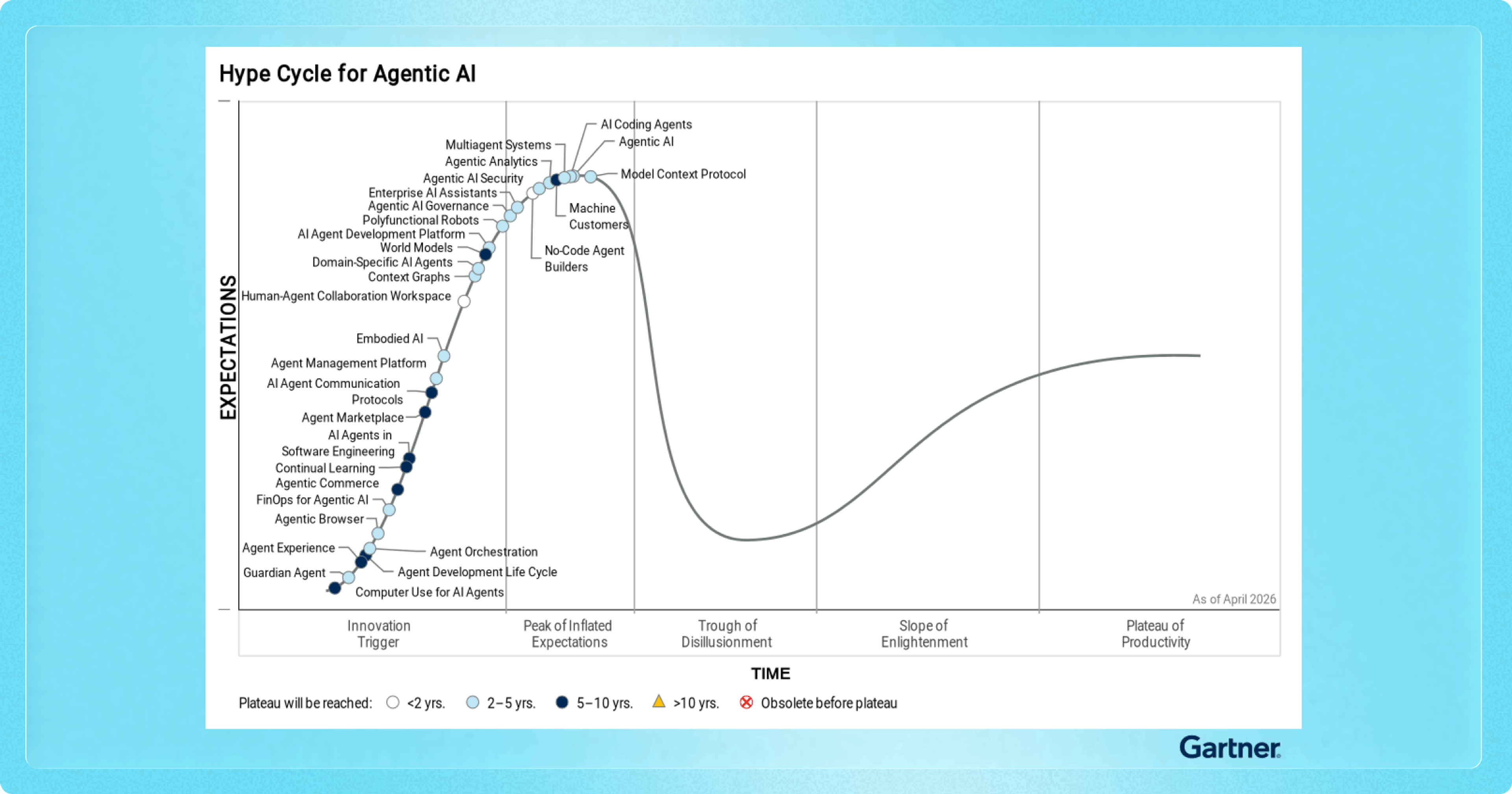
Sigma has been recognized as a Sample Vendor in the Agentic Analytics market in the2026 Gartner® Hype Cycle™ for Agentic AI. We're pleased to see agentic analytics identified as an emerging area of innovation — and one where Sigma has been building for some time.
We believe this recognition aligns with a direction we've been pursuing across the platform: moving analytics beyond static dashboards and one-off AI prompts toward adaptive, AI-powered experiences that help users bridge the gap between insight and action.
How Sigma thinks about agentic analytics
Most analytics AI today works in isolation. You type a question, get an answer, and start over. Agentic analytics is fundamentally different: it's about AI that can reason across steps, select the right data, apply trusted business logic, and help users move through an entire analytical workflow — not just answer a single question.
At Sigma, we've focused on what makes this actually work in production: the context layer underneath. An agent is only as good as what it knows, and most agents don't know enough. They can generate SQL, but they can't tell the difference between a production table and an abandoned experiment. They can calculate a metric, but they don't know whether the business defines it as a trailing 12-month average or a rolling 90-day window.
That's why Sigma's agentic capabilities are built on a continuously updated foundation of warehouse metadata, transformation lineage, semantic definitions, and — critically — usage signals that reflect how real users actually interact with the data. A Sigma Agent is built within a workbook or AI App that your business already uses to make decisions about data. This context layer is what allows agents to go beyond technically correct queries to produce answers that are aligned with how the business actually operates.
Governance at the architecture level
Many platforms bolt governance onto AI after the fact. Sigma takes a different approach: all AI processing runs directly on the customer's cloud data warehouse, inheriting existing row-level security, column-level masking, and role-based permissions automatically. There's no shadow AI layer and no data leaving the warehouse.
This means organizations can adopt agentic analytics without rebuilding their security model or introducing new risk. The same governance that protects a dashboard protects an agent — even in embedded deployments where Sigma is powering analytics inside another product.
From insight to action
Where Sigma's vision goes further is in connecting agentic analytics to real workflows. With Sigma Agents, AI doesn't just surface answers — it can automate analytical workflows, trigger actions in external systems via API Actions, and orchestrate multi-step processes on governed data. Combined with MCP extensibility, customers can bring Sigma's capabilities into their broader AI ecosystem, connecting agents across platforms while keeping data governed at the source.
What this means for data and operations teams
For leaders evaluating agentic AI, the question isn't whether to adopt it — it's how to adopt it without sacrificing the trust your organization has built in its data. The teams that will move fastest are those that already have strong data foundations, clear semantic definitions, and governance models that extend to AI-powered interactions.
Sigma is purpose-built for that transition. If you're exploring what agentic analytics looks like in practice, see Sigma Agents in action, start a free trial, or request a demo.
You can also get complimentary access to the Gartner® Hype Cycle™ for Agentic AI report.
Gartner, Hype Cycle for Agentic AI, Rajesh Kandaswamy, Leinar Ramos, Gary Olliffe, Tom Coshow, Pieter den Hamer, Erick Brethenoux, 2 April, 2026.
Gartner does not endorse any company, vendor, product or service depicted in its publications, and does not advise technology users to select only those vendors with the highest ratings or other designation. Gartner publications consist of the opinions of Gartner's business and technology insights organization and should not be construed as statements of fact. Gartner disclaims all warranties, expressed or implied, with respect to this publication, including any warranties of merchantability or fitness for a particular purpose.
Gartner and Hype Cycle are trademarks of Gartner, Inc., and/or its affiliates.