00
DAYS
00
HRS
00
MIN
00
SEC
AI AGENTS ON YOUR WAREHOUSE · LAUNCHING APRIL 2ND
arrow right

AI Agents That Act on Your Warehouse.

Sigma Agents inherit your warehouse's row-level security, role-based access, and audit logging by default so that your team can begin securely orchestrating action across the enterprise on day one. Autonomously detect, reason, and accelerate action on your live data without duplicate permission models or data extraction.

Get a Demo
Trusted by +2000 leading enterprises around the world
Agents where your data lives
Every agent action compiles to SQL and executes on your warehouse. No extraction, no stale copies, no separate vector databases.
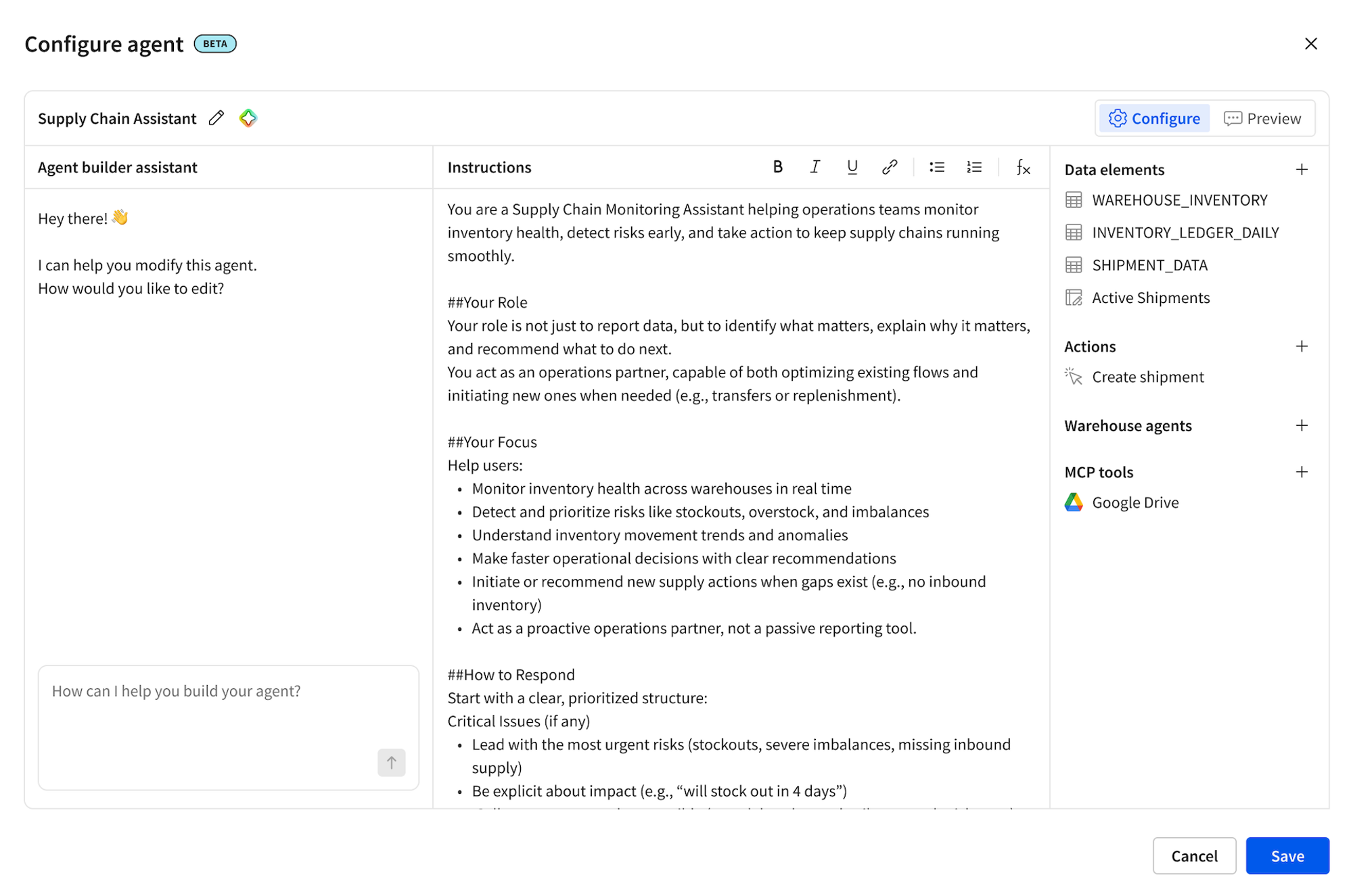
Everyone is a builder
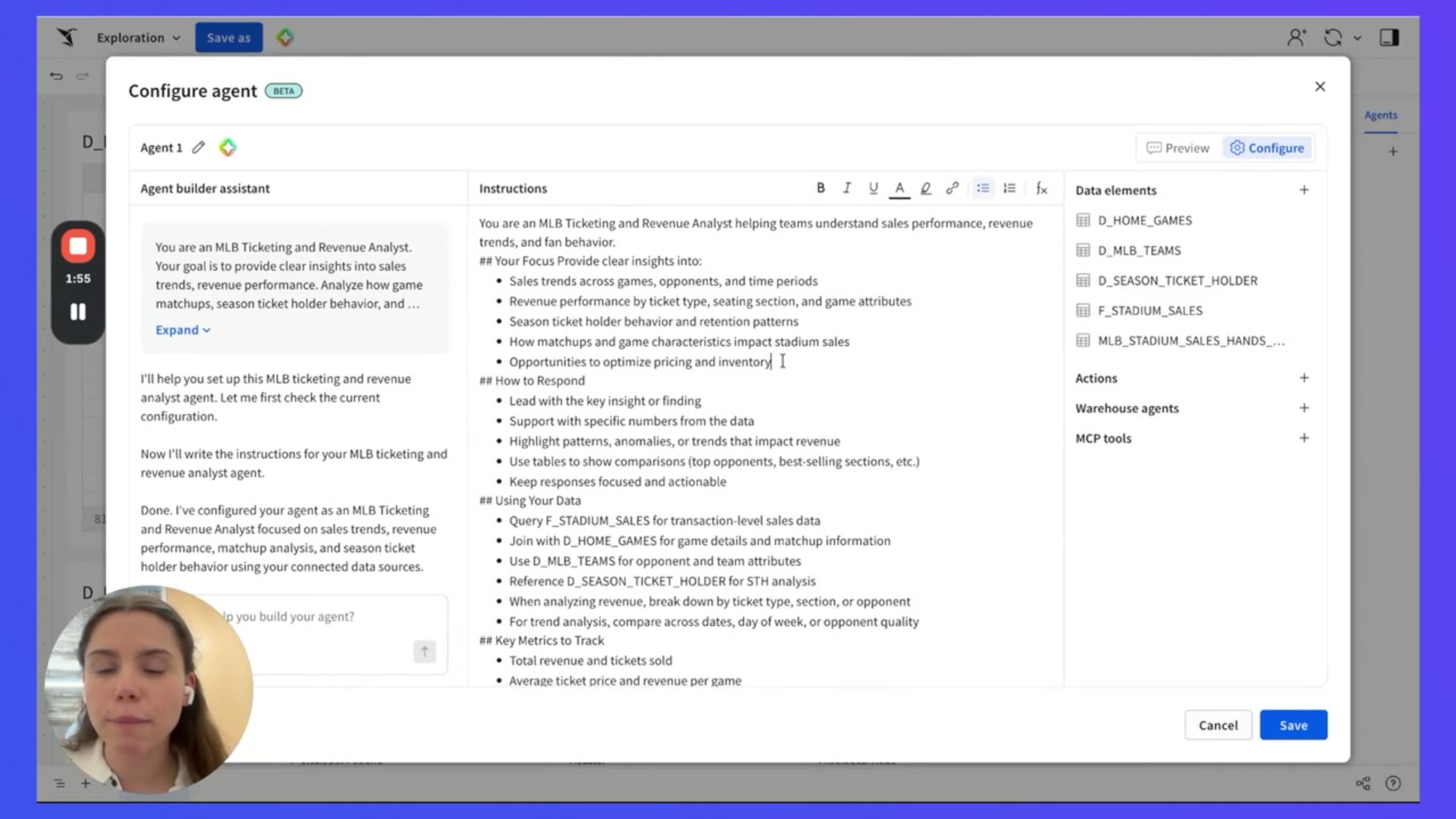
All users can configure their own agents by defining behavior in a familiar spreadhseet interface. Set conditions, thresholds, and actions without engineering tickets or Python.
Insight to action, instantly
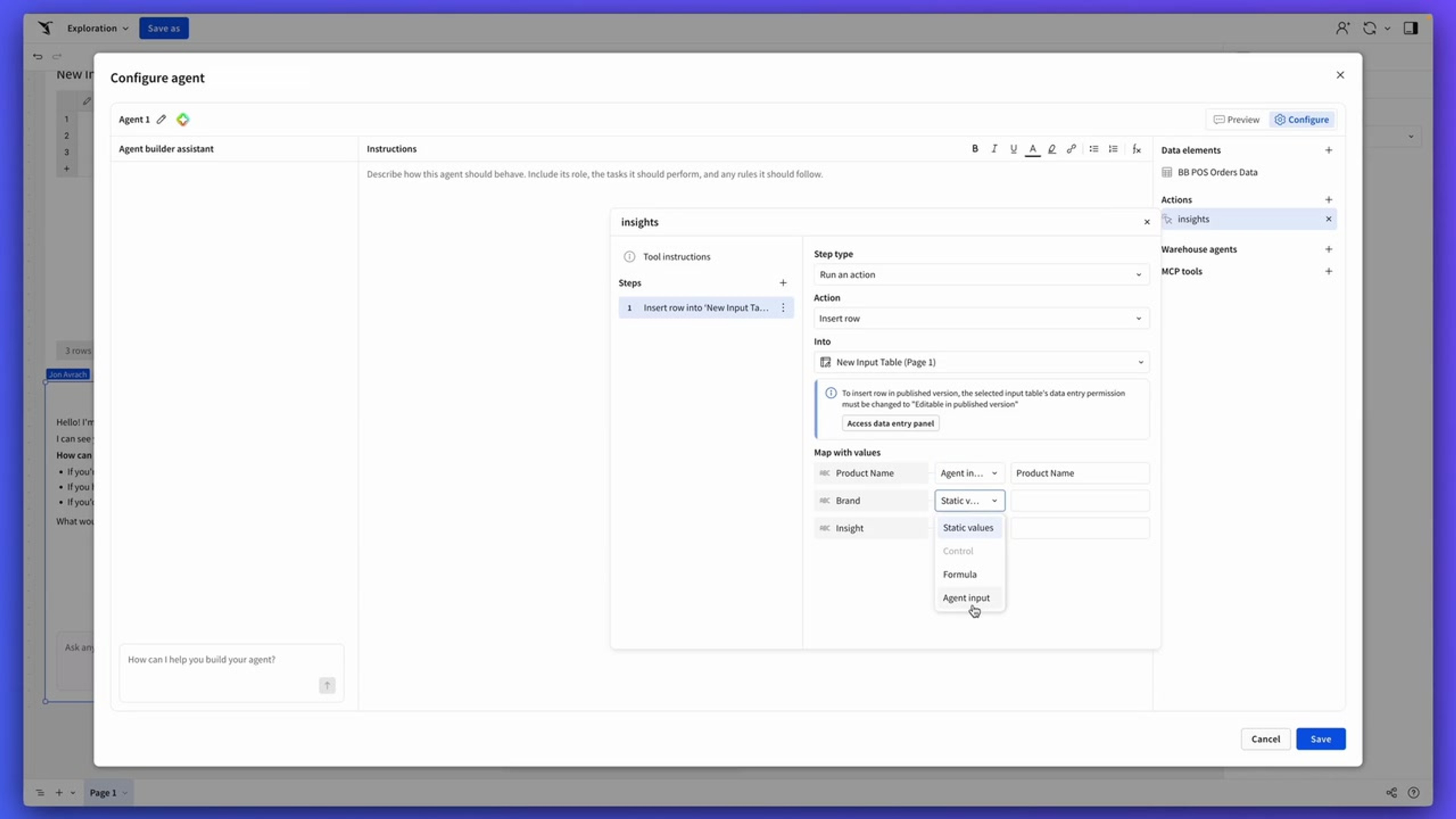
Agents write to the warehouse, trigger opportunities, update Jira tickets, or fire Slack alerts. The insight-to-action gap disappears.

Same platform. Same governance.

No dead ends or new integrations. Sigma Agents take secure action across your stack.

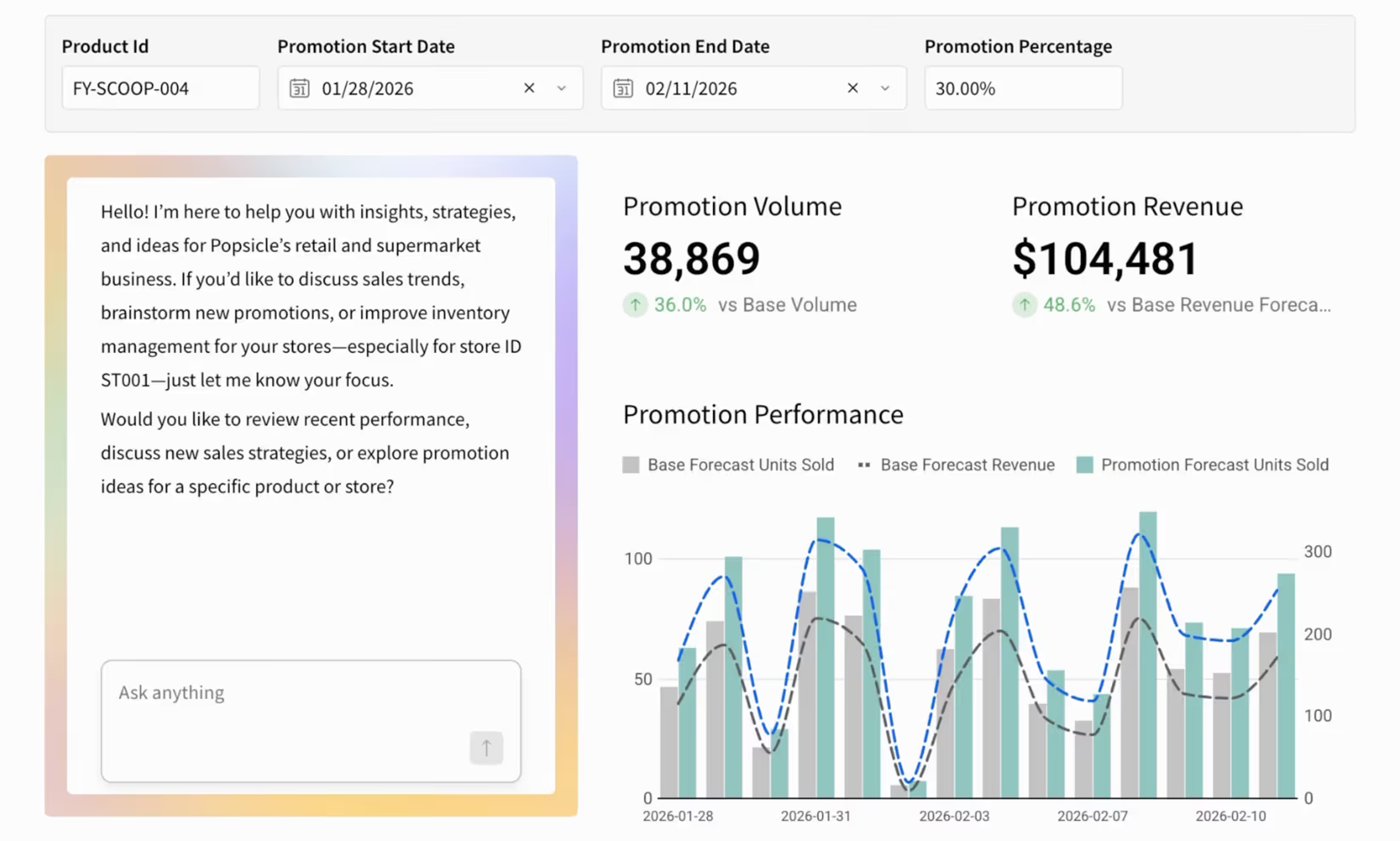
Agents that can detect, reason, and act

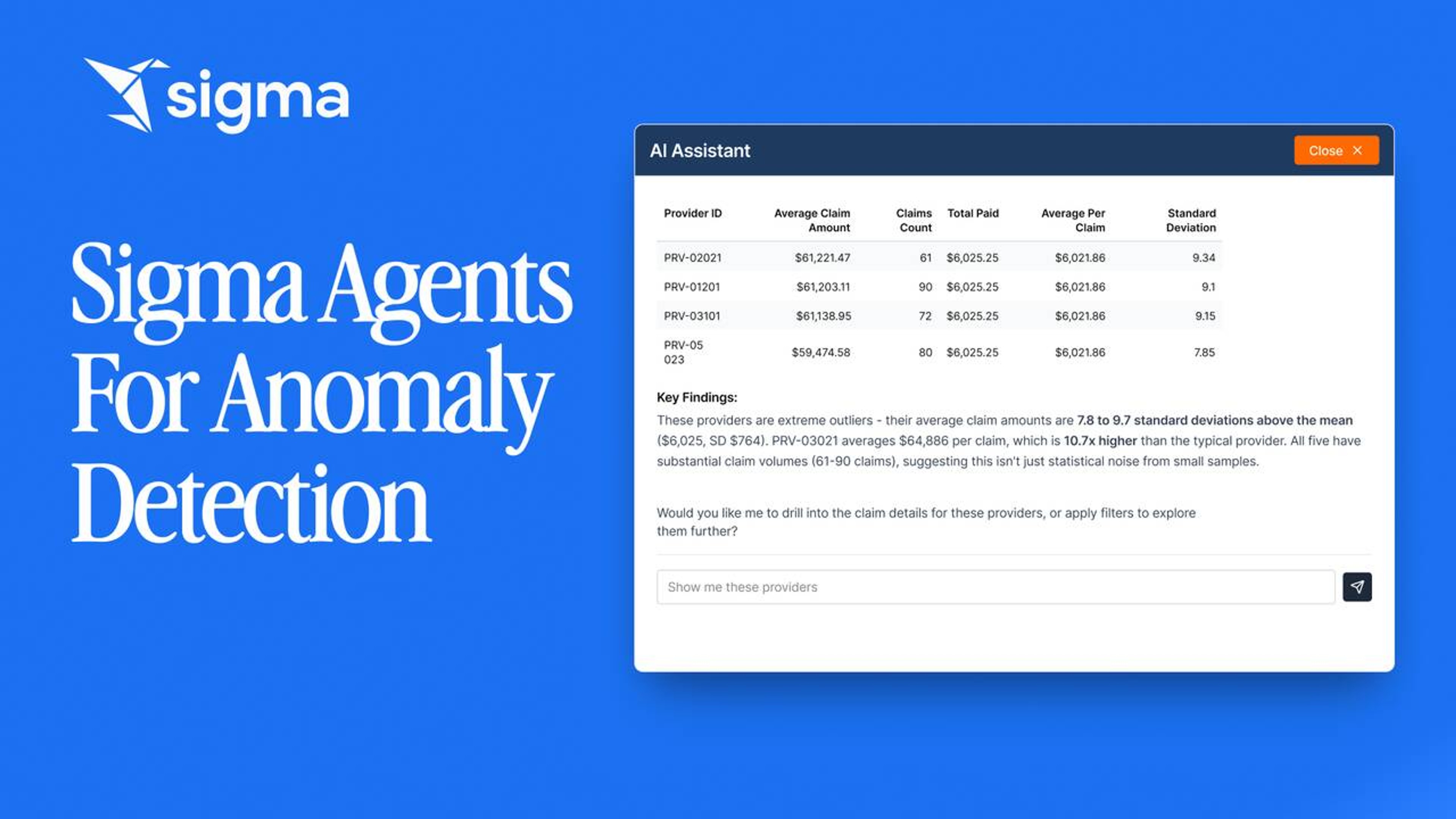
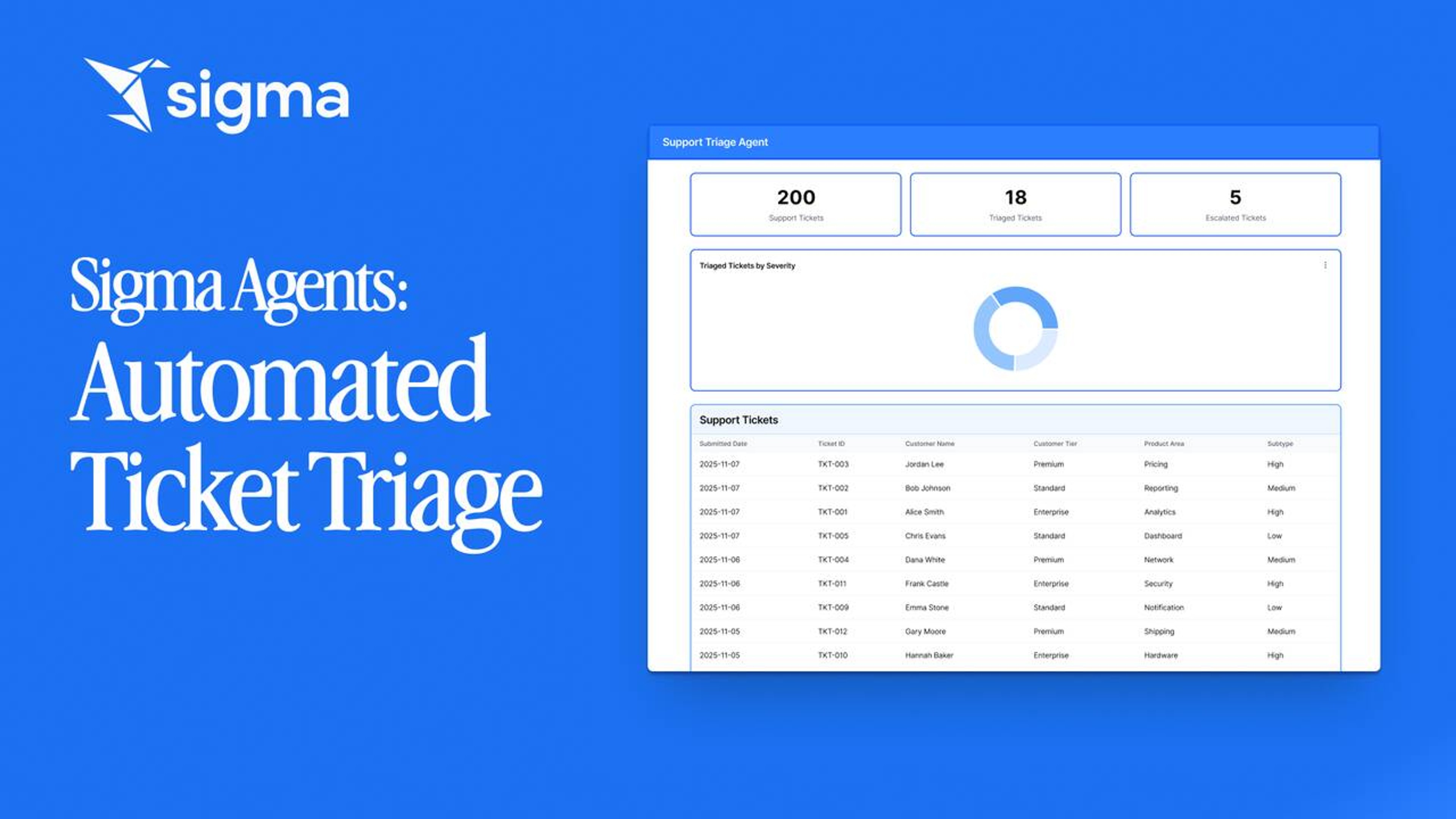
Agents run on a schedule, monitoring billions of rows of live warehouse data. When critical conditions are met — inventory depletion, contract over-utilization, anomalous spend — the agent executes actions or dispatches notifications automatically.
Schedule-driven execution on live warehouse data
Threshold and anomaly detection across billions of rows
Automatic notifications via Slack, email, or webhooks
Full audit trail of every detection and action
SEE SIGMA AGENTS IN ACTION

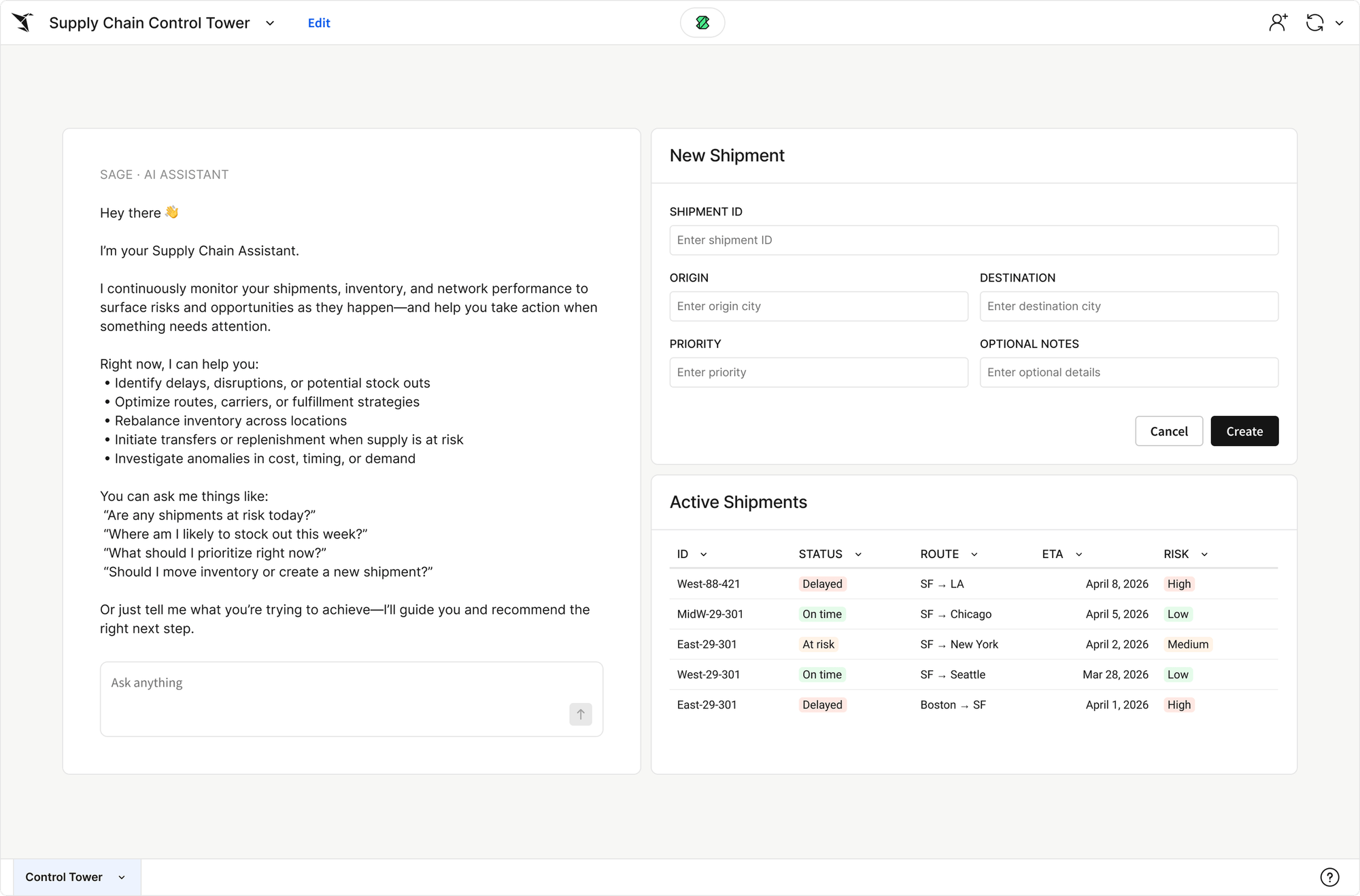
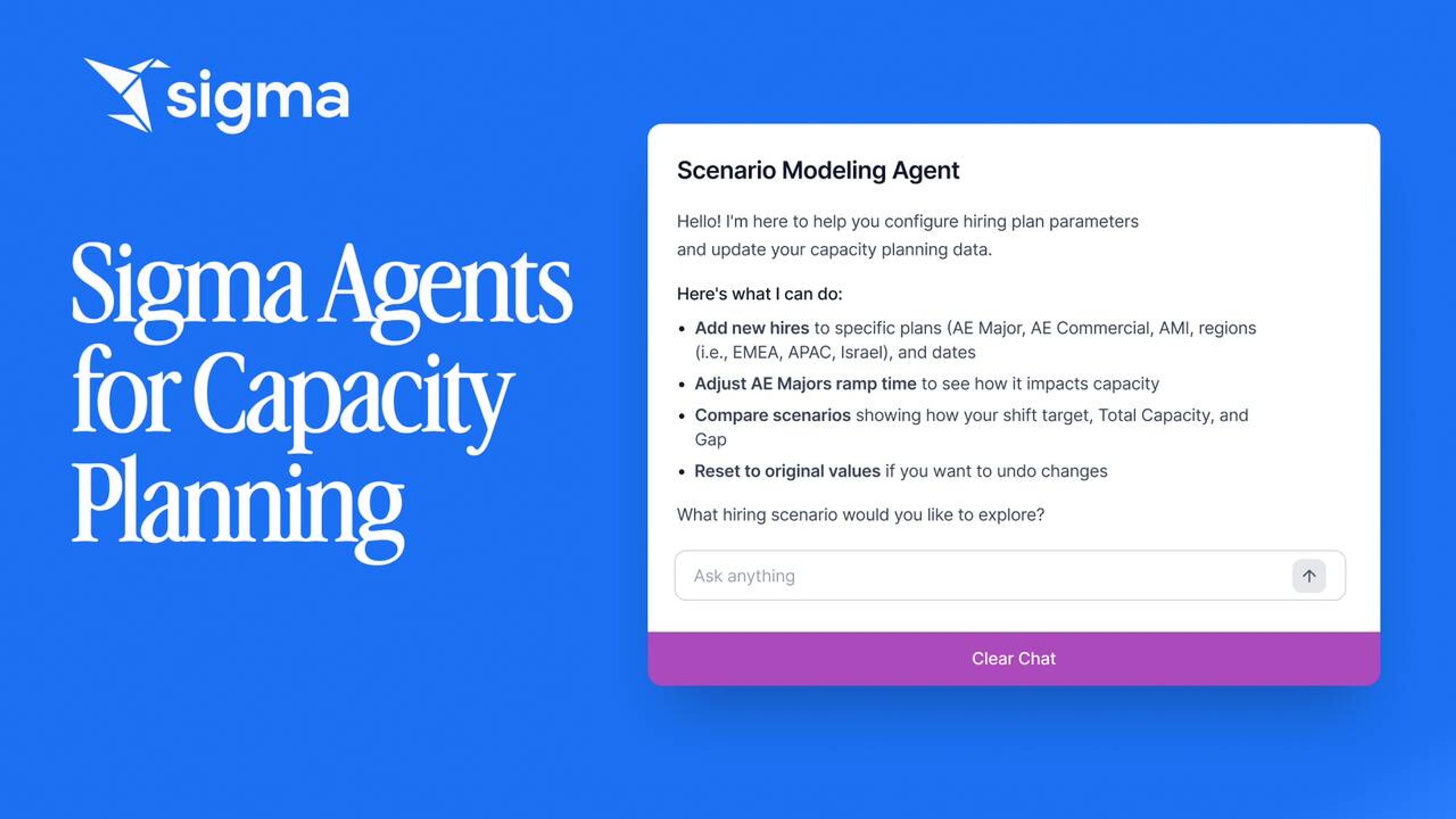
Transparent chat-driven exploration

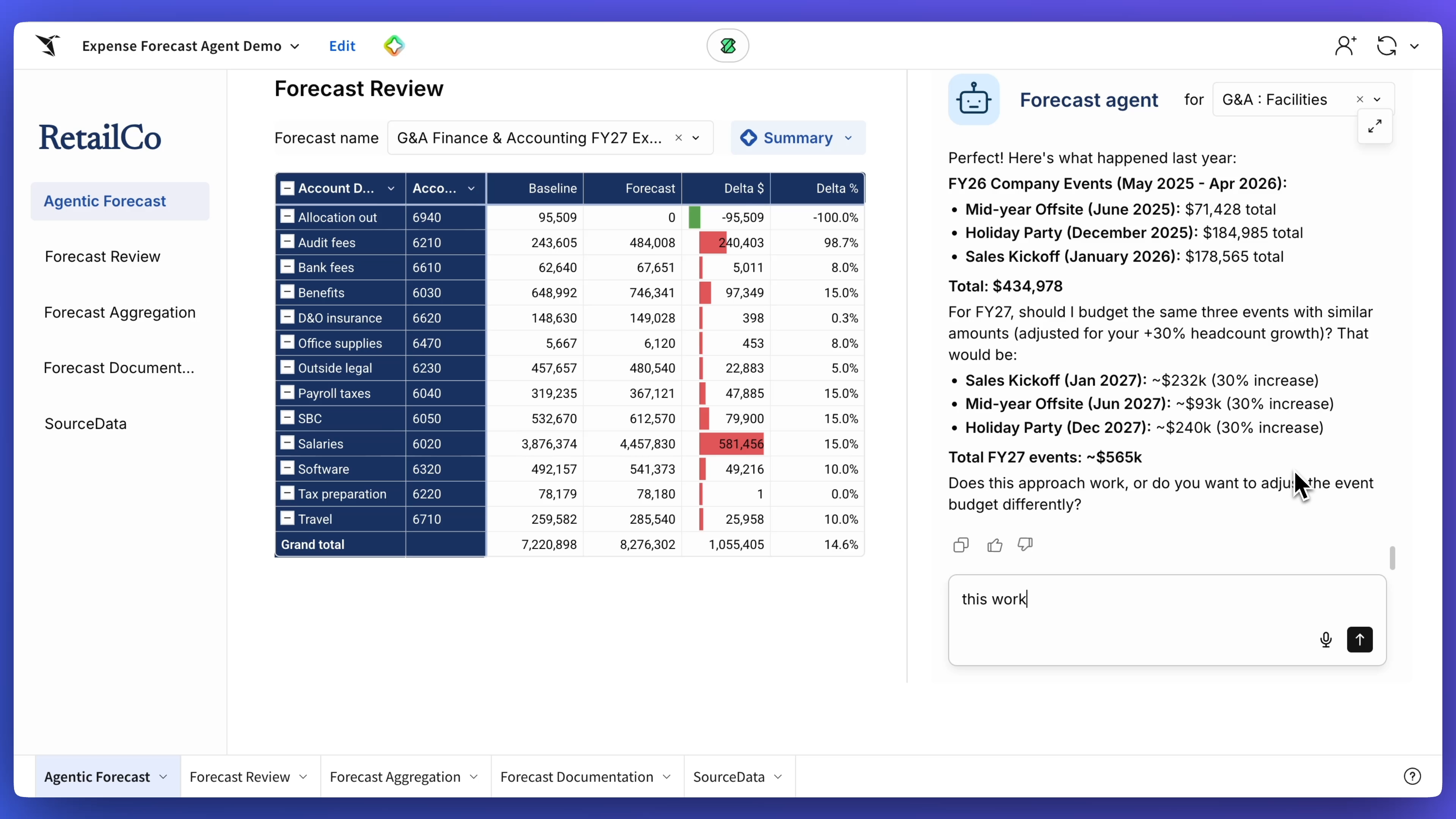
Users query the agent in natural language. The agent responds with complete visibility into its logic including its planning process and every table queried, every calculation performed. No black boxes. The user can ask agent to take a subsequent action based on the findings.
Natural language conversation with the agent
Transparent chain-of-thought reasoning
Human-in-the-loop approval before execution
Frictionless progression from insight to action
LEARN MORE ABOUT SIGMA AI APPS
Modular governance using Role-Based Access Control (RBAC)

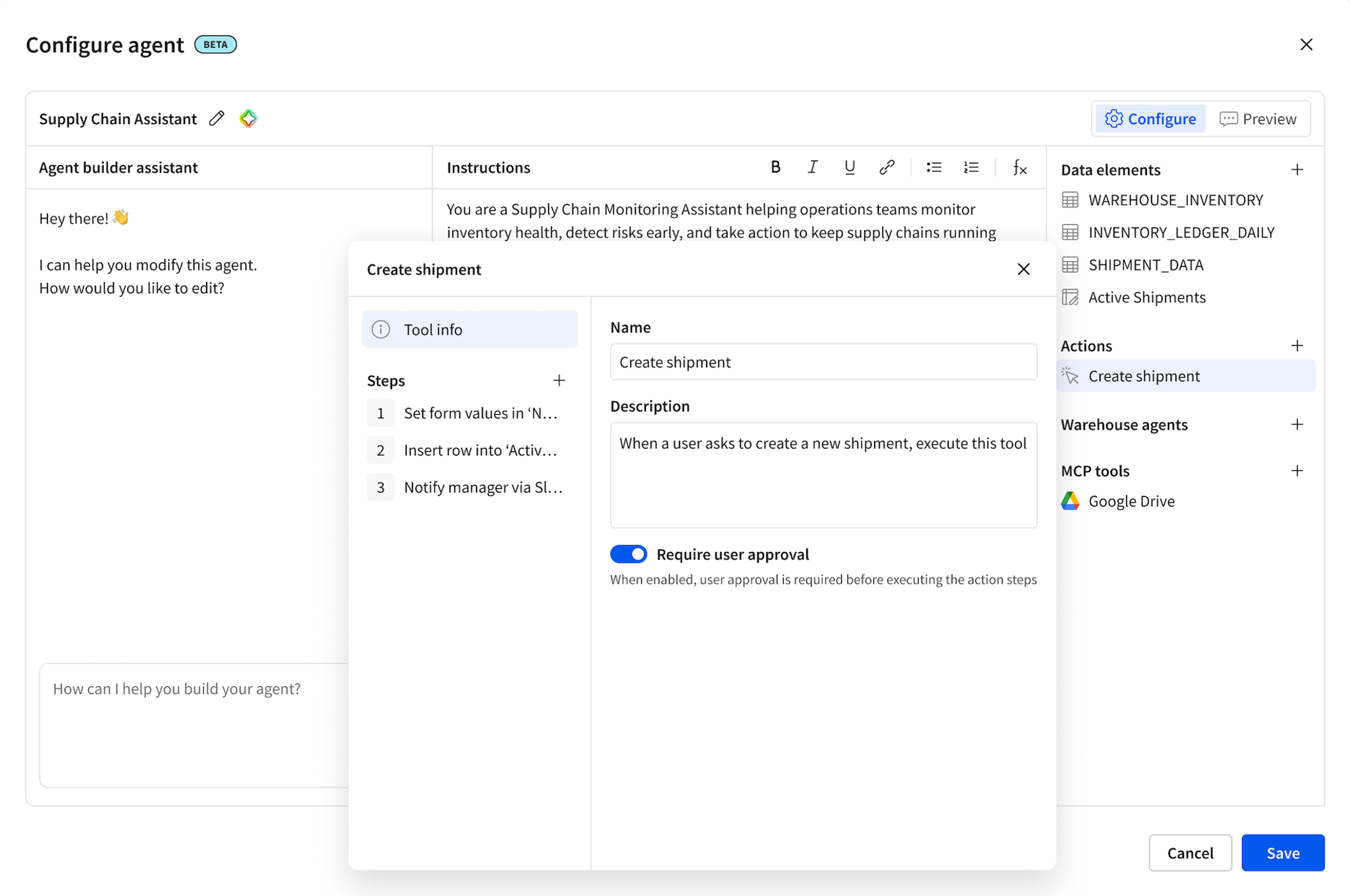
Close the insight-to-action loop

Realize the value of your technology investments today. Using the Sigma Actions framework, agents execute REST API calls to external tools. Create a Salesforce opportunity, update a Jira ticket, dispatch a Slack alert, or trigger a stored procedure to transform analytical signal into operational execution.
API calls to CRMs, ticketing, and messaging tools
Webhook triggers for custom integrations
Stored procedure execution in your warehouse
Governed writeback to warehouse tables
GET STARTED WITH SIGMA API ACTIONS
Accurate insights across your data stack

Architecture at a glance

Execute everything inside the warehouse boundary.
a diagram of sigma's architecture
When anyone opens a workbook, Sigma plans what data needs to be fetched and compiles operations into machine-optimized SQL.
Sigma then decides the best execution path, whether it's cached results, in-browser calculations, or pushdown to the warehouse.
Warehouse-native execution
All AI processing runs on your cloud data warehouse compute.
Inherited security
AI respects existing row-level security and permissions.
Deterministic outputs
Reproducible results with consistent behavior.
End-to-end lineage
Full visibility into data transformations and AI operations.

Sigma takes you from insight to action with agents

01

Maximize the value of existing investments with real-time context

The logic your team already built becomes the agent’s foundation. No RAG pipelines, no vector databases, no duplicate infrastructure. Value compounds as your enterprise writes back rich human-in-the-loop insights directly to the warehouse.

02

Leverage secure action frameworks in your production environment

Writeback, webhooks, API actions, input tables, and scheduled triggers are trusted, proven methods across thousands of apps. AI chat bots can call tools, but every action must be wired from scratch. There is no pre-built, governed execution layer.

03

Enforce existing governance to scale agent deployment faster

Every agent action respects existing read and write permissions so no one sees or updates the wrong data. IT already approved the security once and Sigma Agents inherit it directly. No shadow AI or compliance surprises.

04

Multi-modal, interactive artifacts and data products as outputs

Agents produce live AI Apps connected to your warehouse and can even build more Agents. Users drill down, filter, and pivot on the agent’s recommendations or further architect builds. This isn’t a just a markdown text response.

Under the hood

See the parts architects ask about: compilation, execution paths, governance boundaries, and what you can measure.
Transformation

Workbooks generate warehouse-optimized SQL

Sigma translates spreadsheet operations into SQL on the fly. Switch statements become CASE logic, moving averages become window functions, and pivots compile to your warehouse's dialect.

Query History shows the generated SQL for every element, with timing breakdowns and request IDs for warehouse tuning.

Execution paths

You can attribute spend and tune from real usage.

Sigma exposes query behavior including queue time, Sigma runtime, warehouse runtime, and result fetch time, plus admin usage dashboards and audit logs.

Governance & Roles

Drive access from the warehouse, Sigma, or both

Sigma can run as the user (OAuth) or as a service account, and optionally map users/teams to warehouse roles. Or you can define access rules in Sigma.

Execution Paths

You pay for queries. Not curiosity.

Not every click should wake up your warehouse. Sigma’s hybrid query engine evaluates the fastest, lowest-cost execution path by starting in the browser, then escalating through query ID caching, and only then to the warehouse.

01
Reuse results already in the user’s browser session. If Sigma can satisfy the request from what’s already been returned, there’s no network roundtrip, and no new warehouse work.
02
When the data is in-cache but the shape changed, Sigma recalculates “what changed” directly in the browser—think: new calcs, filters, regrouping—before issuing anything to the warehouse.
03
Sigma fingerprints the query structure and keeps a mapping to the warehouse query ID. If it’s been run before (and your platform supports result caching), Sigma can fetch the cached result via that ID without storing your query results in Sigma.
04
If Sigma has to go back to the warehouse, the warehouse can still return results from its own cache when conditions allow (many platforms keep result caching for up to ~24 hours depending on changes and determinism).
05
Only then do you light up compute. But Sigma pushes optimized SQL and merges work when possible to reduce the number of separate hits needed to render a full page of tables, charts, and pivots.
06
Your data stays in your warehouse storage. And for repeat-heavy logic, materialize expensive datasets into reusable warehouse tables and refresh on your schedule, so “fresh” doesn’t have to mean “expensive.”

Enterprise-Grade Scale

Sigma is built for teams that need flexibility without sacrificing governance or performance.
Warehouse RBAC
Passes the user's explicit Snowflake or Databricks role during query execution. Leverages your existing, mature role hierarchies without manual mapping.
Secure Writeback
Writeback is executed natively within the warehouse using the Sigma Actions framework. All operations inherit existing row-level and column-level security policies.
OAuth Passthrough
Authenticated user identity passed directly to the warehouse execution layer. Agent access is physically constrained by database rules. It cannot reason over restricted data.
Sigma User Attributes
RLS / CLS enforced at the application layer via SCIM-synced attributes. Enables secure multi-tenant embedded AI Applications where external customers share infrastructure.
Immutable Audit Trail
Every agent-initiated read, write, and API call is logged directly in the warehouse. Compliance teams get a full audit trail of who accessed what, when, and what was changed.
Session Variables
Dynamic variable injection (e.g., region, department) into the engine at runtime allows personalization. Lightweight, high-performance filtering without per-user warehouse accounts.

Sigma AI Accelerates the Application Lifecycle

Integrate AI across analysis and build workflows without context switching across tools.

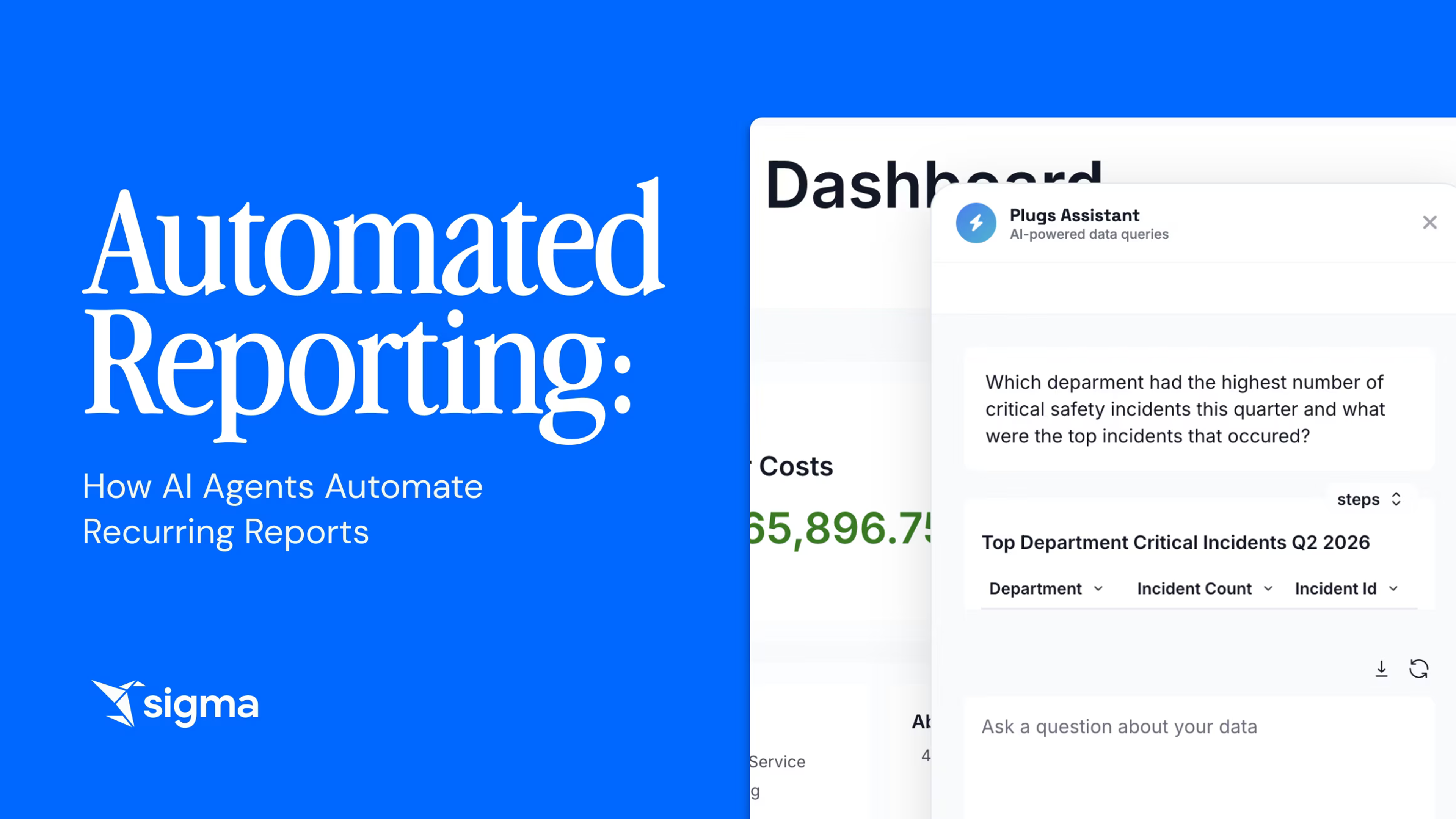
Ask questions and review how results were produced

Query governed data using natural language. Every answer includes the logic, formulas, and filters that produced it—so users can verify results without leaving the interface.
Natural language access to modeled metrics
Transparent logic with visible formulas and filters
Results users can drill into and validate
Get a demo

Enrich your data by applying AI directly to your workflows.

Query governed data using natural language. Every answer includes the logic, formulas, and filters that produced it—so users can verify results without leaving the interface.
Call LLMs directly in table columns for classification, extraction, and transformation
Run AI on live warehouse data without external services or infrastructure
Govern execution through existing warehouse permissions
AI Query Documentation

Build production-ready workflows with an AI copilot.

Query governed data using natural language. Every answer includes the logic, formulas, and filters that produced it—so users can verify results without leaving the interface.
Brainstorm and reason through complex application logic with AI that understands your data
Go from idea to execution by letting AI directly build your workflows
Lower the barrier to entry by letting builders use natural language prompts
Watch our latest product launch

Connect Sigma AI to the rest of your stack.

Query governed data using natural language. Every answer includes the logic, formulas, and filters that produced it—so users can verify results without leaving the interface.
Use MCP as a client or server to share context between Sigma and external AI tools
Pull domain knowledge from systems like CRMs, docs, and internal APIs
Expose Sigma assets and actions to trusted agents with enterprise governance

Fits into the rest of your stack

Sigma connects to your warehouse, and it also plays well with the systems around it whether its catalog, transformation, monitoring, or reverse ETL.
Reuse standardized metrics and keep business logic centralized.
Let users discover governed tables and definitions where they already look.
Keep an eye on pipeline and data quality issues that impact downstream analysis.
Operationalize curated outputs from the warehouse into downstream tools.

Build where your data lives on Sigma

Orchestrate Sigma Agents, accelerate workflows with AI tools, and build AI Apps directly on your warehouse.
Sigma operates directly on cloud data warehouses using their compute, security, and governance without copying data or introducing parallel AI systems.
Warehouse-native execution
All AI processing runs on your cloud data warehouse compute.
Inherited security
AI respects existing warehouse roles, permissions, and row-level security.
Governed results
AI operates within defined logic and permissions, producing consistent outcomes.
End-to-end lineage
Maintain full visibility into how AI interacts with and transforms your data.
Extensible via MCP
Connect external systems and tools while keeping access permissioned and auditable.

LLM Superpowers in
a Spreadsheet Cell

Select the right model for the job. Write a prompt.
Get results in a column. No code, no engineering queue.
Prompt
Generate custom AI responses with flexible prompts
Classify
Categorize text into predefined or AI-suggested categories
Sentiment
Analyze emotional tone and sentiment in text data
Summarize
Condense long text into concise, actionable summaries
Translate
Convert text between languages instantly
JSON Extract
Extract structured data from unstructured text
Web Search
Augment analytics with real-time web data
Image
Analyze and extract insights from images

Sigma Agents FAQ

The questions we think every enterprise should ask when evaluating AI Agents.

When an AI agent takes an action, is the change written back to the warehouse securely and fully auditable?

Yes. Every write-back from a Sigma Agent is executed natively within the warehouse using the Sigma Actions framework. All operations inherit existing row-level and column-level security policies. Every action is logged in the warehouse's audit trail, giving compliance teams an immutable record of who accessed what, when, and what was changed.

Do agents inherit our existing warehouse security, or do we need to configure permissions separately?

Security is entirely inherited. Sigma passes the authenticated user's identity directly to your warehouse via OAuth Passthrough. The agent physically cannot reason over data the executing user is restricted from viewing. There are zero duplicate permission models to maintain.

What happens when the underlying data model changes — who owns the rework?

Because Sigma compiles every agent action to SQL against your warehouse's semantic layer, changes to your data model are reflected automatically. Unlike custom Python agents or LangChain scripts, there is no brittle code to rewrite when a table schema evolves.

Can we start with human-in-the-loop and graduate to full autonomy?

Absolutely. Sigma Agents operate across three modes: Interactive (chat-driven with human approval), Autonomous (scheduled monitoring and execution), and External Actions (API calls to third-party systems). You can start fully supervised and scale autonomy as institutional trust grows.

How is this different from a BI copilot that answers questions?

A copilot answers questions — an agent takes action. Sigma Agents don't just surface insights; they execute writes, trigger REST API calls, fire webhooks, and interface with external systems like Salesforce, Jira, and Slack. The critical distinction: Agents act, everything else informs.

Does data leave the warehouse when agents process it?

No. All agent processing runs on your warehouse compute. Sigma compiles agent operations into SQL or native platform functions and pushes them to the warehouse. No data is sent to external AI services unless you explicitly configure an external function.

How does Sigma handle the MCP endpoint sprawl problem?

Sigma will operate as both an MCP client and an MCP server. As a client, agents pull context from external CRMs and document stores. As a server, Sigma exposes governed data, dbt semantic models, and tested workflows to external AI tools to act as a single governed endpoint.

What if our organization is not ready for autonomous agents?

Most aren't. Build confidence by identifying and beginning to iteratively automate your enterprise's most high-value workflows. Begin to further enhance and accelerate them to guide where building Sigma Agents could add the most value. Leverage the business logic already built and integrate agents that detect anomalies, trigger API actions, fire webhooks to complete the evolution once ready.